

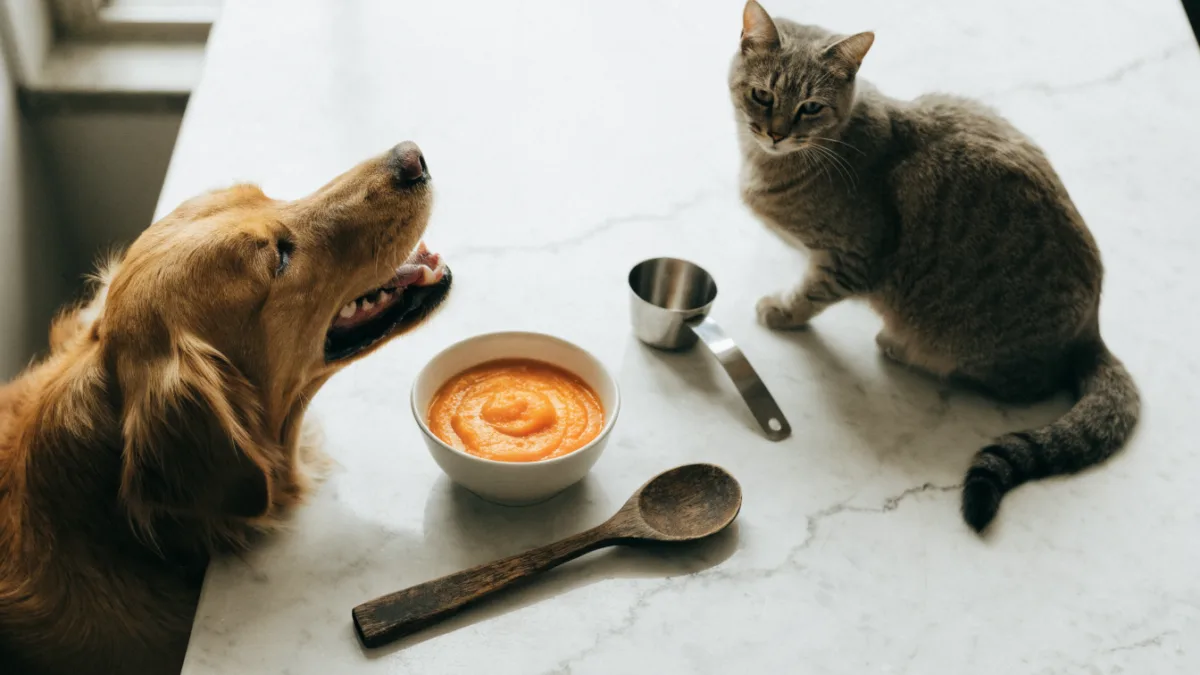
Picture an owner named Karen walking into a clinic last fall carrying her six-year-old Golden Retriever, Cooper, and a can of pureed pumpkin. Cooper had been dealing with loose stools for almost a week after getting into some questionable leftovers during a backyard barbecue. Karen looked hopeful but skeptical. “My dog park friends swear by this stuff,” she said, holding up the can like a talisman. “But does it actually work, or is this just internet folklore?” It’s a conversation that happens at least a hundred times a year. The short answer is yes — pumpkin can genuinely help dogs with diarrhea. But the longer, more interesting answer involves understanding why fiber works, how it behaves differently in canine versus feline bodies, and why the same approach that saves Cooper’s gut could land a cat in the emergency room if you’re not careful.
How Soluble Fiber Actually Works: Meet the “Sponge” Mechanism
Before we talk about specific supplements, let’s get into what soluble fiber is actually doing inside your pet’s digestive tract. I think of it as a biological sponge — and that metaphor has helped countless owners understand why fiber is such a paradoxical nutrient.
Soluble fiber dissolves in water and forms a gel-like substance as it moves through the gastrointestinal tract. When a dog has diarrhea — meaning their stool contains too much unabsorbed water — that gel matrix soaks up the excess moisture, firming things up. But here’s where it gets fascinating: that same mechanism works in reverse for constipation. By adding bulk and retaining just enough moisture, soluble fiber helps stool move through the colon at a healthy, predictable pace. It’s nature’s regulatory system. Recent multicenter studies on therapeutic diets have confirmed that fiber blends do exactly this — they normalize intestinal transit time, which is simply the speed at which food travels from stomach to rectum.
This dual-action capability is why fiber is often called the clinician’s secret weapon in veterinary gastroenterology. It doesn’t force the gut in one direction — it helps the gut find its equilibrium.
Pumpkin for Dog Diarrhea: Why This Orange Superstar Earns Its Reputation
Let’s go back to Cooper. The recommendation was one to two tablespoons of canned pumpkin added to his regular food, twice daily. Within forty-eight hours, his stools were significantly firmer. Karen sent a photo (as owners do) with a caption that read: “Is this sorcery?”
It’s not sorcery — it’s biochemistry. Pumpkin is loaded with soluble fiber, but it also contains a surprising array of beneficial compounds that go beyond simple stool firming. The orange flesh is rich in beta-carotene, which the body converts to vitamin A, supporting the mucosal lining of the intestines. It contains vitamin C, vitamin E, and several antioxidants that help reduce inflammation in an irritated gut. When a dog’s intestinal lining is inflamed from a dietary indiscretion or mild infection, these compounds can help soothe and support tissue repair.
What makes pumpkin so practical for dog owners?
- Gentle dosing: Because it’s a whole food with relatively modest fiber concentration, there’s a wide safety margin. You’re unlikely to cause harm by adding a spoonful too many.
- Palatability: Most dogs genuinely enjoy the taste, which makes compliance easy.
- Accessibility: It’s available in almost any grocery store.
However, I always caution owners to read labels carefully. You want 100% pure pumpkin puree, not pumpkin pie filling — which contains added sugars, spices like nutmeg (which can be toxic to dogs), and other ingredients that will make digestive problems worse, not better. Recently, the pet wellness industry has exploded with functional toppers — pureed pumpkin supplements specifically formulated for animal GI tracts, often combined with other beneficial ingredients. These take the guesswork out of label reading.
The Feline Fiber Danger Zone: Why Cats Need a Different Approach
Now let me tell you about Mochi. Mochi is a seven-year-old Persian cat who belongs to a client named David. David also has a dog, and when his Beagle had success with a fiber supplement, he decided to give some to Mochi, who’d been producing slightly soft stools. He added a heaping teaspoon of psyllium husk powder to her wet food. Two days later, Mochi was straining in the litter box, crying, and producing nothing. She was severely constipated — what we call obstipation — and required enemas and IV fluids at the emergency clinic.
Here’s the critical difference: cats have highly specialized, sensitive digestive tracts evolved for a moisture-rich, carnivorous diet. They have a naturally low thirst drive — in the wild, they get most of their hydration from prey. When you introduce a highly concentrated fiber source like psyllium into a cat’s digestive system without careful dosing and abundant water, that fiber pulls moisture out of their tissues and into the gut. In a dehydrated cat — which many domestic cats quietly are — this can create a thick, cement-like mass in the colon.
Just two tablespoons of psyllium delivers a highly concentrated dose of total dietary fiber. For a sixty-pound dog, that’s a therapeutic amount. For a nine-pound cat, it’s potentially a gastrointestinal obstruction waiting to happen.
When fiber IS appropriate for cats
This doesn’t mean cats should never receive fiber supplementation. In fact, specific fibers — including psyllium husk and sugarcane fiber — have been clinically shown to reduce hairball formation in cats, which is a genuine quality-of-life issue for many long-haired breeds. The key is dose, format, and hydration.
For cats, I prefer moisture-rich fiber sources over dry powders. A small amount of pumpkin puree mixed into wet food is far safer than loose psyllium sprinkled on kibble. The moisture in the food itself helps the fiber do its job without dehydrating the animal. This is an ongoing debate in the holistic pet community, and honestly, I’ve changed my mind on this over the years. Early in my career, I was more casual about recommending psyllium across species. The more feline constipation cases I saw, the more I realized that concentrated dry fiber and cats are often a risky combination.
The Psyllium Rules: Hydration Is Non-Negotiable
If you and your veterinarian decide that psyllium is appropriate for your pet — whether dog or cat — there is one rule that cannot be broken: it must be given with adequate water. Without sufficient moisture, psyllium turns into a dense gel that can cause GI obstruction. I recommend mixing psyllium thoroughly into wet food, or if your pet eats dry food, soaking the psyllium in water for several minutes before serving.
Signs that your pet may be getting too much fiber or not enough water alongside it include:
- Straining during defecation
- Reduced appetite
- Vomiting
- Lethargy
- Reduced or absent stool production
If you see any of these signs, stop the supplement and contact your veterinarian immediately.
The Honest Truth: Fiber Is a Tool, Not a Diagnosis
One of my concerns about the enthusiasm surrounding pumpkin and psyllium is that well-meaning pet owners sometimes use these supplements as a substitute for veterinary care. Chronic diarrhea, persistent constipation, sudden changes in stool quality, weight loss, or blood in the stool can all signal serious underlying conditions — parasites, inflammatory bowel disease, food allergies, bacterial infections, even certain cancers.
I had a patient last year, an eight-year-old Shepherd mix named Bruno, whose owner had been treating his chronic loose stools with pumpkin for three months. The pumpkin helped temporarily, but the diarrhea kept returning. When Bruno finally came in for a full workup, we discovered he had inflammatory bowel disease that required specific medical management. The pumpkin wasn’t harmful — but it was masking a condition that needed real attention.
Fiber supplementation should complement veterinary care, never replace it. If digestive symptoms persist beyond a few days, recur frequently, or are accompanied by other concerning signs, your pet needs a thorough evaluation — not another spoonful of pumpkin.
Bringing It All Together
When used thoughtfully, soluble fiber is genuinely one of the most effective, accessible tools for supporting canine and feline digestive health. For dogs, pumpkin offers a gentle, whole-food source of fiber and anti-inflammatory compounds that can resolve mild diarrhea quickly and safely. For cats, fiber can still play a valuable role — particularly for hairball management — but it demands careful dosing, moisture-rich delivery, and close monitoring. Psyllium, while potent and effective, requires respect for its concentration and an absolute commitment to adequate hydration.
Cooper’s diarrhea resolved within a week, and pumpkin now has a permanent place in Karen’s pantry for the next time his stomach gets the better of him. Mochi recovered fully, and David now uses a tiny, measured amount of pumpkin in her wet food instead of loose psyllium — with no further litter box drama. These two cases, side by side, capture everything you need to remember about fiber and pets: the same nutrient that heals one animal can harm another. The magic isn’t in the ingredient itself — it’s in matching the right fiber, in the right form, at the right dose, to the right species.