

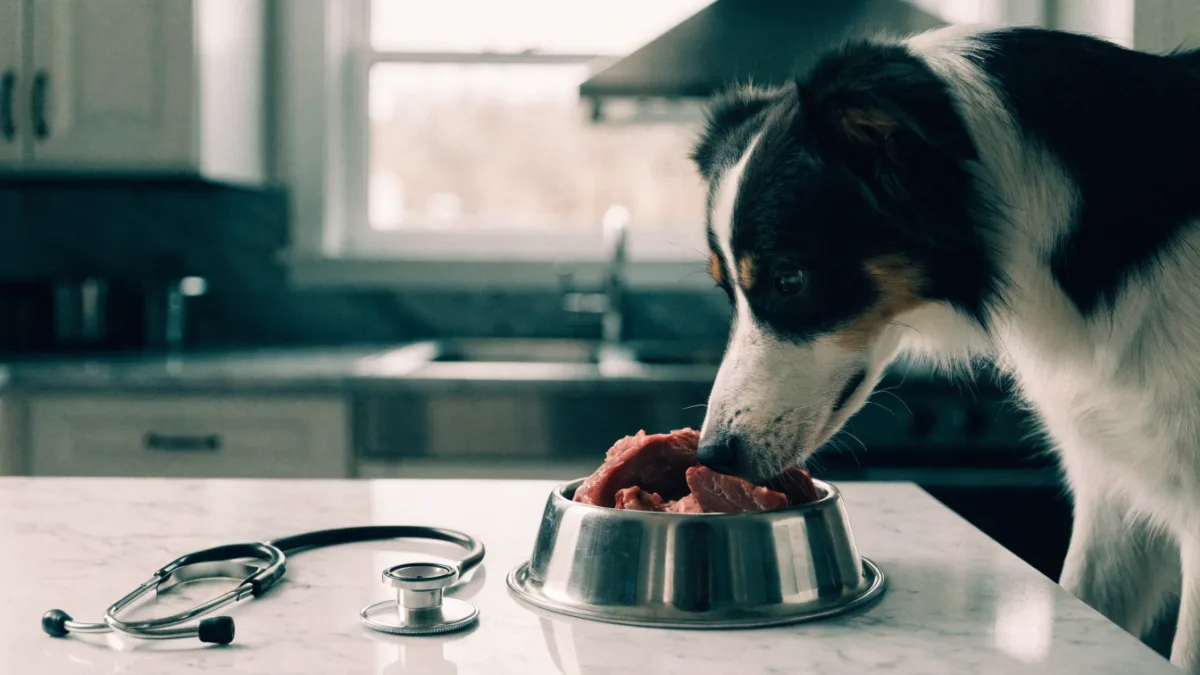
Last month, a client named Rebecca brought her three-year-old Australian Shepherd, Mabel, into my clinic. Mabel had been vomiting on and off for two days, and Rebecca was visibly frustrated. “I don’t understand it,” she said, settling Mabel on the exam table. “I switched her to a raw diet six weeks ago because I wanted her to be healthier, and now she’s sick. The woman at the pet store told me this was the best thing I could do for her.” After running some tests, we discovered Mabel had a mild case of salmonellosis — a bacterial infection from contaminated raw chicken in her food. Rebecca was horrified, but she wasn’t careless. She’s one of thousands of loving, well-intentioned pet owners who’ve heard compelling arguments for raw feeding and decided to give it a try. The raw diet trend isn’t going away, and as veterinarians, pretending it’s all nonsense doesn’t serve anyone. What does serve pet owners is honest, evidence-based information — so let’s separate the meaty myths from the facts.
Why Raw Diets Appeal to Pet Owners
I completely understand the appeal. When you walk down the pet food aisle and see bags of kibble with ingredient lists that read like chemistry textbooks, it’s natural to feel uneasy. Many pet owners tell me they want their dogs and cats eating “real food” — the kind of food they’d recognize in their own kitchens. And there’s a persistent myth that any human food is bad for pets, which simply isn’t accurate. There’s a world of difference between processed table scraps loaded with salt and seasoning, and fresh, whole-food ingredients prepared thoughtfully for an animal’s nutritional needs.
Raw diet advocates often report remarkable transformations: shinier coats, cleaner teeth, smaller stools, and boundless energy. I’ve had clients swear their dog’s chronic ear infections cleared up within weeks of switching to raw. And honestly? Some of these observations probably have merit. Fresh, minimally processed foods do contain bioavailable nutrients that can be lost during the high-heat extrusion process used to make commercial kibble. A 2019 landmark study by RH Davies, cited nearly 300 times, confirmed that raw meat-based diets actively alter the fecal microbiome and fermentation byproducts in healthy dogs — meaning raw food genuinely changes how a dog’s gut works at a cellular level. That’s not nothing. But personal anecdotes, while powerful, aren’t the same as controlled scientific evidence, and they don’t capture the full picture of risks and benefits.
The Bacterial Question: What Your Pet Can Handle vs. What You Can’t
Here’s where the conversation gets heated. Raw feeding advocates frequently argue that dogs and cats have highly acidic stomachs and shorter digestive tracts compared to humans, making them naturally equipped to handle harmful bacteria in raw meat. There’s some truth to this — a dog’s stomach pH can drop as low as 1, which is more acidic than ours, and their shorter intestinal transit time means bacteria pass through more quickly. This is the core physiological argument, and it’s not entirely wrong.
But here’s what I explain to clients like Rebecca: the issue isn’t just whether your pet survives the bacteria. Multiple studies have consistently found pathogenic strains of E. coli and Salmonella in commercial and home-prepared raw pet foods. Even if your dog doesn’t show symptoms, they can shed these dangerous pathogens in their feces for days or even weeks after eating contaminated meat. That means every time your dog licks their back end and then licks your face, or you clean up their stool and accidentally touch a countertop, your entire household is potentially exposed. For healthy adults, this might mean an upset stomach. But for young children, elderly family members, pregnant women, or anyone with a compromised immune system, the consequences can be severe.
Kitchen Cross-Contamination Is the Real Danger
I had a client last year — a retired nurse named Linda — whose eight-year-old grandson ended up hospitalized with a serious Salmonella infection. After investigation, the likely source was traced back to the kitchen where Linda prepared raw chicken for her two golden retrievers. She used the same cutting board she later used for salad prep, even though she’d washed it. Bacteria like Salmonella are remarkably persistent on surfaces, and standard dishwashing doesn’t always eliminate them. This is why the raw diet conversation isn’t just about pet health — it’s a household public health issue. If you’re going to feed raw, you need to treat your kitchen like a commercial food processing facility: dedicated cutting boards, strict sanitization protocols, and vigilant hand hygiene.
One Diet Does Not Fit All: Dogs vs. Cats
The standard raw feeding baseline — often called the “80/10/10” ratio — consists of 80% meat, 10% bone, and 10% organ meat. It’s a starting point that many raw feeders treat as gospel, but here’s what concerns me: this ratio doesn’t automatically meet the complete nutritional needs of either species without careful modification.
Dogs are omnivores with carnivorous tendencies. They can extract nutrients from a wide variety of food sources, including vegetables, fruits, and grains. Cats, on the other hand, are obligate carnivores — their bodies are biologically wired to get specific nutrients like taurine, arachidonic acid, and preformed vitamin A exclusively from animal tissue. A raw diet that works reasonably well for a dog might be catastrophically deficient for a cat if it’s not properly balanced with species-appropriate supplements.
I’ve seen cats come into my practice with dilated cardiomyopathy — a serious heart condition — because their well-meaning owners were feeding them a homemade raw diet lacking sufficient taurine. By the time symptoms appear, the damage can be irreversible. Dogs can also suffer from nutritional deficiencies on unbalanced raw diets, particularly calcium-phosphorus imbalances that affect growing puppies’ bone development. The 80/10/10 ratio is a foundation, not a complete recipe. Both species require thoughtful, species-specific additions to thrive.
The Raw Bone Debate: Dental Benefit or Dental Disaster?
If there’s one topic guaranteed to start an argument among pet owners, it’s bones. Proponents argue that raw meaty bones are essential for dental health — they scrape plaque off teeth, provide mental enrichment, and supply natural minerals like calcium and phosphorus. I’ve seen dogs who chew bones regularly have genuinely impressive dental health.
But I’ve also seen the other side. I’ll never forget the case of a five-year-old French Bulldog named Pierre who came into emergency one Saturday night after his owner gave him a raw beef marrow bone as a weekend treat. Pierre cracked his largest premolar clean down the middle — a slab fracture that required surgical extraction costing over a thousand dollars. Then there was a one-year-old Husky named Zeus who swallowed a raw bone fragment whole. It lodged in his small intestine, and without emergency surgery, he would have died. Gastrointestinal blockages, internal punctures, fractured teeth, chipped enamel — these are the real risks of raw bones, and they happen far more often than raw feeding advocates acknowledge. If you want to offer bones for dental health, always choose size-appropriate options, supervise your pet closely, and never give bones that are small enough to swallow whole.
Middle-Ground Options Worth Considering
I’ll be honest — I’ve changed my thinking on raw diets over the years. Early in my career, I was firmly in the “absolutely not” camp. But as the field of veterinary nutrition has evolved, particularly with research into the gut microbiome and the gut-brain axis, I’ve come to appreciate that there’s real value in fresh, minimally processed nutrition for pets. The problem has never been the concept of feeding fresh food — it’s been the bacterial risks and nutritional imbalances.
That’s why I’m encouraged by the growth of commercial alternatives that aim to capture the benefits of raw while minimizing the dangers. Freeze-dried raw diets, air-dried options, and High-Pressure Pasteurized (HPP) products use processing methods that reduce or eliminate harmful pathogens like Salmonella and pathogenic E. coli while preserving more of the food’s natural nutritional profile than traditional kibble extrusion. When clients ask me about these options, I tell them to look for products that meet recognized nutritional standards — specifically, labels indicating the food is formulated to meet Association of American Feed Control Officials (AAFCO) nutrient profiles or equivalent international standards for complete and balanced nutrition. Look for transparency about sourcing, clear listing of all ingredients including supplements, and third-party testing for pathogens. These middle-ground options aren’t perfect, and they’re not cheap, but they offer a pragmatic compromise.
My Bottom Line After Years in Practice
Feeding your pet well is one of the most fundamental ways you show love for them, and nobody should feel judged for wanting the best for their companion animal. If you’re feeding a raw diet and it’s working for your pet, that’s worth acknowledging. But I’d encourage you to do it with eyes wide open. Talk to your veterinarian — not the pet store employee — about whether your pet’s diet is nutritionally complete. Ask for a referral to a board-certified veterinary nutritionist if you’re preparing food at home. Practice meticulous kitchen hygiene. And consider whether the risk profile of truly raw food is the right choice for everyone in your household.
At the end of the day, the raw diet debate reflects something deeper: a growing awareness that what we feed our animals matters enormously, and that the conventional options haven’t always served pets as well as they could. That instinct is worth honoring. Let’s just make sure we’re channeling it toward choices that keep both our pets and the people who love them safe and healthy. The most compassionate thing we can do for the animals in our care is to make decisions grounded not in fear or trends, but in honest science and genuine love.