
Resource guarding is one of the most mishandled behavior problems I see — because the instinct when a dog growls over their food bowl is to punish it. And punishing resource guarding is one of the most reliable ways to turn a manageable behavior problem into a dangerous one.
Why Resource Guarding Exists
It's normal. In a natural context, a dog that doesn't protect their food from competitors doesn't eat. The drive to guard valuable resources is evolutionarily functional, and virtually all dogs have some capacity for it. What varies is the threshold (what triggers it) and the intensity (how strongly they respond).
Some dogs guard food. Some guard toys. Some guard their owner, their resting spot, or specific locations. Some guard in specific contexts (around other dogs but not people) and are fine in others. Individual variation is enormous.
The Warning Signals
Resource guarding follows a predictable escalation if warning signals are consistently ignored or punished:
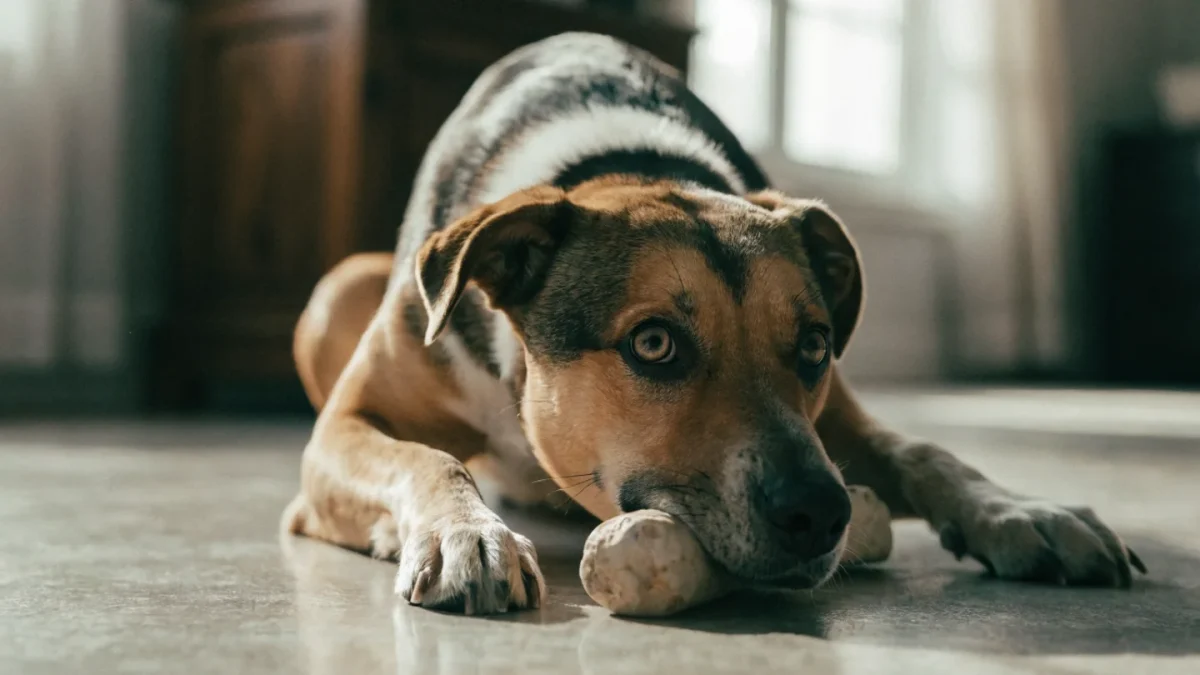
- Body stiffening, head lowering over the item
- Freeze (all movement stops)
- Hard stare
- Low growl
- Snarl or lip curl
- Snap (usually air snap as a final warning)
- Bite
The growl and earlier signals are communication: "I'm uncomfortable with this, please stop." Punishing the growl doesn't remove the discomfort — it removes the communication. The dog may still bite, but now without warning.
The Protocol: Counterconditioning
The goal is teaching the dog that approach to their resources predicts good things happening, not the removal of resources.
Food bowl work:
Start with the dog eating from their bowl. Approach casually and drop a very high-value treat near the bowl. Walk away. Repeat many times across many meals. The dog learns: person approaching the food bowl = amazing thing gets added.
Gradually progress: approach and briefly pause, then drop the treat and leave. Then bend down briefly, drop treat, leave. Over many sessions, work toward being able to stand next to the dog during eating without any stiffness or guarding response.
Object guarding:
Trade up rather than just taking. Offer a very high-value item (treat) in exchange for the item the dog is guarding. "Give" command paired with a treat trade. The dog learns: giving things up produces good things, not just deprivation.
Management alongside training:
Feed guarding dogs separately from other dogs and from children. Remove high-value items (fresh bones, bully sticks) in contexts where guarding is more likely. This isn't giving up — it's reducing risk while the training does its work.
FAQ
My dog started resource guarding suddenly as an adult. What changed?
Sudden onset resource guarding in an adult that previously didn't show it often has a trigger: a new dog in the household, a child reaching for their bowl, a stressful event. Sometimes it correlates with illness or pain (dogs become more resource-protective when feeling vulnerable). A vet check is worthwhile for sudden onset behavioral changes.
My dog guards me from other people and dogs. Is this the same as food/toy guarding?
Possessive aggression toward the owner's body or proximity is related but has some distinct features. The approach is similar — counterconditioning to the approach of others — but the specifics differ because the "resource" (you) is mobile and participates in the dynamic. Trainer consultation is valuable for this type.
How severe does resource guarding have to be before I need professional help?
If the dog has bitten with contact, if the guarding is unpredictable, or if children are in the household, professional guidance should be sought before attempting counterconditioning on your own. For mild guarding (stiffening, hard stare) without a bite history, following the protocol above is reasonable. When in doubt, consult a professional.
Resource guarding managed correctly stays safe and often improves significantly. The key is not letting instinctive punishment responses drive the approach.