
I get calls about multi-dog household fights fairly regularly, and when I ask where the fight happened and what was nearby, the answer is almost always the same: they were near the food bowls, or there was a bone involved, or one dog was on the couch and the other approached.
Resource guarding isn't usually random. It has specific triggers. And in most multi-dog homes, those triggers are predictable and manageable — if you know where to look.
What Dogs Guard
Dogs guard things they perceive as limited and valuable. In a multi-dog home, the common flashpoints are:
Food. The highest-value resource in most dogs' world. Even dogs that don't guard food at home alone can develop guarding behavior when another dog is nearby.
High-value chews and toys. Raw bones, bully sticks, stuffed Kongs, novel toys — anything with higher value than a regular tennis ball. Dogs that share low-value toys without issue often guard high-value chews.
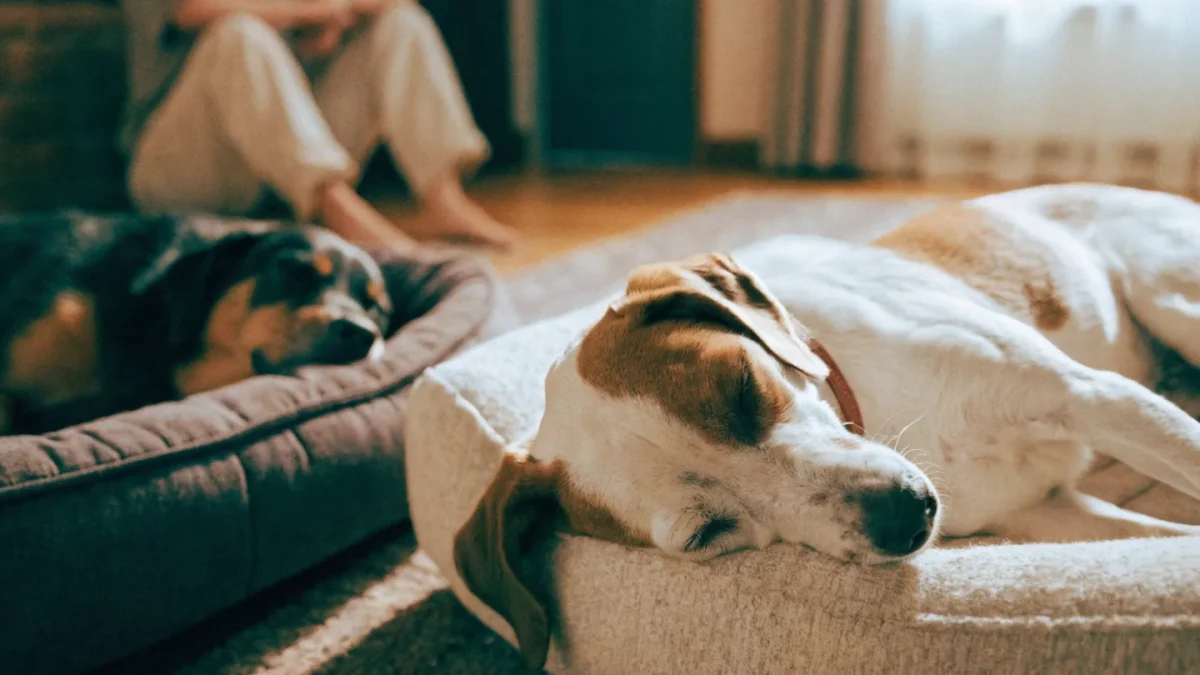
Resting spots. Certain beds, the couch, or spots near the human. Some dogs guard these opportunistically — they don't care until another dog approaches.
Access to you. This one surprises people. Dogs can guard the human — blocking another dog from getting attention, interposing between you and the other dog, or becoming tense when you give affection to the other dog.
Water bowls. Less common, but happens in some households.
Prevention Through Management
The most effective strategy is removing the competition before it becomes conflict. This isn't "letting the dog win" — it's managing the environment so guarding behavior never gets practiced and reinforced.
Separate feeding, every time. Dogs in different rooms, or at minimum, feeding stations far enough apart that each dog eats their own food without awareness of the other's bowl. Pick up bowls immediately when dogs are finished. Food bowls sitting empty on the floor are still resource-relevant to some dogs.
No unsupervised high-value chews. If you give your dogs bully sticks or raw bones, give them in separate spaces — crates, separate rooms — and remove any remaining pieces when done. High-value items left loose when you're not watching are invitations to conflict.
Multiple resources. More beds than dogs, multiple water stations, enough toys to go around. Abundance reduces guarding motivation.
Managed alone time with you. Give each dog individual attention out of sight of the other periodically. This reduces the pressure-cooker quality of always competing for the same person's attention.
Recognizing Early Warning Signs
Fights don't start from nowhere. They build, usually through a sequence that moves from mild to serious. Early signs to watch for:
- Eating faster when another dog approaches
- Stiffening over a chew when another dog is nearby
- Blocking — putting their body between you and the other dog
- Hard stare directed at the other dog around a resource
- Low growl when another dog gets too close
These are not problems yet — they're information. A growl is communication that says "I'm uncomfortable with this." Removing the resource and managing the situation is appropriate; punishing the growl is counterproductive because it removes the warning signal without addressing the underlying tension.
When Management Isn't Enough
If your dogs have had significant fights around resources — not just warning growls but escalated conflict — management reduces risk but doesn't retrain the behavior. At that point, structured desensitization work around resources is warranted, and a consult with a behavior professional is the most efficient path.
The goal of behavior modification in this context is changing the dog's emotional response to the other dog's proximity near resources — turning a dog's presence near the food bowl from a threat into a neutral event. That work is absolutely possible; it takes time and correct technique.
For most multi-dog households, though, solid management prevents the problem from developing in the first place.