

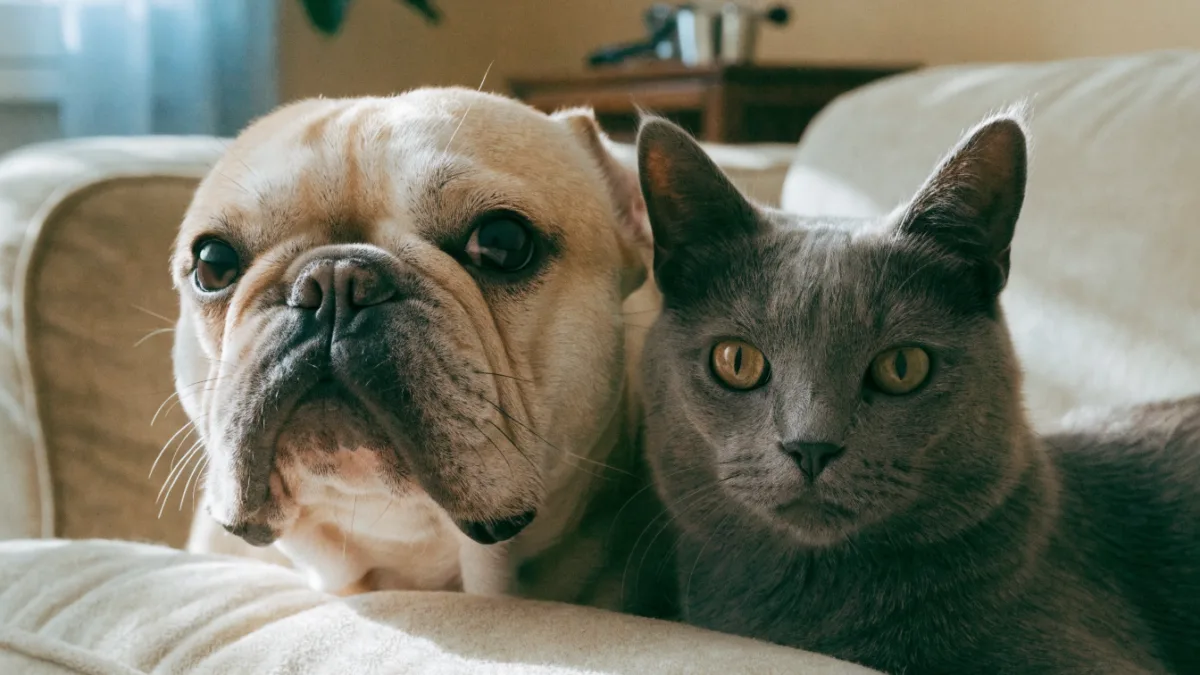
It was 2 a.m. on a Tuesday when Jenna called our emergency line, her voice shaking. “My dog is choking — he’s making this awful honking sound and I think he’s dying.” I could hear seven-year-old Baxter, a brindle French Bulldog, in the background doing exactly what I suspected: rhythmically snorting inward, stretched rigid like a sawhorse, eyes wide. Jenna was hysterical. By the time she finished describing it, Baxter had already stopped. He was probably wondering why his mom was crying and why she was now offering him a treat at 2 a.m.
What Baxter experienced wasn’t choking, and it wasn’t a collapsed trachea. It was a reverse sneeze — one of the most terrifying-to-witness, generally harmless respiratory events a dog can have. Clinics see it constantly, and it generates dozens of frantic phone calls. But here’s where it gets tricky: not every dramatic breathing sound is benign. That same honking, gagging, or wheezing noise could signal something far more serious, especially in cats. So let me walk you through it — how to recognize dog reverse sneezing, understand a feline asthma attack, and know when pet breathing issues actually warrant an immediate veterinary visit.
The Honking Dog: What Reverse Sneezing Actually Is
Technically called paroxysmal respiration, a reverse sneeze is essentially a spasm of the soft palate and nasal passages. During a normal sneeze, your dog pushes air out forcefully to clear irritants. During a reverse sneeze, they do the opposite — they rapidly and violently pull air in through their nose. The result is a sound that’s been described as everything from a goose honk to a choking gag to a bizarre snorting fit. It is deeply unsettling to listen to, especially the first time.
The classic presentation is unmistakable once you’ve seen it. The dog stops abruptly, stands still, extends their neck outward and upward, and their chest heaves with rapid, dramatic inward snorts. Episodes typically last anywhere from a few seconds to a minute. Most dogs act completely normal afterward — sometimes even moments later, as if nothing happened.
Common triggers include allergens like pollen, household dust, strong fragrances, excitement or overstimulation, rapid temperature changes, and pressure on the throat from pulling against a collar. I had a client last spring — a Boston Terrier named Olive — whose reverse sneezing spiked dramatically during peak cedar pollen season. Once we switched her to a harness and added an air purifier in the bedroom where she slept, her episodes dropped from several times a week to maybe once a month.
Why Small and Flat-Faced Breeds Get It More
If you have a Pug, French Bulldog, English Bulldog, Brussels Griffon, or even a small breed like a Chihuahua or Yorkshire Terrier, you’re far more likely to witness reverse sneezing. There’s an anatomical reason for this. Brachycephalic — or flat-faced — breeds have been selectively bred over generations for shortened skulls. That adorable smooshy face comes with a trade-off: their nasal passages are compressed and narrowed, and their soft palates (the fleshy extension of the roof of the mouth) are often too long for the space they occupy. This creates turbulence in the airway, making spasms and irritation far more likely.
This same anatomy underlies what veterinary medicine calls Brachycephalic Obstructive Airway Syndrome (BOAS). In recent years, veterinary colleges worldwide have pushed to educate owners about BOAS because many flat-faced dogs live with chronic low-grade respiratory distress that owners accept as “normal for the breed.” It’s not normal. Surgery to widen narrowed nostrils or trim an elongated soft palate can dramatically improve quality of life, and I’ve referred several patients for these procedures with genuinely life-changing results.
The Wheezing Cat: Understanding Feline Asthma
Now let’s shift to cats, because what looks superficially similar — dramatic respiratory noise — is a completely different medical condition with very different stakes. Feline asthma is a chronic inflammatory disease where the airways constrict in response to an allergic trigger. Think of it like human asthma: the immune system overreacts to an inhaled irritant, the airway walls swell, mucus production increases, and the muscles around the airways tighten. The cat struggles to move air through narrowed tubes.
Veterinary estimates suggest asthma affects roughly 1% to 5% of the general feline population, but I suspect the real number is higher because mild cases go undiagnosed. Cats are masters at hiding discomfort, and many owners mistake the early signs — an occasional dry cough, a slight wheeze after play — for hairballs or normal grooming noise.
A full feline asthma attack looks different from a dog’s reverse sneeze. The cat typically crouches low to the ground with their neck extended horizontally, hunching their shoulders. You may hear wheezing or a soft, high-pitched squeak on exhalation. Some cats develop a persistent dry cough that owners frequently confuse with retching or an attempt to vomit. And here’s the critical distinction: if a cat is breathing through an open mouth, that is a medical emergency. Cats are obligate nose-breathers under normal conditions. Open-mouth breathing indicates significant respiratory distress and warrants immediate veterinary attention — not a “let’s wait and see” approach.
What Triggers Feline Asthma?
The list is long and familiar if you have human allergies in your household. Common triggers include:
- Dust from cat litter (especially fine, scented varieties)
- Household dust mites and mold spores
- Pollen from trees, grasses, and weeds
- Tobacco and marijuana smoke
- Scented candles, diffusers, and cleaning products with strong fragrances
- Particulate matter from wildfire smoke or localized air pollution
That last point has become increasingly relevant. In the last several years, veterinary practices — mine included — have seen a noticeable uptick in respiratory cases during wildfire season. Cats with previously well-managed asthma have presented with severe flare-ups, and cats with no prior history have shown up wheezing for the first time. If you live in an area affected by seasonal smoke or poor air quality, monitoring indoor air matters for your pets just as much as it matters for you.
How to Help During an Episode
This is the question I get asked most: “What do I do when it happens?” The answer depends on whether you’re dealing with a dog or a cat, and there’s some genuine debate even among professionals about how much intervention helps.
For the Reverse-Sneezing Dog
Two camps exist here. One advocates for gentle intervention — briefly covering the dog’s nostrils with your hand for a second or two, which forces them to swallow, and swallowing often breaks the spasm cycle. Others rub the throat gently or softly blow on the dog’s face. The opposing view holds that you should simply let the episode run its course, because intervening can add anxiety to a dog that’s already mildly stressed.
Gentle intervention works well for some dogs and stresses others out. There’s no harm in trying — if covering the nostrils briefly seems to help, do it. If your dog panics when you touch their face during an episode, back off and let it pass. Most episodes resolve on their own within 30 to 60 seconds regardless of what you do.
For the Asthmatic Cat
Cats need a completely different approach. You cannot massage or reassure an asthmatic cat out of an attack — the airway constriction requires medical management. If your cat has a diagnosed asthma condition, your veterinarian will likely prescribe an inhaled corticosteroid delivered through a spacer device designed specifically for cats. These devices — small chambers with a soft mask that fits over the cat’s muzzle — allow the medication to reach the lungs without requiring the cat to coordinate breathing with actuation the way human inhalers do.
This inhaled approach has become the gold standard over the past decade, and it represents a significant improvement. Older protocols relied heavily on oral steroids, which often caused weight gain, increased thirst and urination, and in some cases contributed to diabetes. Inhaled steroids deliver medication directly to the lungs with minimal systemic absorption, dramatically reducing those side effects. But dosage and frequency must be determined by your veterinarian — never adjust or start inhaled medications without a proper diagnosis and prescription.
When to Worry: The Sounds That Aren’t Normal
Here’s where I want to be very direct, because social media has created a real problem. I’ve seen well-meaning pet groups on Facebook where owners post videos of their dogs coughing and dozens of commenters chime in with “oh, that’s just reverse sneezing, it’s fine!” Sometimes it is fine. But sometimes it’s a collapsing trachea, congestive heart failure, a foreign body lodged in the airway, kennel cough, pneumonia, or even lung cancer. Social media cannot differentiate these conditions — and neither can I, sometimes, without an exam and imaging.
As a general baseline, here’s what warrants a veterinary visit:
- Reverse sneezing that increases in frequency or begins happening multiple times daily
- A cough that produces mucus, foam, or blood — reverse sneezing is dry, so any productive cough needs investigation
- A chronic dry “goose-honk” cough, especially in small breeds — this is the classic sign of tracheal collapse, which is highly prevalent in Yorkshire Terriers, Pomeranians, Chihuahuas, and other toy breeds
- Any cat breathing with an open mouth, panting, or showing blue-tinged gums — this is an emergency, not a wait-and-see situation
- Exercise intolerance — if your dog or cat collapses, stumbles, or refuses to move after mild activity
- Respiratory noise during sleep that’s new or worsening, particularly in flat-faced breeds
One case I won’t forget: a nine-year-old Pomeranian named Coco came in after her owner had been told by a friend that her nightly honking was “just reverse sneezing.” It wasn’t. It was a grade-three tracheal collapse, and by the time we saw her, she’d lost significant weight because coughing made eating difficult. We managed her with medication, weight management, and a harness instead of a collar, and she improved — but I think about how much earlier we could have intervened if that first assumption hadn’t delayed the visit.
Trust What You Hear — But Verify With a Professional
Respiratory sounds are your pet’s body telling you something. Sometimes that message is reassuringly mundane: a dog who snorted too hard at a dust bunny and needs a minute to reset. Sometimes it’s urgent: a cat whose airways are closing in real time. The skill isn’t in knowing the difference by yourself — it’s in recognizing when the pattern changes, when the frequency increases, and when the sound itself shifts into something you haven’t heard before.
If you take one thing from this article, let it be this: don’t let social media replace a veterinary exam when it comes to pet breathing issues. Reverse sneezing, tracheal collapse, BOAS, and feline asthma can all sound remarkably similar to an untrained ear. A 15-minute exam, possibly with X-rays, can give you a definitive answer — and either peace of mind or a treatment plan that genuinely changes your pet’s quality of life.
And if you share your life with a flat-faced breed, consider what their breathing is costing them. The ethical conversation around brachycephalic breeding isn’t going away, and for good reason. Supporting breeders who prioritize health over head shape — and being honest about the medical realities those adorable flat faces carry — is one of the most meaningful things we can do for the next generation of dogs. They deserve to breathe as easily as they love.