

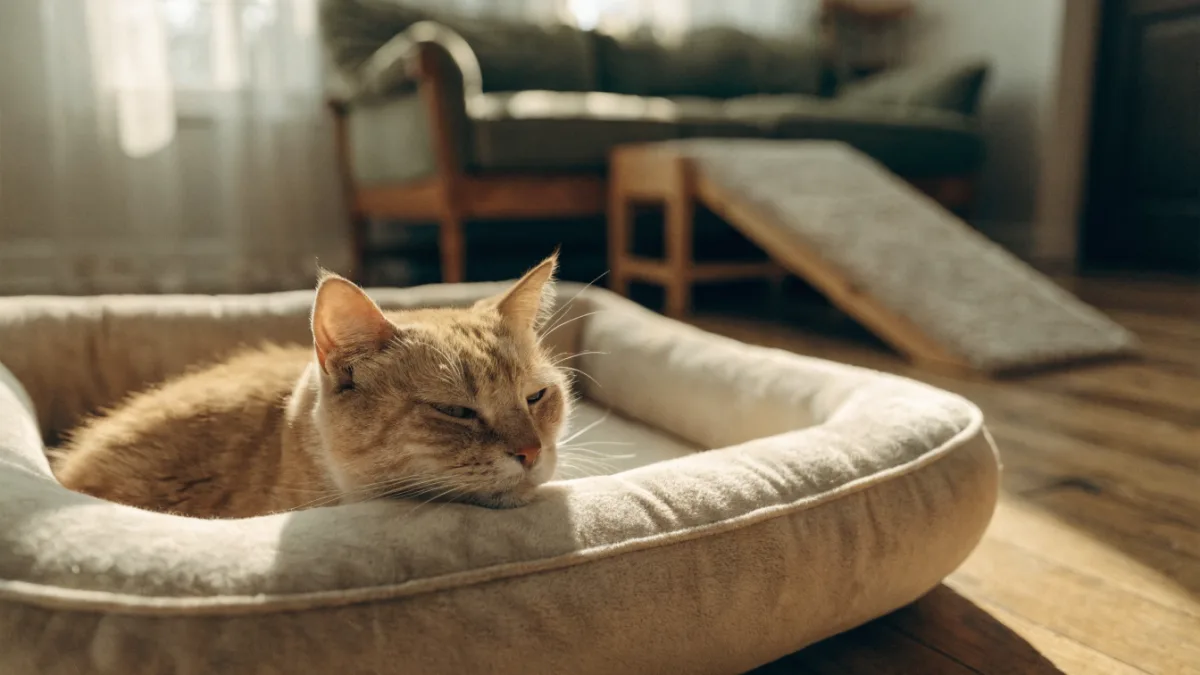
I used to think Barnaby, my 14-year-old tabby, was just getting lazy. He’d sit at the base of his favorite cat tree, stare at the top perch, and just… sigh. Then he started sliding across our hardwood floors like a drunken curling stone. It wasn’t laziness. It was gravity and age teaming up against him.
According to the,[1] cats are officially considered “senior” once they hit 11 to 14 years old, and “geriatric” at 15 and beyond. Because our indoor cats are living longer these days, we’re seeing a lot more of what happens when feline bodies start to slow down. And while I can’t help you train your dog to ignore them (you’ll have to ask Jake about that), I can tell you that adapting your house for an aging feline is the difference between a cat that’s merely surviving and one that’s genuinely thriving. Here is exactly how I modified my home (and my routine) for my old man.
Flooring, Furniture, and the Laws of Gravity
Did you know that around 90% of cats over the age of 12 show radiographic signs of arthritis? I didn’t, until Barnaby started looking at me like I had personally betrayed him every time he slipped on the kitchen tile.
Hardwood, tile, and laminate floors are absolute nightmares for older joints. When a cat slips, it puts painful pressure on their already degrading cartilage, which makes them want to move even less. It’s a vicious, painful cycle. As the team at [2] points out, making their everyday environment accessible is the core of senior feline care.
Giving Them Traction
You don’t need to rip up your floors. Just put down area rugs, non-slip runners, or even cheap yoga mats along their favorite walking paths. When I laid down a runner from Barnaby’s bed to his food bowl, his entire demeanor changed. He went from tip-toeing timidly to trotting.
Bridging the Vertical Gaps
Cats love vertical spaces, but jumping becomes a literal pain. Don’t make them give up their favorite spots. Provide pet stairs, ramps, or just shove a sturdy chair next to the couch to act as a stepping stone. I bought a cheap foam ramp for the bed. Let me tell you: yes, it takes up space and looks a little ridiculous, but seeing him sleep next to my pillow without struggling to get there is 100% worth it.
The Absolute Nightmare of Litter Boxes
No one likes talking about litter boxes, but if you have a senior cat, this is where you’ll likely face your biggest challenges. Older cats often develop arthritis in their hips and knees, making the act of stepping over a high-walled, enclosed litter box absolutely excruciating.
If your cat starts peeing outside the box, on your bathmat, or in the laundry basket, it’s rarely out of spite. They are literally telling you it hurts too much to climb into their bathroom.
- Go low: You need a box with at least one very low side. You can buy a specific low-entry litter box, or you can do what I did and take a sharp utility knife to a cheap plastic storage tub, carefully cutting a low “U” shape in the front. It’s not pretty, but it works beautifully.
- Keep it close: If your house has multiple floors, you must have a litter box on the exact same floor where the cat spends most of their time. Navigating stairs to pee is asking too much of an arthritic cat.
- Keep it clean: Older cats are generally less tolerant of a dirty box. If they have to dig through a mountain of clumps with sore paws, they’ll just find a softer place to go.
Water, Wet Food, and Kidney Survival
Aging kidneys are the downfall of many senior cats. Chronic kidney disease (CKD) affects an estimated 30-40% of cats over 10 years old. Their bodies just aren’t as good at concentrating urine, meaning they lose more water and need to drink more to compensate.
The old myth that cats only need a bowl of dry kibble is completely outdated. For a senior cat, hydration needs to be an all-out assault.
Hydration Hacks
- Wet food is non-negotiable: I don’t care what brand you use, talk to your vet, but incorporate canned or wet food into their diet. It is packed with the moisture their kidneys desperately need.
- Elevate the bowls: Raising food and water dishes just a few inches reduces the strain on their neck and joints. I use a small wooden platform to lift Barnaby’s dishes.
- Spread the water out: Place multiple water dishes around the house. Keep them away from their food (cats have a biological aversion to drinking near where they eat).
- Get a fountain: Moving water encourages them to drink. Even better, there’s a recent boom in smart home tech for pets. You can get sensor-triggered fountains that track exactly how much your cat is drinking on an app. A sudden drop in water intake is often the first indicator of a health decline.
Keeping Them Warm, Safe, and Indoors
Older cats have a much harder time regulating their body temperature. Barnaby used to sleep on the cold bathroom floor; now he burrows under every blanket he can find. Provide heated cat beds or self-warming blankets, and make sure their sleeping areas are far away from cold drafts.
Dealing with Sensory Decline
Another thing they don’t warn you about: vision and hearing often fade as cats age. Barnaby’s hearing is selective at best now (though he somehow still hears the can opener from three rooms away). This sensory decline can lead to increased anxiety, extreme startle responses, and disorientation, especially in low light.
Try not to sneak up on them. When entering a room, speak softly or lightly tap the floorboards so they know you’re coming. If they sleep through your approach, stomp a little heavier so you don’t scare them half to death when you touch them. You should also leave nightlights on in hallways to help them navigate to their litter box or water bowl in the dark.
Indoor vs. Outdoor: A Necessary Boundary
There is an ongoing debate about letting cats roam, but for senior cats, the consensus is firmly in the strictly indoor camp. Their slowed reaction times, declining senses, and weaker immune systems make them highly vulnerable to cars, predators, and diseases outside.
Keeping them indoors isn’t just about protecting them from the outside world—it’s about protecting the outside world from them. Domestic and free-roaming cats are responsible for billions of bird and small mammal deaths annually. By keeping your aging feline safely inside, you’re giving local wildlife a massive break while giving your cat a stress-free, climate-controlled environment to age gracefully.
Modern Medicine and Pain Management
I am absolutely not going to give you veterinary advice, but I will tell you that veterinary medicine has made massive leaps recently. You should be taking your senior cat to the vet twice a year, not just annually. Cats hide pain better than almost any other animal.
Historically, treating chronic pain in cats was a nightmare because of their unique metabolisms. We just didn’t have safe, long-term options.
That has finally changed. If your cat has arthritis, ask your vet about frunevetmab (often known by its brand name, Solensia). It’s a groundbreaking monthly injectable medication approved specifically for osteoarthritis pain in cats. It changed everything for Barnaby. He went from sleeping 22 hours a day to actually playing with a feather wand again.
And if injections aren’t your cat’s vibe, alternative therapies like cold laser therapy—which reduces inflammation and relieves joint pain non-invasively—are becoming standard offerings at modern clinics. Even physical rehabilitation is an option now.
Adapting your home for a senior cat takes a little effort, some spatial sacrifices, and a lot of patience. But watching your cat age comfortably, without pain, in a home designed just for them? That’s the best return on investment you’ll ever get.
Sources
- Cornell Feline Health Center — vet.cornell.edu
- Love.vet — love.vet