

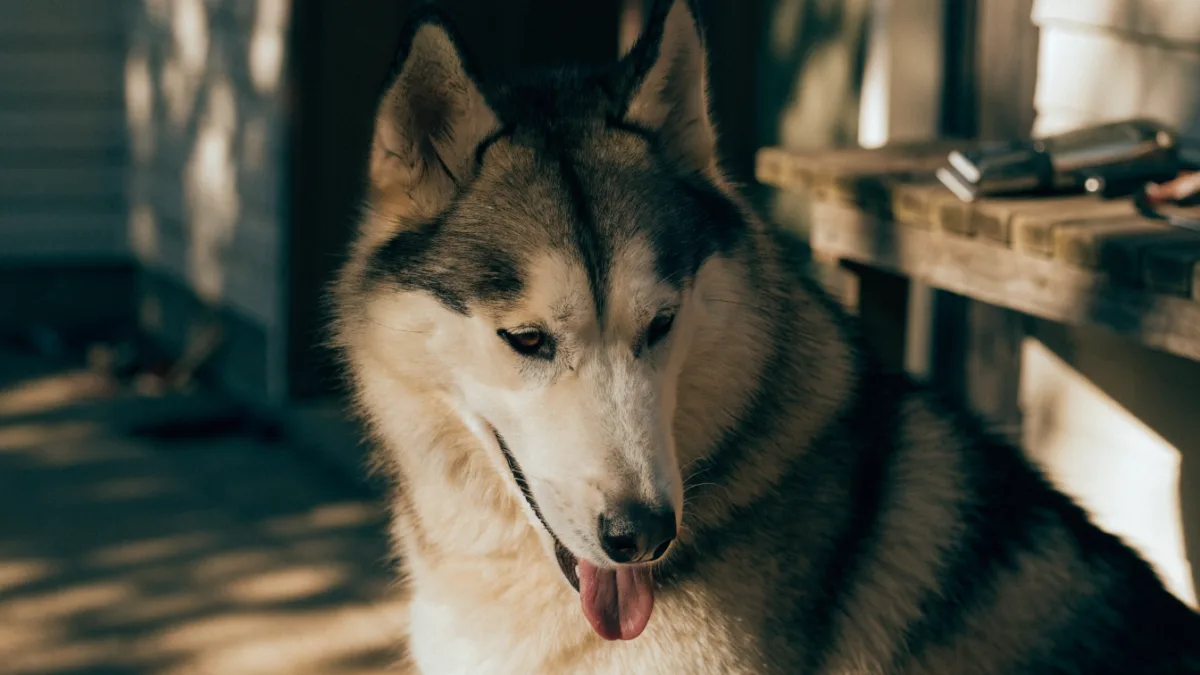
I was at a dog show in 2019 when I saw a woman walking a shaved Siberian Husky. It wasn’t a medical shave down for surgery, and it wasn’t a sanitary trim. The dog was clipped right down to the skin from nose to tail. It was 85 degrees outside. The dog was panting so hard its ribs were heaving, while the intact huskies sitting in the shade nearby were practically napping. When someone asked the owner why she did it, she cheerfully explained that she wanted to keep him cool for the summer.
Every dog groomer and veterinarian reading this just felt their blood pressure spike.
We’ve all seen the “lion cut” trend on the internet. People shave their long-haired cats down to a fuzzy pom-pom on the head, a tuft on the tail, and bare skin everywhere else. Sometimes it’s practical—preventing severe matting or stopping a cat from ingesting too much fur during grooming. It looks ridiculous, but biologically, cats bounce back from it.
But applying that same logic and aesthetic to a double-coated dog isn’t just a bad stylistic choice. It’s a fundamental misunderstanding of canine biology.
Feline Fluff vs. Canine Coats
To understand why shaving a cat is different than shaving a dog, we have to look at how their hair actually grows.
For long-haired cats—like Persians, Maine Coons, or domestic longhairs—a lion cut is a valid grooming tool. Cats are fastidious self-groomers, and sometimes their fur grows faster than they can maintain, leading to painful pelting that pulls on their skin. In those cases, shaving them down is the kindest option. While you are temporarily removing their thermoregulatory layer, the cat’s coat will grow back exactly as it was. As,[1] shaving a cat does not usually cause permanent, structural damage to the hair follicles.
Dogs are not built this way. If you shave a double-coated dog, you are messing with a complex, evolutionary HVAC system.
A double coat consists of two entirely distinct layers. The outer layer is made up of guard hairs. These are coarse, long, and water-resistant. They act as a raincoat and a barrier against the sun. Underneath that is the undercoat, which is a dense, soft, wooly layer that traps air.
In the winter, the undercoat traps the dog’s body heat to keep them warm. In the summer, it traps a layer of air that insulates them against the ambient heat. The guard hairs reflect the sun. This is why a sled dog can sleep in the snow in January and survive the Arizona heat in August. Their coat is a thermal regulator. Shaving it off doesn’t give them relief from the heat—it strips away their natural armor.
The Cooling Myth and the Danger of Bare Skin
I hear the same justification every single summer: “He was so hot, I had to shave him.”
It makes sense to the human brain. We take off our jackets when we are hot, so we assume dogs want their jackets taken off, too. But dogs do not sweat through their skin like we do. They cool themselves primarily through respiratory evaporation—panting—and through their paw pads.
When you shave a double-coated dog, you expose their bare skin to direct sunlight. Instead of cooling them down, you make them hotter. You remove their air-conditioning layer and replace it with a black car sitting in the sun.
Worse, dog skin is highly susceptible to sunburn and skin cancer. Their skin wasn’t meant to see the light of day. It is thin and easily blistered. A dog shaved to the skin in the summer is a dog at risk for solar dermatitis and squamous cell carcinoma.
The Regrowth Disaster
Here is where the permanent damage happens.
The undercoat grows much faster than the guard hairs. When you shave a double-coated dog down to the skin, the undercoat follicles wake up and start producing fuzz immediately. The guard hair follicles, meanwhile, are lazy. They take months to grow.
Because the fast-growing undercoat crowds out the slow-growing guard hairs before they can emerge, the coat grows back uneven, frizzy, and entirely lacking its weather-resistant properties. Instead of a sleek, shedding water, the dog ends up with a porous sponge that holds water, collects dirt, and loses its insulative properties. Groomers call this coat funk.
In severe cases, the follicles go into shock from the trauma of the clippers. This results in post-clipping alopecia. The hair on the dog’s back and sides simply never grows back. I’ve seen Pomeranians and Samoyeds shaved down once for a “summer cut,” only to spend the rest of their lives with patchy, bald backs covered in a thin layer of peach fuzz. It’s heartbreaking, and it’s 100% preventable.
The Groomer’s Dilemma
This situation creates one of the most heated debates in the pet care industry. What does a groomer do when an owner demands a shave down on a Husky?
It’s a massive point of contention, as.[2] Professional groomers are caught between providing customer service and protecting the animal in their care.
There are two camps.
Camp A refuses outright. They view shaving a double coat as a form of harm and will lose the client before they pick up the clippers. I’ll admit, I used to think these groomers were being overly dramatic. Now, knowing the permanent risks to the follicles, I completely understand why they refuse to be the one holding the clippers when the damage is done.
Camp B will perform the shave, but only under severe protest and legal protection. More and more groomers are implementing mandatory liability waivers. If you look at,[3] you will see groomers sharing their “Refusal of Service” and informed consent forms. These waivers explicitly state that the groomer has explained the risks of permanent coat damage, temperature dysregulation, and sunburn, and that the owner assumes all liability.
Social media hasn’t helped. There has been a surge in influencers showing off extreme makeovers and lion cuts on double-coated breeds for views. Animal welfare advocates and veterinarians are constantly playing whack-a-mole, trying to combat these trends with actual biology before the trend causes irreversible harm to the dogs.
How to Actually Manage a Double Coat
If you own a double-coated dog, you don’t need clippers. You need a rake.
The absolute best thing you can do for your dog in the summer is to deshed them.
Using an undercoat rake or a high-velocity dog dryer pulls the dead, loose undercoat out from beneath the guard hairs. Once that packed, wooly dead hair is gone, the coat breathes beautifully. It allows the air to circulate down to the skin, allowing the dog’s natural cooling system to function exactly as nature intended. A properly deshedded, intact double coat is incredibly cool to the touch, even in July.
Beyond proper grooming, management is simple. Walk your dog in the early morning or late evening. Provide access to shade and fresh water at all times. Offer them a cooling mat on the floor, or let them lie on the tile in the bathroom. Limit intense exercise when the humidity is high.
The bottom line is this: we have to stop projecting human aesthetic preferences onto canine biology. The lion cut looks adorable on a cat because cats have different follicular cycles and different coat structures. When we try to apply that feline grooming standard to a working, double-coated dog, we aren’t doing them a favor. We are breaking their natural defenses. Let dogs be dogs. Let their coats do the job they evolved to do.
Sources
- discussed by professional cat groomers — reddit.com
- highlighted in industry discussions — groomertogroomer.com
- industry forums and Facebook groups — facebook.com