

For years the advice was firm: don't comfort a scared dog. You'll reinforce the fear. You'll make it worse. The dog will learn that being scared earns attention.
That advice is based on a misunderstanding of how fear works — and current behavioral science has largely walked it back.
The Operant Conditioning Mistake
The "don't comfort" advice applies operant conditioning logic to an emotional state. Operant conditioning says: behaviors that are reinforced will occur more frequently. If you reinforce a behavior (comforting a dog when they express fear), you'll get more of that behavior.
The problem: fear is not an operant behavior. Fear is an emotional/physiological response driven by the autonomic nervous system. The dog is not choosing to be afraid in order to get comfort. They're afraid, and then you comfort them.
You cannot reinforce an emotional state through operant conditioning the same way you can reinforce a sit or a recall. The dog's fear system doesn't work that way.
What the Evidence Shows
Research on social buffering backs this up. A 2023 study found that dogs confronted with a stressful, unfamiliar situation showed more relaxed behavior and lower cortisol when their owner was present versus a stranger — the attachment figure's presence measurably reduced the physiological stress response.
This is parallel to research on human children: comforting a scared child does not teach them to be more fearful. It reduces the immediate distress and builds secure attachment — which is associated with better coping in novel situations, not worse.
What DOES Matter
The owner's emotional state. A calm, matter-of-fact response communicates that the situation is manageable. An anxious, hovering, frantically reassuring response communicates that there's genuinely something to be worried about. Your tone and body language matter.
Reinforcing behavior, not emotion. If the dog is engaged in a behavior you don't want (destructive, biting, jumping) and you comfort during that, you're reinforcing the behavior. The distinction is between responding to emotional distress (okay) and reinforcing problem behavior that happens to occur when the dog is anxious (not okay).
Not forcing interaction. If the dog wants space rather than contact during a fear event, respect that. Forcing cuddles on a dog that's trying to move away doesn't reduce fear; it adds another stressor.
Practical Takeaway
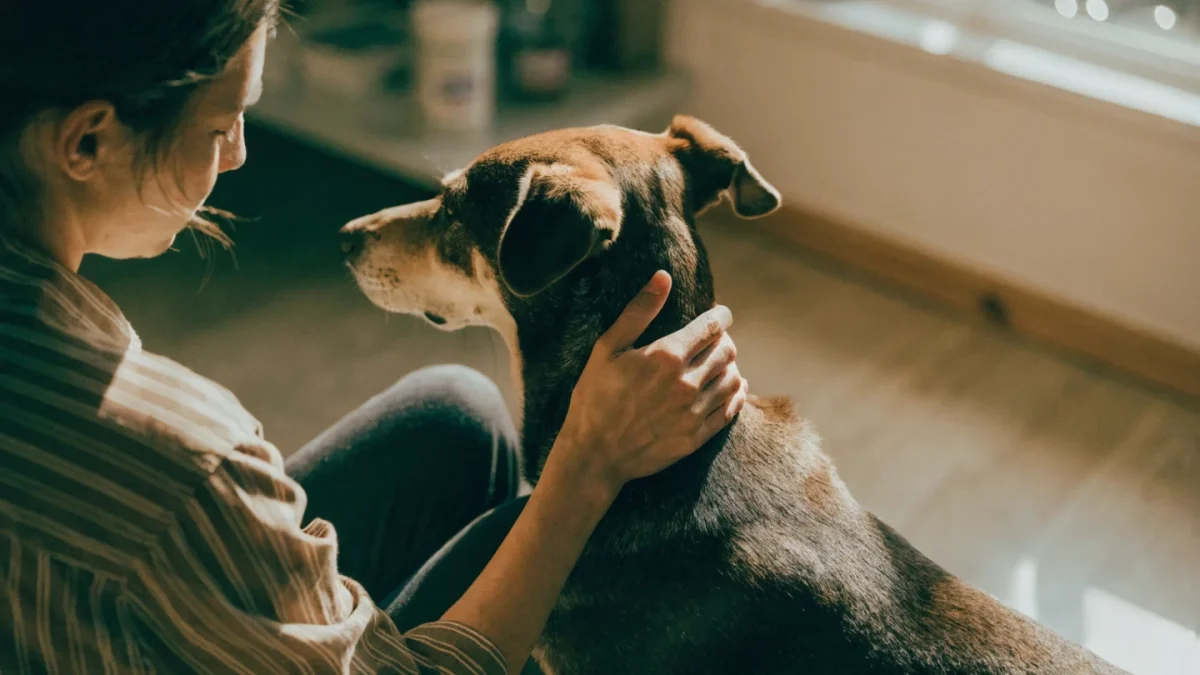
If your dog is scared, you can comfort them. Sit with them. Speak calmly. Offer contact if they want it, don't force it if they don't. Don't panic about it making things worse. (See also: noise phobia in dogs.)
What you're trying to do is provide a calm, secure presence that helps them regulate the emotional state. That's appropriate and helpful.
See creating a safe space for anxious dogs for how to provide that stable, low-demand environment during fear events.