

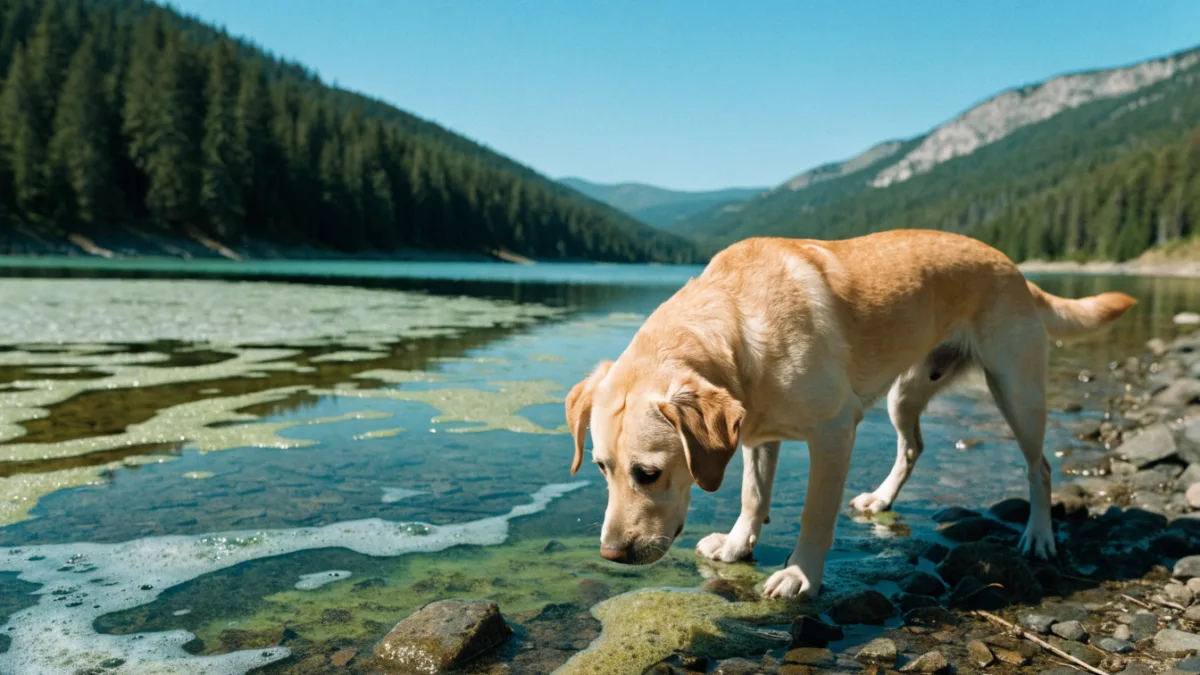
I’ll never forget the night a five-year-old Labrador named Buster came into our clinic. His owners had taken him on a weekend camping trip at a beautiful, seemingly pristine mountain lake. They threw a ball for him in a shallow, marshy cove, and like most Labs, Buster couldn’t resist snapping at the water as he swam. Within an hour of leaving the lake, Buster was staggering, drooling uncontrollably, and seizuring.
His owners were terrified, and rightfully so. They had no idea that the slightly murky water in that cove harbored a deadly threat. We managed to save Buster, but it required days of intensive care. The culprit was a toxin produced by cyanobacteria, commonly known as blue-green algae. For outdoor enthusiasts, campers, and owners of water-loving dogs, understanding this silent lake killer is absolutely vital. It can turn a favorite summer swimming hole into toxic water for pets in a matter of hours.
Not Actually an Algae: Understanding the Threat
First, let’s clear up a common misconception. What we commonly call blue-green algae isn’t actually algae at all. It’s a type of bacteria called cyanobacteria. Cyanobacteria dogs is a topic I discuss frequently with clients because these microscopic organisms are naturally present in many freshwater bodies. Under the right conditions—warm weather, stagnant water, and excess nutrients—they multiply rapidly into what we call “harmful algal blooms.”
Here is the tricky part: while most blooms are completely harmless, a small percentage produce some of the most potent, life-threatening toxins known to veterinary medicine. These toxins fall into two main categories: hepatotoxins, which cause acute liver failure, and neurotoxins, which attack the nervous system. Because you cannot visually distinguish between a harmless green scum and a highly toxic one, veterinary professionals have a strict rule: if you see a bloom, stay out.
The “Looks Fine” Misconception
One of the most controversial challenges we face in public safety is the “it looks fine, so it must be fine” mindset. I see this all the time. A lake might look perfectly clear in the center, leading owners to ignore posted beach closure signs. But wind and water currents are tricky. They can easily concentrate invisible toxic blooms into the exact shallow coves or shorelines where dogs typically launch into the water to fetch sticks.
When a bloom is highly visible, it often looks like spilled green or blue paint on the surface of the water. You might also see what looks like pea soup, thick foam, scum, or floating mats of green slime. If the water looks or smells foul, keep your dog on a short leash and walk away.
When Minutes Matter: Spotting Blue Green Algae Toxicity in Dogs
If a dog ingests water containing toxic cyanobacteria, the onset of symptoms is terrifyingly fast. We are talking about a timeline of minutes to a few hours, not days. The toxins are absorbed rapidly through the gastrointestinal tract and head straight for the liver or the brain.
Blue green algae toxicity in dogs usually presents in one of two ways, depending on the specific toxin released:
- Neurological symptoms: Excessive drooling, muscle tremors, rigidity in the legs, panting, seizures, and disorientation. In severe cases, respiratory failure can occur within minutes.
- Gastrointestinal and liver symptoms: Vomiting, diarrhea (which may be dark and tarry), extreme lethargy, and a swollen, painful abdomen as the liver acutely fails. You might also notice a yellowing of the whites of their eyes or their gums—a condition called jaundice.
Because these toxins act so quickly, prevention is quite literally the only reliable cure. Once the symptoms start, we are in a race against time to support the dog’s organs while their body attempts to clear the poison.
The Great Outdoors: Leashing vs. Off-Leash Freedom
I love taking my own dogs hiking into the backcountry, and I completely understand the joy of letting a dog run free. There is an ongoing, sometimes heated, debate in outdoor recreation communities about off-leash freedom versus veterinary advisories. Many campers feel that remote, wilderness lakes are safe precisely because they are far away from urban pollution.
I used to be more relaxed about letting my own dogs swim in backcountry ponds, but I’ve changed my mind on this over the past five years. The reality is that toxic blooms don’t care how far you are from a city. Until remote freshwater bodies are routinely tested—which is incredibly rare—keeping your dog leashed near any stagnant, untested water is the safest choice.
How to Protect Your Trail Buddy
When you are out camping or hiking, avoiding toxic water for pets requires a proactive approach:
- Carry plenty of fresh water. Always bring enough clean water for both you and your dog, along with a collapsible bowl. If your dog is thirsty on the trail, they will gladly drink from a stagnant puddle or pond if you don’t offer a better alternative.
- Check local advisories. Before you head out, check with local environmental or state agencies. Many are currently rolling out interactive maps and apps that allow hikers to report and check freshwater bodies for confirmed toxic blooms in real-time.
- Obey closure signs. If a beach or trail is closed due to an algal bloom, respect the signage. Even if the water looks clear to you, invisible toxins might be lingering.
Emergency Action: What to Do If Exposed
Despite our best efforts, dogs will be dogs. A dog might dive into a scummy pond before you can yell “Come!” or might furiously lick their fur after a swim before you can stop them. If you suspect your pet has been exposed to a harmful algal bloom, immediate veterinary intervention is critical. Do not wait for symptoms to appear. By the time the vomiting or seizures start, significant internal damage may have already occurred.
While you are preparing to rush to the nearest emergency vet, take these immediate steps:
- Rinse them immediately. Use clean, fresh water from your bottle or a nearby tap to thoroughly rinse your dog’s coat, paws, and face. This prevents them from continuing to lick the bacteria off their fur and ingesting more toxins. Wear gloves if you have them, as the toxins can irritate human skin.
- Note the timeline and symptoms. Write down exactly what time they were in the water and what the water looked like. This information is incredibly helpful for us in the clinic.
- Head straight to the vet. Call ahead so the emergency clinic can prepare for your arrival. There are no safe or effective home remedies for this type of poisoning. They need immediate medical intervention, which may include intravenous fluids, activated charcoal to bind the toxins, anti-seizure medications, and liver-protectants.
Why Our Lakes Are Changing
You might wonder why we seem to be hearing so much about cyanobacteria lately. While cyanobacteria is one of the oldest organisms on Earth—having been around for billions of years—human activity is giving it a massive, unnatural advantage.
These massive, toxic blooms are happening more frequently because of nutrient pollution. When agricultural fertilizers, lawn chemicals, and pet waste wash into our watersheds during rainstorms, they dump excess nitrogen and phosphorus into the water. Combine this nutrient buffet with rising global temperatures, and you have the perfect recipe for a toxic bloom.
Furthermore, the season for these blooms is expanding. Historically, blue-green algae was primarily a late-summer issue. Today, local municipalities, state environmental agencies, and veterinary associations are significantly increasing their public service announcements because toxic blooms are appearing earlier in the spring and lasting later into the fall.
Protecting our pets from this silent killer ultimately means protecting our environment. When we advocate for better agricultural practices, properly manage our lawn fertilizers, and clean up after our pets on the trail, we are doing more than just helping the local wildlife. We are reducing the nutrient loads that feed these toxic bacteria, ensuring that our favorite swimming holes remain safe, clear, and enjoyable for our four-legged adventure partners for generations to come.