

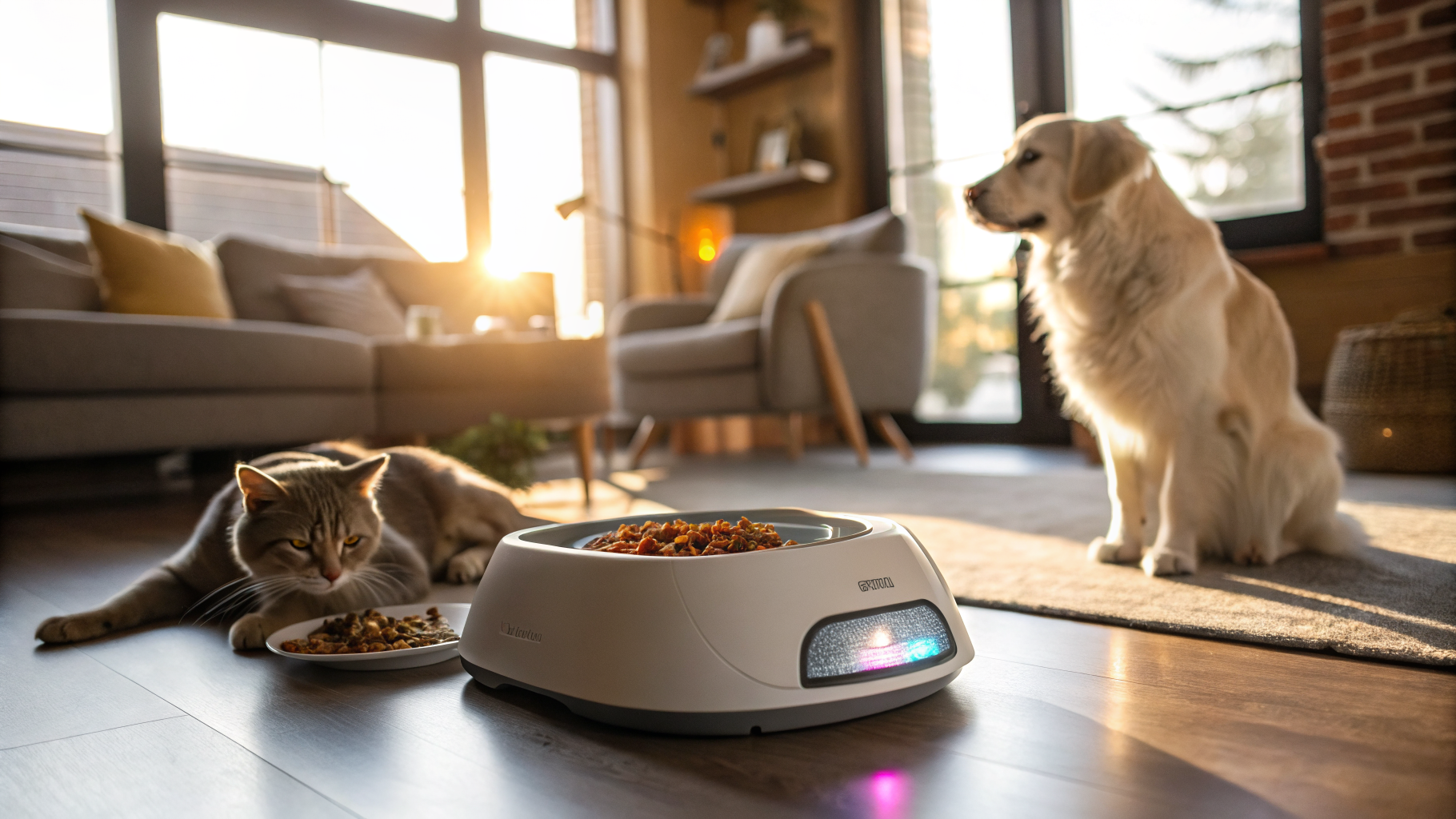
Barnaby, my seventy-pound shepherd mix, possesses the resting innocence of a choir boy and the thievery skills of a seasoned cat burglar. For years, his favorite target was Mochi’s premium cat food. You would hear the distinct crunch of forbidden kibble echoing from the kitchen, walk in, and find Barnaby wearing a guilty grin while Mochi glared daggers at us both from the top of the refrigerator. Managing a household with both dogs and cats often feels less like living with pets and more like running a 24/7 security detail. But after one too many stolen meals and litter box ambushes, I finally caved and upgraded my house into a smart pet home. It changed everything. No more barricading doors. No more wondering who knocked over the trash while I was at the office. But setting it up right requires more than just buying fancy gadgets off a shelf.
The Battle of the Bowls: Smart Feeding and Hydration
In a multi-pet home, food is the primary currency, and if you leave it unguarded, the dog will absolutely eat everything in sight. The dog gets too fat, the cat goes hungry, and you end up with a massive vet bill. This is where automated feeders become non-negotiable.
Forget the basic gravity bins that just dump food when the bowl is empty; those are practically an all-you-can-eat buffet for a determined dog. What you want is a microchip-activated feeder or an RFID-collar feeder for the cat. These devices read your cat’s unique microchip or a sensor on their collar, opening a trapdoor or dispensing a portion of food only for them. Barnaby can sit and stare at Mochi’s bowl all he wants—it simply won’t open for him.
When looking for a feeder, prioritize a few specific features:
- App connectivity and low-food alerts: You want your phone to notify you when the hopper is running low during a busy workday.
- Anti-jam technology: Cheaper automatic feeders are notorious for kibble jams. In a multi-pet home, a jam can quickly lead to hunger-induced food aggression. Look for feeders with robust auger designs.
- Battery backups: If your Wi-Fi drops or the power goes out, you do not want your pets going starving until the grid comes back online.
The same logic applies to water. A smart fountain keeps water filtered and flowing, which encourages cats to drink more (crucial for their urinary health). Just make sure to get one with a heavy, chew-resistant cord, because if there is one thing dogs love more than cat food, it’s chewing on plastic cables.
The Sanctuary Door: Smart Access
If there is one piece of technology that saves my sanity daily, it is the smart pet door. Cats need safe spaces. They need access to their litter boxes and high perches without a canine companion bounding after them. Traditional pet doors fail here because, let’s face it, if a cat can fit through it, a small or medium dog can too.
Installing a microchip-activated smart pet door completely alters the household dynamic. You program the door to recognize your cat’s microchip. When Mochi approaches, the latch unlocks with a satisfying click, and she slips through. When Barnaby nudges it with his nose? Nothing. It stays firmly locked.
I cannot overstate how much this improves feline happiness. Cats treat their independence as a core personality trait, not a flaw. Giving a cat a literal escape hatch from an overly enthusiastic dog is the kindest thing you can do for their mental health.
It also solves the dreaded “litter box raid” problem. You can place the litter box in a spare bedroom or the basement, install the smart door on the interior entryway, and suddenly the dog’s late-night snacking habits are permanently retired.
Remote Parenting: Cameras, AI, and Lasers
Keeping the Peace While You’re Away
The push toward remote pet parenting is driven by one thing: guilt. We hate leaving them. Smart cameras with two-way audio let you check in, but the newest 2024 and 2025 models are taking things to a completely new level with artificial intelligence.
The newest wave of interactive pet cameras includes AI capable of distinguishing between a dog and a cat. Instead of getting a generic “motion detected” notification, you get an alert saying, “The cat is near the feeder,” or “The dog is on the couch.” This is incredibly helpful for monitoring their individual activity levels when you’re not home.
The Entertainment Factor
Beyond surveillance, cameras offer interaction. If your cat is feeling restless while the dog is napping, you can use a camera equipped with a laser pointer or a treat-tosser to give them a burst of high-energy playtime. It prevents feline boredom and keeps the peace without waking the dog. You can see a great overview of how this works in action by checking out,[1] which show just how seamless this remote interaction can be.
However, there is a real debate in the veterinary community about the over-reliance on tech. Some experts warn that cameras can cause owners to become too detached, missing subtle signs of illness or behavioral stress that require in-person observation. A treat-tosser is great, but it doesn’t replace physical presence. And of course, there are privacy concerns. Hackers accessing home Wi-Fi through poorly secured smart pet cameras is a growing issue, so always buy devices from reputable companies that offer regular firmware updates and two-factor authentication.
Ecosystems, Trackers, and Making It All Work
Buying the gear is the easy part. Getting the gear to actually talk to each other? That is where people tear their hair out. Compatibility is everything. Before you invest in smart plugs, cameras, and feeders, you need to decide on a central smart home ecosystem—like Apple HomeKit, Amazon Alexa, or Google Home. The,[2] is a fantastic resource for figuring out which devices play nice together and which ones will leave you juggling five different apps on your phone.
And let’s talk about collars. GPS trackers and smart collars are essential for keeping tabs on your pets. For the dog, it’s about tracking daily exercise and location. For the cat, it’s peace of mind if they ever slip outside. Modern smart collars have moved way beyond GPS. They now track resting respiratory rates, scratching behaviors, and sleeping patterns. This means the collar can alert you to potential health issues before they become severe.
If you want to future-proof your setup, look into the new standard communication protocols emerging in the tech space. As noted in recent market analyses looking toward [3] manufacturers are standardizing protocols (like Matter) so that pet devices seamlessly integrate with mainstream smart home hubs without locking you into one specific brand.
Just remember, tech is a tool, not a substitute for training. When it comes to teaching Barnaby to ignore the cat’s space, I defer entirely to my friend Jake’s professional dog training expertise. The tech buys you supervision and physical boundaries; the training builds the actual behavioral foundation. If your dog has severe resource guarding, a smart feeder won’t magically fix it—talk to a professional trainer. And if your cat stops eating or your dog’s activity levels suddenly drop on their tracker, put the phone down and call your vet.
Final Thoughts on Smart Pet Parenting
Transforming your house into a smart home for dogs and cats isn’t about showing off gadgets. It’s about reducing friction. It’s making sure the cat can eat in peace, the dog can’t eat forbidden litter box treasures, and you can actually focus on your workday without a creeping sense of dread. Start small with a microchip feeder and a dedicated camera, figure out your preferred smart home ecosystem, and build from there.
And while we’re talking about upgrading our homes, it is worth considering the environmental footprint of running a 24/7 tech operation. Leaving devices plugged in constantly draws “vampire energy.” To keep your eco-conscious values intact, pair your pet tech with smart plugs that cut power to idle devices, and sync your smart thermostat to maintain an energy-efficient temperature for your pets while you’re out. By choosing energy-efficient devices and recycling old tech responsibly, we can keep our multi-pet households running smoothly while doing our part to protect the wild spaces that our domesticated companions will never need to survive in. Keep your home smart, keep your pets safe, and keep the planet in mind while you do it.
Sources
- smart home device setups on YouTube — youtube.com
- r/HomeKit community on Reddit — reddit.com
- 2026 smart pet home trends in the UK — smartpetsystems.com