

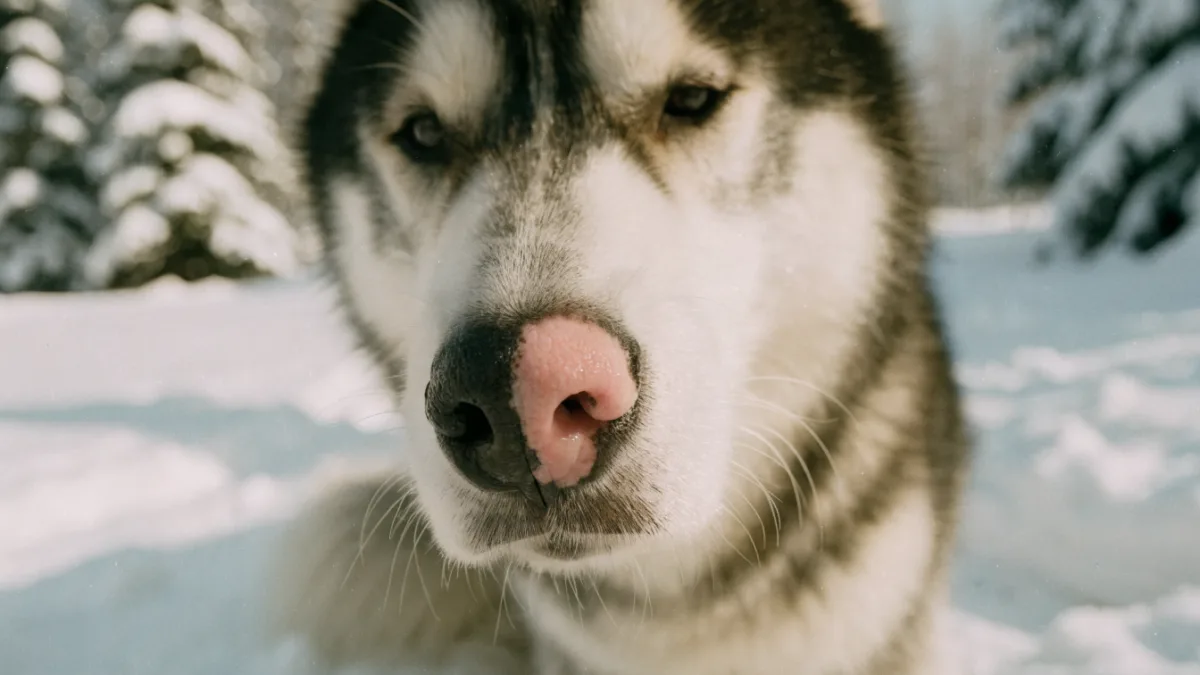
It was a bitterly cold January when Marcus brought his four-year-old black Labrador, Bess, into the clinic. He looked genuinely worried as he knelt beside her on the exam room floor. “Her nose was solid black all summer,” he said, gently lifting her snout. “Now it’s got this pink stripe right down the middle. Is she sick?” Bess, meanwhile, was wagging her tail and trying to lick every hand in reach, clearly feeling fantastic. Her nose had a classic strip of pinkish-brown running through the center of what had been a rich, dark leather. This scenario plays out every single winter. A dog owner notices their pup’s nose has mysteriously lightened, panic sets in, and they rush in convinced something is terribly wrong. Nine times out of ten, it’s something completely harmless called snow nose. It’s one of the most common winter concerns pet parents raise, and once you understand what’s actually happening inside that snout, it makes perfect sense.
What Exactly Is Snow Nose?
Snow nose, sometimes called winter nose or by its clinical name seasonal nasal depigmentation, is a temporary lightening of the pigment on a dog’s nose during the colder, darker months. A nose that was jet black in July might gradually fade to pink, light brown, or even a creamy white by January. Sometimes the change happens in patches or stripes, and sometimes the whole nose lightens fairly evenly.
The condition typically shows up in dogs with naturally dark noses, and it’s particularly common in certain breeds. Golden Retrievers, Labrador Retrievers, Siberian Huskies, and Bernese Mountain Dogs seem to be especially prone to it, though I’ve seen it in plenty of mixed breeds too. I had a sweet Husky mix named Luna last February whose owner was convinced her dog had been burned on a heating vent because her nose went from coal black to almost entirely pink over the course of about six weeks.
Here’s the key thing I always emphasize to worried owners: snow nose is purely cosmetic. It doesn’t cause any pain, itching, discomfort, or health problems whatsoever. Your dog has no idea their nose changed color, and they certainly don’t care.
The Science Behind the Color Shift
To understand why noses fade in winter, you need to understand a little bit about how pigment actually works in your dog’s body. The color of your dog’s nose, skin, and fur comes from a pigment called melanin. You’ve probably heard of melanin before because it’s the exact same pigment that determines skin color in humans and controls whether you burn or tan in the sun.
In dogs, melanin production depends on a specific enzyme called tyrosinase. Think of tyrosinase as the factory worker whose job is to manufacture melanin. Without enough active tyrosinase on the job, melanin production slows down, and pigment fades. Simple enough, right?
Here’s where it gets interesting, and honestly, a little mysterious. Research suggests that tyrosinase is sensitive to temperature and light exposure. During the shorter, darker, colder days of winter, dogs get less exposure to sunlight. This reduced sun exposure appears to trigger a breakdown, or at least a reduction in activity, of the tyrosinase enzyme. Less active tyrosinase means less melanin production, which means a lighter nose.
It’s not entirely unlike what happens to humans in winter. Many of us look a little paler during the darker months because we’re spending less time in the sun. The mechanism is different, but the basic principle of reduced light leading to reduced pigment holds true.
What’s fascinating is that this process usually reverses on its own. As days lengthen, temperatures rise, and sunlight increases in the spring and summer, tyrosinase activity picks back up, melanin production returns to normal, and the nose darkens again. Marcus actually emailed me the following June to share a photo of Bess with her nose back to its original solid black. Nature is remarkably good at course-correcting when given enough time and sunlight.
The Mystery Nobody Has Fully Solved
Now, here’s where I have to be honest with you. While veterinary researchers understand the basic mechanism of snow nose reasonably well, the deeper question of why this happens remains genuinely unanswered. And I find that both humbling and kind of wonderful.
We know that tyrosinase breaks down or becomes less active in cold conditions with reduced sunlight. We know this leads to decreased melanin. What we don’t fully understand is the evolutionary or biological reason behind this specific seasonal enzyme response. Why would a dog’s body reduce pigment production in winter? There’s no obvious survival advantage to having a pinker nose in January.
Some researchers have speculated that it might be a leftover trait from wild canine ancestors, perhaps related to how animals adapt their coats and skin to changing seasons. Others think it might simply be an incidental quirk of how the enzyme functions, with no real evolutionary purpose at all. The truth is, if you ask five different veterinary dermatologists for their theory, you’ll probably get five slightly different answers, all prefaced with phrases like “we believe” or “the likely explanation is.”
I’ve actually changed how I talk about this with clients over the years. Early in my career, I used to present the tyrosinase explanation as if it were settled science. As research has evolved and I’ve read more deeply into the pigmentation literature, I’ve come to appreciate how much we still don’t know. I think it’s important to be transparent about that rather than pretending veterinary medicine has all the answers.
Snow Nose vs. Aging: Knowing the Difference
One of the most common sources of confusion I encounter is pet owners trying to figure out whether their dog’s nose is lightening due to winter weather or simply due to getting older. This came up recently with a Reddit thread where someone shared photos of their rescue dog’s nose going from black to pinkish-brown and received dozens of conflicting opinions in the comments. Some said snow nose, others said permanent age-related change, and a few worried souls suggested autoimmune conditions.
Let me clear this up. There are a few key differences that can help you distinguish between temporary snow nose and permanent changes:
Temporary Snow Nose
- Tends to appear during fall or winter and partially or fully reverses in spring and summer
- Often shows up as a stripe or patch rather than uniform lightening
- The texture of the nose remains smooth and normal, just with lighter color
- Can recur year after year in the same dog
Permanent Age-Related Changes
- Typically begins around the muzzle area and may spread gradually over months or years
- Does not reverse with the seasons
- Often appears in senior dogs, usually over age seven or eight
- Can be accompanied by other signs of aging like graying fur around the face
There are also medical conditions that can cause nose color changes, including autoimmune disorders like discoid lupus erythematosus, certain thyroid conditions, and contact allergies from plastic food bowls. The distinguishing feature of these conditions is that they usually come with other symptoms like crusting, scabbing, sores, swelling, or visible irritation of the nasal tissue. Snow nose never causes these issues. The nose looks perfectly healthy, just lighter in color.
When You Should Actually Come See Me
If your dog’s nose simply changes color with no other symptoms, and the change aligns with the seasons, you almost certainly have nothing to worry about. However, I always tell owners to bring their dog in if they notice any of the following:
- The nose is crusting, flaking, scabbing, or developing sores
- The color change is accompanied by swelling or redness around the nasal area
- Your dog is pawing at their nose, rubbing it against furniture, or showing signs of irritation
- The change happens suddenly and dramatically outside of the winter season
- You notice changes to the lips, eyelids, or other pigmented areas of skin at the same time
Any of these could indicate something beyond simple snow nose that deserves a proper evaluation. I’d much rather have you come in and have me tell you it’s nothing than have you sit at home worrying or, worse, miss something that actually needs treatment.
As for preventing or reversing snow nose, I know some owners try supplements, special foods, or increased sun exposure to keep their dog’s nose dark through the winter. I understand the impulse, and I’m not dismissive of the desire to help. However, there’s no strong evidence that any supplement or dietary change reliably prevents snow nose. The most honest answer is that this is a natural, harmless variation, and the best thing you can do is accept it as part of your dog’s unique seasonal rhythm.
Snow nose is a reminder that our dogs’ bodies are constantly responding to their environment in ways we’re still working to fully understand. That slight pink tinge on your Labrador’s snout in February isn’t a defect or a disease. It’s a tiny window into the complex, fascinating biology happening just beneath the surface of the animals we love. And honestly, I think there’s something beautiful about a dog whose appearance shifts gently with the seasons, marking the passage of time right alongside us. So next time you notice your pup’s nose looking a little paler on a cold January morning, give them a scratch behind the ears and remember that nature knows exactly what it’s doing, even when the rest of us are still figuring it out.