

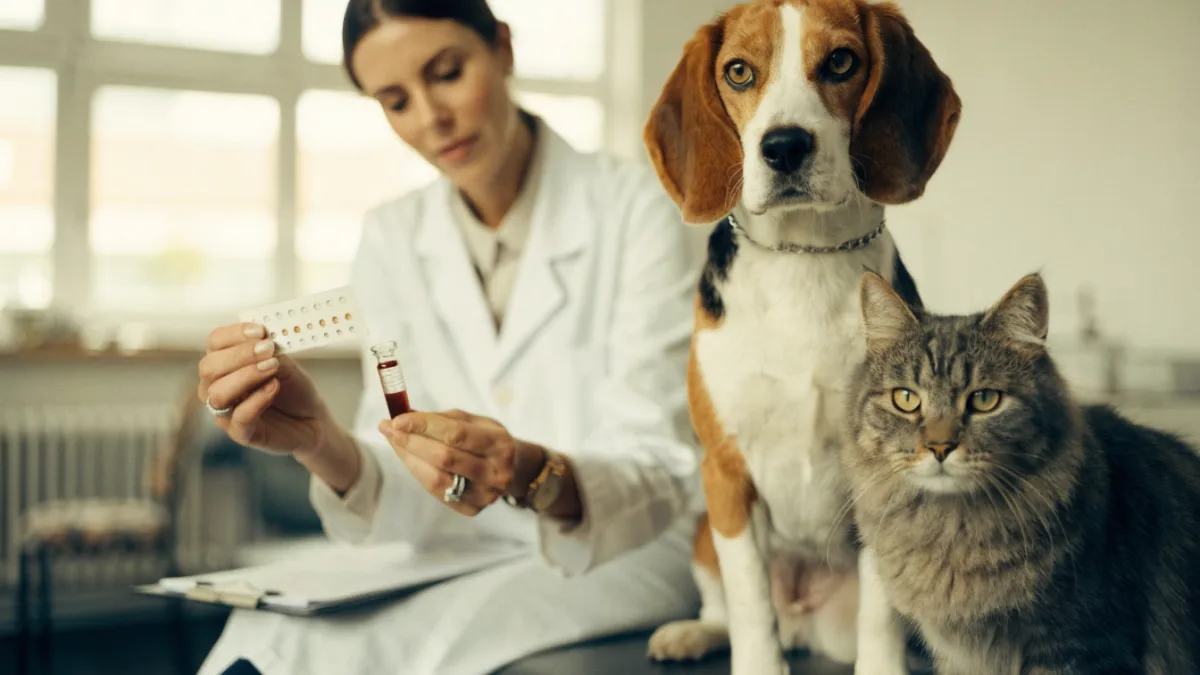
Picture Marigold, a seven-year-old Golden Retriever, in for her annual visit last spring. Her owner Lisa pulls the vet aside before the exam is even finished. “I keep reading that we’re over-vaccinating our pets,” she whispers. “Marigold had a reaction last time — she was lethargic for three days. Is there another option?” Lisa isn’t alone in her concern. Some version of this question comes up nearly every week. Pet owners are more educated than ever, and many are questioning whether automatic annual or triennial boosters are truly necessary for every animal. The answer is a qualified yes — and the tool that helps navigate that conversation is called a titer test.
What Exactly Is a Titer Test?
A titer test is a straightforward blood test that measures the level of specific antibodies circulating in your pet’s bloodstream. Antibodies are the proteins your immune system produces to recognize and neutralize invaders like viruses and bacteria. When we run a titer, we’re essentially asking: does your dog or cat still have enough immune “memory” from their previous vaccinations to fight off a disease if they encounter it tomorrow?
For dogs, we most commonly test for antibodies against parvovirus, distemper, and adenovirus — the three core diseases that every puppy series covers. For cats, the focus is typically on panleukopenia, herpesvirus, and calicivirus. Rabies titers exist as well, though they’re a different conversation, which I’ll get to shortly.
The procedure itself is simple. We draw a small blood sample, send it to the laboratory, and within a few days have a result that tells us whether your pet’s antibody levels fall into a protective range. If they do, we can confidently skip that year’s booster. If they don’t, we know vaccination is medically necessary.
Duration of Immunity: Longer Than We Once Thought
One of the most important findings in veterinary immunology over the past two decades is that [1] is significantly longer than manufacturers historically claimed. Studies have shown that many dogs and cats maintain protective antibody titers for five, seven, even ten or more years after their initial puppy or kitten series and first booster.
This shouldn’t have surprised us. The human medical community has long understood that vaccines like measles or polio provide decades of protection. Our companion animals’ immune systems work the same way. What changed is that researchers finally started asking the question — and the answer has shifted how many of us practice.
The Over-Vaccination Debate: Where I’ve Changed My Mind
I’ll be honest with you. Early in my career, I followed the standard vaccination protocols without much questioning. Annual boosters for everything — that’s what I was taught, and for a while, that’s what most clinics did. But as the evidence accumulated, I started paying attention to what the [2] was saying. Their vaccination guidelines, which are regularly updated and reflect the best available science, began drawing a clear distinction between core vaccines that provide long-lasting immunity and non-core vaccines that may need more frequent administration based on lifestyle and risk.
I’ve genuinely changed my approach. Where I used to automatically reach for the syringe at every annual visit, I now have an open conversation with pet owners about what their animal actually needs. Titer testing has become a central part of that conversation.
The Rare Patient Who Actually Needs Sooner Protection
Here’s what I find genuinely valuable about titer testing beyond avoiding unnecessary vaccines: it identifies the exception. Most pets maintain robust immunity for years. But I’ve had patients — like Biscuit, a four-year-old Boston Terrier I saw last fall — whose titers came back surprisingly low despite a complete puppy series. His owner had done everything right, followed the schedule to the letter, and yet Biscuit’s immune system simply hadn’t mounted a durable response to distemper.
Without titer testing, we would have assumed he was protected. He would have been another dog walking around with a false sense of security. Instead, we boosted him that day, retested a month later, and confirmed his immunity was now solid. That’s personalized medicine in action.
What Titer Testing Cannot Do
This is where I need to be careful, because there’s a myth circulating in some pet communities that titer testing can completely replace vaccination. The WSAVA has been quite clear on this point, and I agree with them entirely. Titer testing is a tool for evaluating immunity — it is not a replacement for vaccination itself.
If a titer comes back low or non-protective, your pet needs to be vaccinated. There’s no herbal supplement, no dietary change, no homeopathic remedy that will generate protective antibodies where none exist. I’m not dismissive of people who explore holistic options — I understand the impulse, especially when you’ve watched your pet have an adverse reaction. But antibody production requires immune system stimulation, and vaccines remain the safest, most reliable way to provide that stimulation for the diseases we worry about most.
“Titer testing is not an alternative to vaccination — it is a guide to whether vaccination is needed at a specific point in time.”
The False Negative Problem
One limitation worth understanding is that titer tests can occasionally produce false negatives. As noted in scientific literature, including work by researchers like Horzinek, a false negative means the test indicates your pet has no immunity when, in fact, protective antibodies are present. The consequence is straightforward: your pet receives a vaccine they didn’t actually need.
This isn’t a health emergency by any means — an extra vaccine in an already-immune animal is generally well-tolerated. But it does mean titer testing isn’t perfect. The good news is that false negatives are relatively uncommon with modern testing methods, and the alternative — vaccinating every animal on a fixed schedule regardless of actual immunity status — guarantees far more unnecessary vaccinations than occasional false results ever will.
Practical Considerations: Cost, Access, and the Rabies Exception
If you’re wondering why every veterinarian doesn’t offer titer testing as a matter of routine, there are practical reasons. Titer tests cost more than vaccines — sometimes significantly more, depending on the laboratory and how many diseases you’re testing for. A vaccine might cost thirty or forty dollars, while a full titer panel can run several times that amount. For some pet owners, that price difference is meaningful, and I respect that.
Accessibility is improving, though. [3] as a standard option rather than something owners have to specifically request. In-hospital test kits that provide results in under thirty minutes have also made the process faster and more convenient, reducing the wait time that used to make titers impractical for busy households.
The Rabies Complication
Rabies deserves special mention because it operates under different rules entirely. In most jurisdictions, rabies vaccination is mandated by law for dogs and often for cats as well. These legal requirements specify vaccination at particular intervals — typically one or three years depending on the vaccine used — and local authorities generally do not accept titer results as a substitute.
This frustrates some pet owners, and I understand the frustration. Rabies titers do correlate well with protection, and research supports long duration of immunity. But public health officials are understandably cautious because rabies is almost universally fatal and poses direct risk to humans. The legal landscape is slowly evolving in some regions, but for now, plan on following your local rabies vaccination requirements regardless of titer results.
Boarding facilities, groomers, and doggy daycares present a similar challenge. Many require proof of current vaccinations and will not accept titer results in their place. If you use these services, check their policies before deciding to skip a booster based on titer testing.
Making Titer Testing Part of Your Pet’s Wellness Plan
So how do we use this tool wisely? Here’s what the evidence supports:
- Start with a complete puppy or kitten series. Titer testing only makes sense after your pet has received their initial core vaccinations and first annual booster. We’re checking whether immunity persists — we can’t check for immunity that was never established.
- Consider titer testing before subsequent boosters. For adult dogs and cats with completed initial series, a titer before the next scheduled booster tells us whether that booster is actually needed.
- Discuss non-core vaccines separately. Vaccines for Lyme disease, leptospirosis, Bordetella, and feline leukemia protect against organisms that may require different strategies. These aren’t one-size-fits-all — they depend on your pet’s lifestyle, geography, and exposure risk. Talk through these decisions with your veterinarian rather than applying a blanket approach.
- Keep rabies vaccinations current as required by law. Until legal frameworks change, compliance protects both your pet and your community.
- Work with a veterinarian who respects your priorities. If your current clinic won’t discuss titer testing or dismisses your concerns about over-vaccination, it may be time to find one who will partner with you on these decisions.
The Bigger Picture
The shift toward titer testing reflects something broader happening in veterinary medicine — a move away from one-size-fits-all protocols toward individualized care. We’re recognizing that a Chihuahua living in a city apartment and a Labrador roaming a rural farm may have very different risk profiles, and their vaccination plans should reflect that reality.
For me, the patients who come to mind are the seniors — the twelve-year-old cat with early kidney disease, the arthritic Greyhound whose immune system isn’t what it was at age two. These animals benefit enormously from a thoughtful, evidence-based approach that avoids stressing their bodies with unnecessary vaccines while ensuring they remain protected against genuinely dangerous diseases. Titer testing lets me practice that kind of medicine with confidence.
I think Lisa said it best when she called with Marigold’s results: “So she’s actually still protected? I don’t need to put her through that again?” That relief in her voice — that’s what this conversation is really about. Not anti-vaccine sentiment or internet-driven fear, but informed pet owners making thoughtful decisions alongside veterinarians who listen. If that’s where we’re heading as a profession, I’m genuinely encouraged by the direction. The goal has never been to vaccinate less for its own sake — it’s to vaccinate well, protecting each animal with precision rather than habit.
Sources
- duration of immunity for core vaccines — pmc.ncbi.nlm.nih.gov
- World Small Animal Veterinary Association (WSAVA) — ovchsc.ca
- More clinics are offering titer testing — doctordym.com