

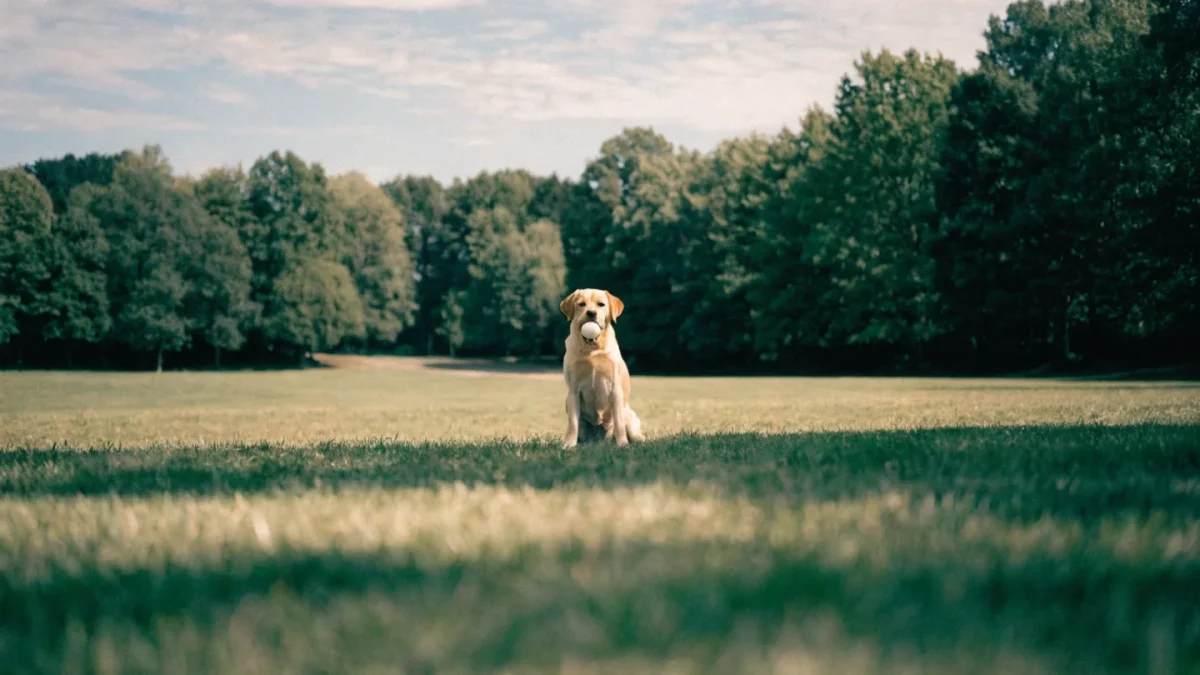
Retrievers are often described as the easiest dogs to train, and in some ways they are. High food drive, human focus, willingness to cooperate, generally non-confrontational — these traits make the basics come quickly.
But I've also seen plenty of "easy" retrievers that were unmanageable at 18 months because their owners stopped training after "sit" and "down." The same biddability that makes early training smooth can make handlers complacent. And an under-trained retriever at full size and full energy is a lot of dog.
What Retrievers Are Actually Like
Labrador Retrievers, Golden Retrievers, Flat-Coated Retrievers, Chesapeake Bay Retrievers, and similar retriever-type dogs share:
Intense food motivation: Most retrievers will work for food in almost any context. This is a training gift. Use it.
Retrieve drive: The desire to carry, fetch, and bring back objects is deeply bred. This instinct can be harnessed as a primary reward (a retrieve game as the reinforcer) and as a basis for sports and complex behaviors.
Social enthusiasm: Most retrievers like everyone. Children, strangers, other dogs — everyone is potentially a friend. This is lovely until the dog is leaping on guests or dragging you toward every person on the sidewalk.
Oral fixation: The breed was developed to hold birds gently in their mouths. In domestic dogs, this often manifests as mouthing, carrying household items, and the tendency to greet people with a sock or toy in their mouth. Not aggression — mouth drive.
High energy in adolescence: Retriever adolescence (roughly 7-18 months) is famously difficult. High energy, selective hearing, and social distraction peak together in a window that surprises many first-time owners.
Training Advantages to Exploit
Use the retrieve as a reward. A ball throw or tug game is a legitimate training reward for most retrievers — often higher value than food in distracting environments. A dog that has a reliable retrieve game available will work harder for it than for kibble. Building a reliable retrieve covers the mechanics.
Food drive makes early training smooth. Any basic behavior can be lured, clicked, and rewarded in a single session with most retrievers. Take advantage of this early. Build a large behavioral vocabulary while the dog is in their compliant early adolescence.
Human focus: Retrievers generally keep an eye on their handler even in distracting environments. This makes eye contact training, recall, and heeling easier than with more independent breeds. Build on this natural tendency early — make sustained attention to you deeply rewarding.
The Challenges
Social distraction: The dog that loves everyone is the dog that can't focus in a crowd. Train specifically in social environments — gradually building focus around other people and dogs, rewarding orientation to you rather than toward the distraction.
Mouthing: Adult mouthing needs addressing directly rather than hoping the dog will outgrow it. Fixing mouthing in adult dogs involves teaching an incompatible behavior (holding a toy) and consistently responding to all mouthing with complete interaction cessation.
Recall in exciting environments: The recall that works at home may not work at the dog park when three Labs are racing around. Build your recall specifically for these high-distraction scenarios — long-line practice, high-value rewards, progressive exposure to distractions.
Adolescence: 7-18 months in a retriever is a genuine management challenge. Training may seem to regress. Keep sessions consistent, reduce off-leash freedom during the worst of the adolescent period, and understand that this phase passes. Consistency through adolescence pays off at 2 years when the dog's brain matures.
Sports and Enrichment for Retrievers
Retrievers were bred to work with hunters. The drive is still there, and it creates excellent candidates for:
- Dock diving (especially Labs)
- Hunt tests and field trials
- Flyball (retrieve-based team sport)
- Nose work (strong scenting ability)
- Rally obedience and formal obedience competition
- Therapy dog work (social nature is a perfect fit)
A retriever with an active enrichment and sport program is a dramatically easier dog to live with. The drive needs somewhere to go — channel it deliberately and the "too much energy" problem shrinks considerably.