
"Stubborn" is the word people use when their training isn't working and they've decided it's the dog's fault.
I don't blame anyone for using it. When your dog is looking directly at you and refusing to sit, it's very easy to attribute that to character rather than to training. But in fifteen years of training, I've never met a dog that was fundamentally unwilling to work with a human. I've met a lot of humans whose training wasn't meeting their dog where they were.
Here's what "stubborn" usually actually means.
Reason 1: The Reward Isn't Worth It
The most common reason dogs blow off cues: the reward you're offering isn't worth what you're asking for.
Dogs constantly make reward-opportunity cost calculations. "Sit" in your kitchen for a piece of kibble when they're hungry? Easy yes. "Sit" in the dog park next to three other dogs for a piece of kibble when they just ate? The math doesn't work.
Adjust your reward value to match the difficulty. Kibble for easy behaviors in low distraction. Real food — cooked chicken, cheese — for hard environments. Your highest value treat for the hardest situations.
Reason 2: The Training Hasn't Been Built There
A dog that sits reliably in your kitchen and "refuses" at the park hasn't forgotten how to sit. They haven't been trained to sit at the park.
Training doesn't generalize automatically. Each new environment is a new lesson. If you've only trained at home and then expect park-level behavior, you're asking for something that hasn't been built.
The fix isn't different training for stubborn dogs. It's proper proofing — systematic practice in progressively harder environments.
Reason 3: You're Asking Above Their Current Level
If you're asking for something your dog can only do 50% of the time in easy conditions, you're not ready to try it in difficult conditions. The behavior isn't solid enough yet.
Build the behavior to 90% reliability in easy conditions before raising the difficulty. A wobbly sit in the kitchen is not a sit that will hold at the park.
Reason 4: Motivation Mismatch
Some dogs are deeply food-motivated. Others are more motivated by play, tug, or social interaction. If you're using food and it's not moving the needle, try switching to play or a game as the reward.
Similarly: is your dog actually in a state to work? A dog that's just had a 45-minute play session may not have the focus for training. A dog that's anxious or stressed about something else in the environment is not going to perform well no matter how good your treats are.
Breed Considerations
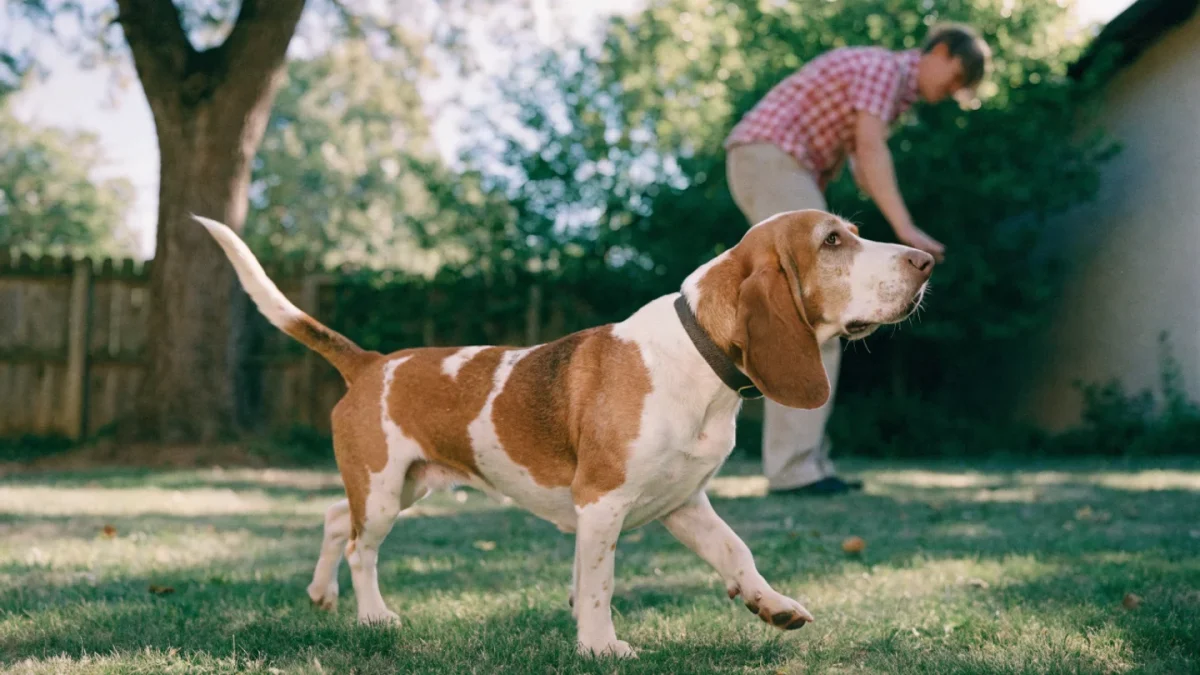
Some breeds were genuinely not selected for handler compliance. Hounds, terriers, sighthounds, and independent working breeds often require different approaches — more creativity with motivation, shorter sessions, clearer value propositions. (See also: why consistency matters more than technique.)
This isn't stubbornness. It's genetics. They have jobs they were bred to do, and those jobs don't involve checking in with humans constantly. Work with their nature rather than against it. (See also: breed-specific dog training.)
The Practical Fix
When a dog is "being stubborn":
- Lower the criteria. Ask for something easier.
- Move to a less distracting environment.
- Increase your reward value significantly.
- Get a few clean successes.
- Build back up gradually.
That's it. Not a special stubborn-dog protocol. Just better-calibrated training.
The dog in your life who you'd call stubborn: identify one specific cue they're failing on. Now ask: am I asking for this at the right difficulty level, with the right reward, in an environment they've been trained in? That's your diagnosis.