

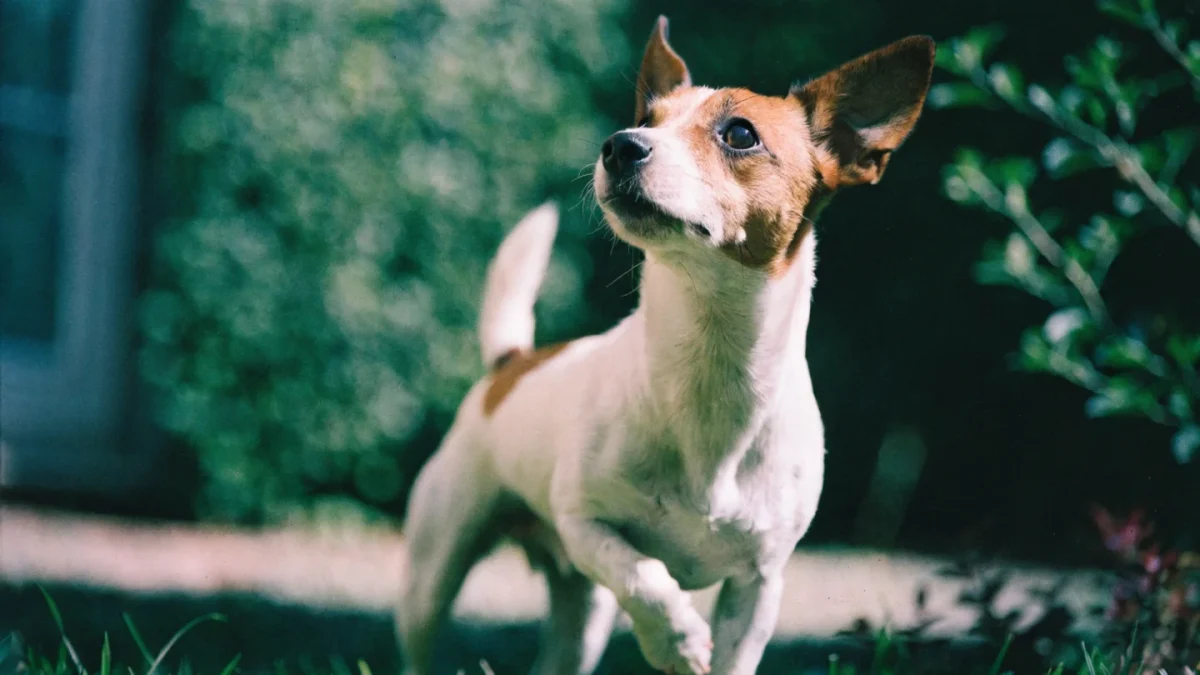
There's a joke among terrier people: the difference between a terrier and a Golden Retriever is that the Golden wants to know what would make you happy, and the terrier wants to know what's in it for them.
It's not just a joke. It's a description of selection history. Retrievers were bred to work with humans. Terriers were bred to work independently — go underground, find the quarry, deal with it, come back. Human direction was minimal and irrelevant once they were in the hole.
That history is alive in every Jack Russell, Cairn, Scottish Terrier, Airedale, and Bull Terrier you meet. Understanding it doesn't make training easier exactly — but it makes your frustration make a lot more sense.
The Terrier Temperament
Terrier breeds share a cluster of traits that come from their working function:
High prey drive: Movement triggers chase-and-grab responses that are fast, intense, and hard to interrupt. Small animals, birds, squirrels — many terriers have full tunnel vision within seconds.
Independent problem-solving: They make decisions without checking in with you. This was the job. They didn't wait for the handler to decide what to do with the rat.
Persistence: Terriers keep going. They don't quit. The same quality that makes a working terrier dig for forty minutes to reach quarry makes them difficult to redirect mid-pursuit.
Gameness: Willingness to engage challenging situations that would deter other dogs. Not aggression per se, but a lack of conflict-avoidance that other breeds have more of.
Sensitivity to correction: Terriers often push back on harsh corrections or respond by disengaging entirely. They're not submissive by temperament. Correction-heavy training tends not to work well.
Why "Stubborn" Is the Wrong Word
When a terrier ignores a recall cue because they're following a scent trail, they're not defying you. They're doing exactly what they were built to do: pursue quarry independently.
Calling it stubbornness implies refusal based on a conscious choice to disobey. What's actually happening is that the terrier's prey drive is simply louder in that moment than the human's cue.
The practical implication: training a stubborn dog isn't the solution. Making yourself and your cues more salient than the competing drive is the solution.
What Actually Works
Make yourself interesting. Terriers need to find the handler genuinely rewarding. Play, high-value food, fast interaction, the presentation of novel things — these compete better with environmental distractions than calm treats and gentle praise.
Short, fast, interesting sessions. Terriers have strong opinions and short attention spans in formal training contexts. Five minutes of rapid-fire, varied training is worth more than twenty minutes of drilling one behavior. They need novelty.
High-value rewards, not kibble. Competing with a scent trail or a squirrel requires something worth competing. Real meat, genuine play, toys with good tug — upgrade the reward for distraction situations.
Recall with high prey drive requires specific protocols: long-line practice, high-rate reinforcement, and realistic acceptance that off-leash recall in unfenced environments may never be reliable enough for safety.
Management matters. Secure fencing. Long-line for open-area recall practice. Leash in areas with wildlife. This isn't a training failure — it's responsible terrier ownership.
Training Areas Where Terriers Excel
For all the talk of difficulty, terriers are fast learners when motivated. Trick training suits them — they pick up physical behaviors quickly, find problem-solving engaging, and stay interested in novel tasks longer than some breeds.
Barn hunt and earthdog sports (finding and alerting on quarry scent) are purpose-built for terriers. Many terriers who've never worked a day in their life show instant, intense engagement the first time they smell a quarry scent. The instinct is that strong.
Nose work is another excellent channel — it gives the prey drive an outlet (sniffing) that can be directed and rewarded.
What Won't Work
Punishment-based training with terriers tends to backfire. They resist coercion, become avoidant, or escalate. If correction is delivered and the terrier finds it aversive, the result is often a dog that disengages from training sessions entirely, or one that learns to redirect the frustration into problematic behavior.
This doesn't mean no limits — it means limits are set through management and redirection rather than punishment.
Accept the breed. Work with what you have. A well-matched terrier owner who genuinely enjoys the challenge usually ends up with an exceptionally fun, amusing companion. A new owner who expected a dog that defers automatically tends to have a rough few years.