

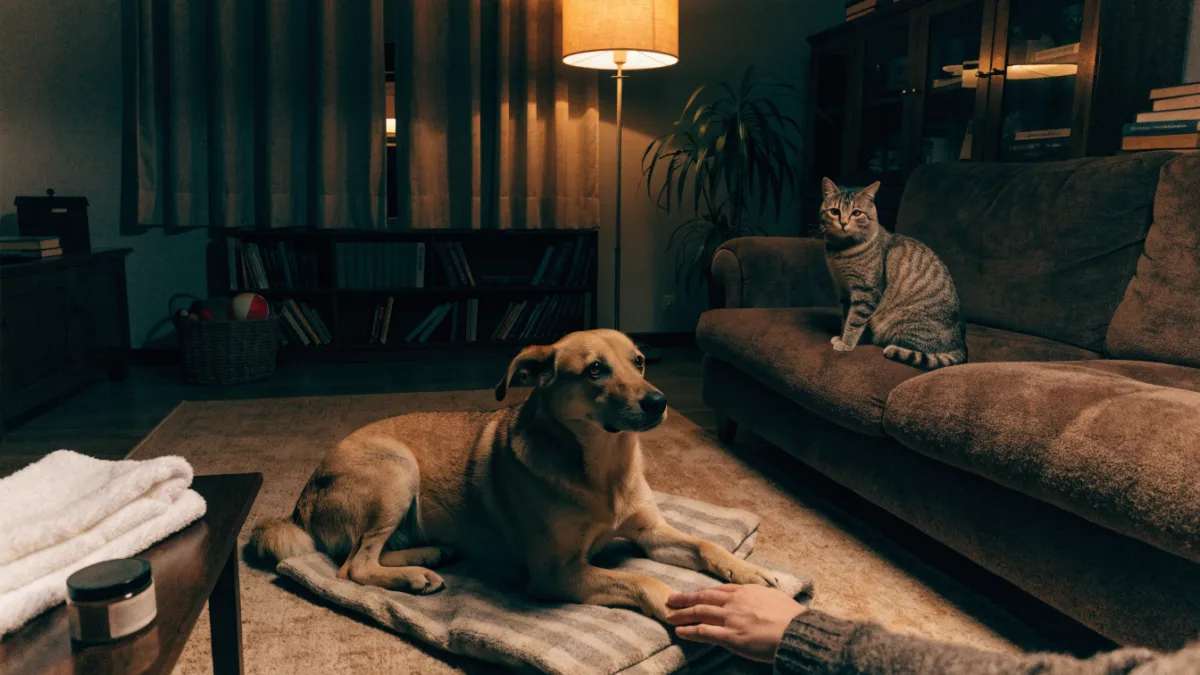
I’ll never forget the first time I saw a dog completely melt under the influence of a Tellington TTouch. Barnaby, a seven-year-old Border Collie mix, came into my clinic shaking like a leaf during a thunderstorm. His owner, Mark, was at his wit’s end, telling me, “He’s torn up two doorframes this month alone. I don’t know how to help him.” While we discussed long-term behavioral strategies and potential anti-anxiety medications, I knelt beside Barnaby and placed my hands on him. But instead of standard petting, I used a technique called TTouch—making gentle, clockwise circular motions on his skin. Within three minutes, the frantic panting slowed. His muscles, previously rigid as a board, softened. He let out a deep sigh and rested his chin on my knee. Mark stared in disbelief.
In veterinary medicine, we often focus heavily on what happens inside the body—bloodwork, X-rays, pharmaceuticals. But therapies like TTouch and therapeutic massage remind us that the body’s largest organ is the skin, and how we interact with it can profoundly alter a pet’s physical and emotional landscape.
What Exactly is TTouch and How Does it Work?
TTouch—short for Tellington Touch—is a bodywork method developed by Linda Tellington-Jones, an internationally recognized animal expert. It involves specific, light touches that work on the nervous system to change an animal’s behavior, posture, and overall well-being.
The hallmark of TTouch is the “clouded leopard” touch, which involves using your fingers to make a circle and a quarter on the animal’s skin. It sounds simple, but the execution is quite specific. You aren’t rubbing the fur; you are gently moving the skin over the underlying tissue in a slow, mindful, clockwise motion. This is entirely different from the deep, muscle-kneading pressure of a traditional Swedish massage.
Why clockwise? The theory is that this specific directional movement helps activate the body’s proprioceptive pathways—the sensory receptors that tell the brain where the body is in space. By sending these gentle, organized signals to the nervous system, we are essentially helping the animal’s body map itself more accurately.
The Mind-Body Connection and “Cellular Intelligence”
One of the most fascinating aspects of TTouch is its impact on an animal’s emotional state. In holistic bodywork, practitioners often talk about “cellular intelligence”—the idea that physical touch can prompt the body to heal itself from the inside out. While that term might sound a bit unscientific to a clinical mind, when we translate it into neurobiological terms, it makes perfect sense.
Gentle, rhythmic touch stimulates the parasympathetic nervous system, which is responsible for the “rest and digest” state. When we apply TTouch, we are physically interrupting the sympathetic nervous system’s “fight or flight” loop. This allows the animal to feel safe and connected in their own body. The result is a significant decrease in anxiety and a boost in confidence.
This technique is incredibly versatile. I’ve seen it work wonders on anxious household cats who hide under the bed, but it is also highly effective on intense, highly reactive animals. In fact, world-renowned behaviorists have used TTouch to rehabilitate severe cases. Cesar Millan famously documented the story of Sting, a high-intensity protection dog who was highly reactive. Through the application of TTouch, Sting transitioned from a state of hyper-vigilance to enjoying a.[1] When an animal’s body physically relaxes, their mind follows suit.
Real-World Applications in Clinical Practice
In recent years, therapies that were once considered “alternative” have moved into mainstream veterinary practice. Modern veterinary rehabilitation centers now frequently incorporate therapeutic massage and TTouch alongside physical therapy. When I first started practicing fifteen years ago, I was highly skeptical of these modalities. I’ve changed my mind on this as I’ve watched the research evolve and, more importantly, witnessed the outcomes in my own patients.
Post-Surgical Rehabilitation
Consider a patient like Leo, a twelve-year-old Labrador Retriever I treated last year for a torn cranial cruciate ligament (the dog equivalent of an ACL tear). After surgery, Leo was naturally compensating by shifting all his weight to his front legs, causing severe tension in his shoulders and neck. While we needed traditional physical therapy to rebuild the muscle in his hind leg, therapeutic massage was essential to release the secondary tension in his upper body. By integrating TTouch, we were able to.[2]
Behavioral Modification
TTouch isn’t just about physical healing; it’s a profound behavioral aid. When a dog or cat is stuck in a cycle of reactivity—whether that means barking at the mail carrier, lunging on a leash, or hiding from visitors—their body is flooded with stress hormones like cortisol. By using TTouch to lower the heart rate and bring the animal into a state of calm, we make them significantly more receptive to training. It’s incredibly difficult to teach a dog to “sit” when their brain is screaming “danger!” TTouch helps turn off that alarm.
Navigating the Science vs. Anecdote Debate
I always believe in looking at the evidence, and I think it’s important to have a transparent conversation about where TTouch stands in the scientific community. The truth is, the claim that TTouch “activates cellular intelligence” is a holistic concept. There is an ongoing debate in the broader veterinary field regarding the lack of large-scale, peer-reviewed, double-blind studies proving the specific physiological healing claims of TTouch.
TTouch is widely recognized by behaviorists and rehabilitation practitioners for its calming benefits, but traditional veterinary science categorizes it as a complementary therapy rather than a standalone medical treatment.
What does this mean for you and your pet? It means that while TTouch is a wonderful, non-invasive tool to support joint mobility, ease anxiety, and strengthen your bond, it should never replace traditional veterinary diagnostics or treatments. If your cat is hiding due to pain, or your dog is suddenly limping, we need to figure out why with X-rays and exams. Once we have a treatment plan in place, then we can bring in the healing hands.
Bringing Healing Hands into Your Home
One of the greatest gifts of TTouch is its accessibility. This is a completely safe, non-invasive form of bodywork that you can easily learn and apply at home. You don’t need specialized equipment, just your hands, a quiet space, and a willingness to learn.
If you want to try it, start by finding a time when your pet is already relatively relaxed. You don’t want to force a scared animal to submit to touch—that will only increase their anxiety. Once they are settled beside you:
- Set your intention: Your energy matters. Take a deep breath and calm your own mind before touching your pet. Animals are incredibly perceptive to our tension.
- The “Clouded Leopard” touch: Gently place your hand on your pet’s side. Imagine the face of a clock on their skin. Using the pads of your fingers, push the skin gently in a clockwise circle, moving from 6 o’clock all the way around, and ending at 8 o’clock (a circle and a quarter).
- Keep it light: Remember, you are moving the skin over the muscle, not digging deep into the tissue. The pressure should be light enough that you aren’t causing tension, but connected enough that you aren’t just brushing the fur.
- Read their body language: If your dog or cat leans into your hand, keep going. If they move away, flick their tail, or pin their ears back, stop. Respect their boundaries.
Before you begin any new therapy routine, especially if your pet has a history of arthritis, recent surgeries, or acute injuries, please consult with your own veterinary team to ensure it’s safe for their specific condition.
The Power of Presence
Whether we are talking about a high-speed working dog or a senior rescue cat lounging on the sofa, the fundamental truth remains the same: our animals thrive on connection. In our fast-paced world, we often rush through feeding our pets, briefly scratching their ears, and rushing out the door. TTouch and therapeutic massage force us to slow down.
The most significant benefit of this practice isn’t just the physiological stimulation of the nervous system; it is the deep, unspoken communication that happens between human and animal. By taking ten minutes to mindfully touch your pet, you are telling them, in a language they intuitively understand, that they are safe, they are loved, and you are there for them. And sometimes, that message is the most powerful medicine of all.
Sources
- therapeutic massage in a state of total calmness — facebook.com
- reduce his physical tension, assist his physical rehabilitation, and relieve his post-operative pain — vcahospitals.com