

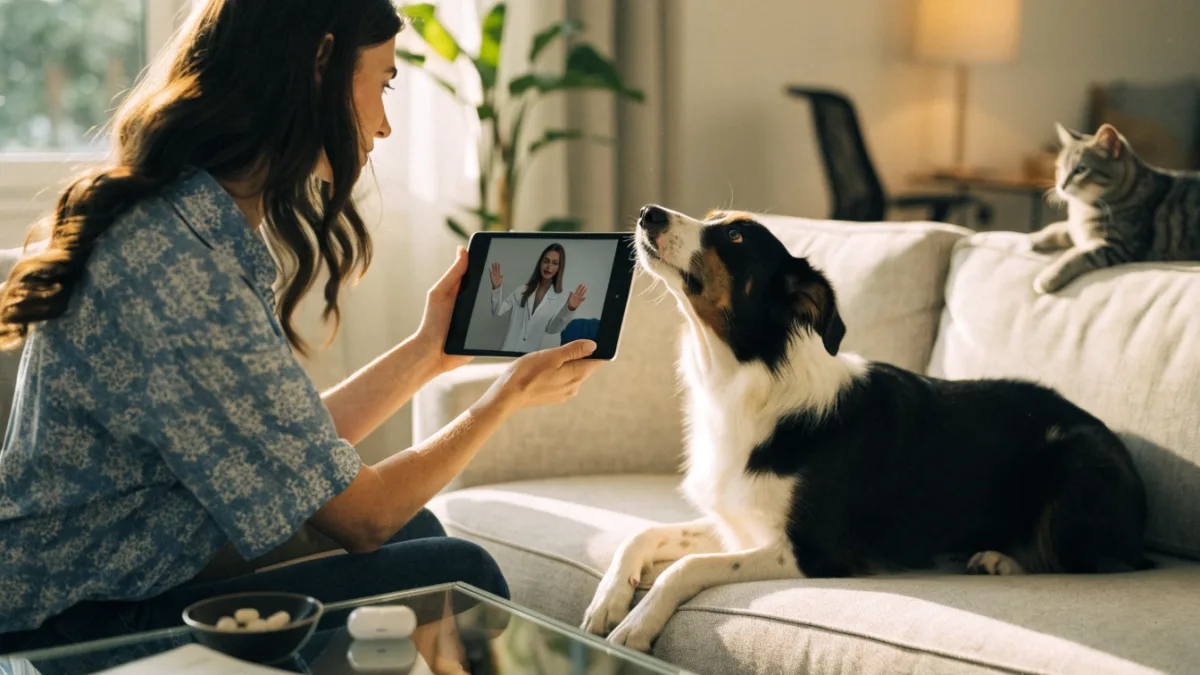
It was a Tuesday evening when my phone buzzed with a frantic message from a client. Mark, a busy software developer, has an eight-year-old Boxer named Buster. Buster had suddenly started licking frantically at a red, raw spot on his side, and Mark was panicking. Ten years ago, Mark would have loaded Buster into the car, paid a hefty emergency room fee, and sat in a noisy waiting room for two hours just to get a cone and some topical spray. Instead, we hopped on a quick video call. I had Mark hold his phone close to the spot. I could see it was a mild acute moist dermatitis—what we call a “hotspot.” I directed him on exactly how to gently clean it, advised him on what over-the-counter supplies to look for, and told him what symptoms would require an actual physical exam. Buster was thrilled to stay on the couch, and Mark was relieved.
This is the reality of modern pet medicine. Virtual veterinary care has rapidly evolved from a pandemic-era novelty into a permanent, expanding fixture in how we manage animal health. It’s changing the landscape of our profession, removing barriers to access, and keeping pets comfortable. But while I’m a huge advocate for the technology, I’m also quick to remind my clients that a camera can never fully replace the healing power of human hands.
Bridging the Distance: Who Really Benefits from the Digital Clinic?
Telemedicine isn’t just a gimmick; it’s a vital tool that meets pet owners exactly where they are. Recent academic literature, including a 2024 review by Abu-Seida published in the National Library of Medicine, highlights that this technology is bringing a genuine “new era” to animal welfare by successfully bringing more animals into the healthcare system that might otherwise go untreated.
The Busy Professional
I see it all the time in my practice. Young professionals are working longer hours, and finding a two-hour window to drive across town, wait for an exam, and drive back is nearly impossible. For these folks, the ability to schedule a video consult during their lunch break is a game-changer. It fits seamlessly into their daily lives, much like the human telehealth apps they already use.
The Rural Pet Owner
If you live in a rural area, the nearest emergency clinic might be an hour or more away. Telehealth for dogs and cats completely removes these geographical barriers. Instead of making a panicked, midnight drive down dark country roads, you can connect with a professional who can tell you if the situation is a true emergency or if it can safely wait until the morning.
The Anxious Patient
Then there are the pets like Chloe, a three-year-old Tortoiseshell cat who belongs to a friend of mine. Chloe gets so stressed during car rides that she vomits, and the second she enters a clinic, her respiratory rate triples. Virtual care prevents unnecessary trauma and stress for these sensitive pets, allowing us to assess them while they remain safely in their favorite sunbeam.
The Intention-Behavior Gap: Why Aren’t We Using It More?
Despite the obvious perks, researchers are currently puzzling over a fascinating phenomenon known as the “intention-behavior gap.” A fascinating 2024 study by Springer found that while pet owners widely recognize the benefits of telemedicine, there is a massive mismatch between their positive perceptions and their actual usage of these services.
I’ve certainly noticed this. Clients tell me they love the idea of an online vet for pets, but when something goes wrong, their ingrained habits kick in, and they default to packing the car for an in-person visit. Some of it is a lack of awareness of what services are available, and some of it is just human nature—we stick to what we know when we’re stressed.
There’s also a healthy debate within the veterinary community itself. Some of my older colleagues worry that quality of care will suffer if we can’t physically palpate (feel with our hands) an animal’s abdomen or listen to their heart and lungs with a stethoscope. It’s a valid concern. Diagnosing a subtle heart murmur or a small abdominal mass via webcam is impossible.
Telemedicine doesn’t replace the physical exam; it triages it. By determining who needs immediate hands-on care and who doesn’t, we actually streamline the entire healthcare process.
The Ideal Use Cases: When to Click “Join Call”
I completely understand the impulse to turn to DIY home remedies when your pet has a minor issue at 9:00 PM. You want to help them right now. But instead of guessing, a virtual visit bridges that gap with evidence-based advice. Here is when I strongly recommend utilizing a virtual consult:
- Minor Skin Issues: Assessing localized rashes, mild ear redness, or the aforementioned hotspots.
- Dietary and Nutritional Questions: Discussing weight management plans or transitioning to a new diet.
- Behavioral Consultations: Sudden changes in behavior, anxiety management, or litter box issues in cats. (Always ensure you rule out underlying physical pain, which may require a baseline in-person visit).
- Post-Surgery Follow-Ups: Checking on incision sites to ensure they are healing cleanly without bacteria.
- Triage: Assessing whether a pet urgently needs to go to the ER or if it can wait for a regular appointment.
One of the best parts of a virtual visit is the cost-effectiveness. Virtual consultations are generally much more affordable than in-person visits, particularly when you factor in the time off work and the high costs of emergency room walk-ins.
The Non-Negotiables: When Hands-On Care is Mandatory
As much as I love the convenience of a video call, I will be the first to tell you to hang up and drive to the clinic in certain situations. Quality of care must always come before convenience. A virtual vet cannot draw blood, take an X-ray, or perform surgery.
Hands-on exams are non-negotiable in the following scenarios:
- Severe Trauma: If your pet has been hit by a car, suffered a deep wound, or fallen from a height.
- Difficulty Breathing: If your dog or cat is gasping, gagging, or their gums are turning blue or pale.
- Suspected Broken Bones: We have to physically stabilize fractures and take radiographs.
- Diagnostic Testing: If we suspect kidney disease, diabetes, or severe infections, we need bloodwork, urinalysis, and cultures that simply cannot be done over the internet.
It’s also incredibly important to understand regulatory hurdles. In many jurisdictions around the world, a veterinarian must establish an in-person “Veterinarian-Client-Patient Relationship” (VCPR) before they can legally prescribe certain medications via telehealth. This means we can’t just call in antibiotics or pain relievers for a pet we’ve never physically met. Be sure to check what regulations apply in your specific region. And of course, never administer any medications or change a prescribed dosage without consulting your own vet first—what is safe for one species or breed can be highly toxic to another.
The Hybrid Future of Pet Care
The most exciting recent development in the industry isn’t purely virtual care, but rather hybrid care models. Mobile vets and brick-and-mortar clinics are increasingly partnering with telehealth platforms to offer comprehensive triage. We are moving toward a system where a virtual vet acts as your first point of contact, guiding you on exactly if and how fast you need to seek in-person care.
By removing barriers to access, virtual veterinary care helps keep pets healthy and in their loving homes longer. It enhances the human-animal bond by making professional, science-based healthcare a frictionless part of our lives. While it won’t replace the stethoscope, it will ensure that when we do use one, it’s for a very good reason. Ultimately, embracing these digital tools isn’t just about convenience for us—it’s about reducing stress for the animals we love and ensuring they get the right care, at the right time, in the right place.