

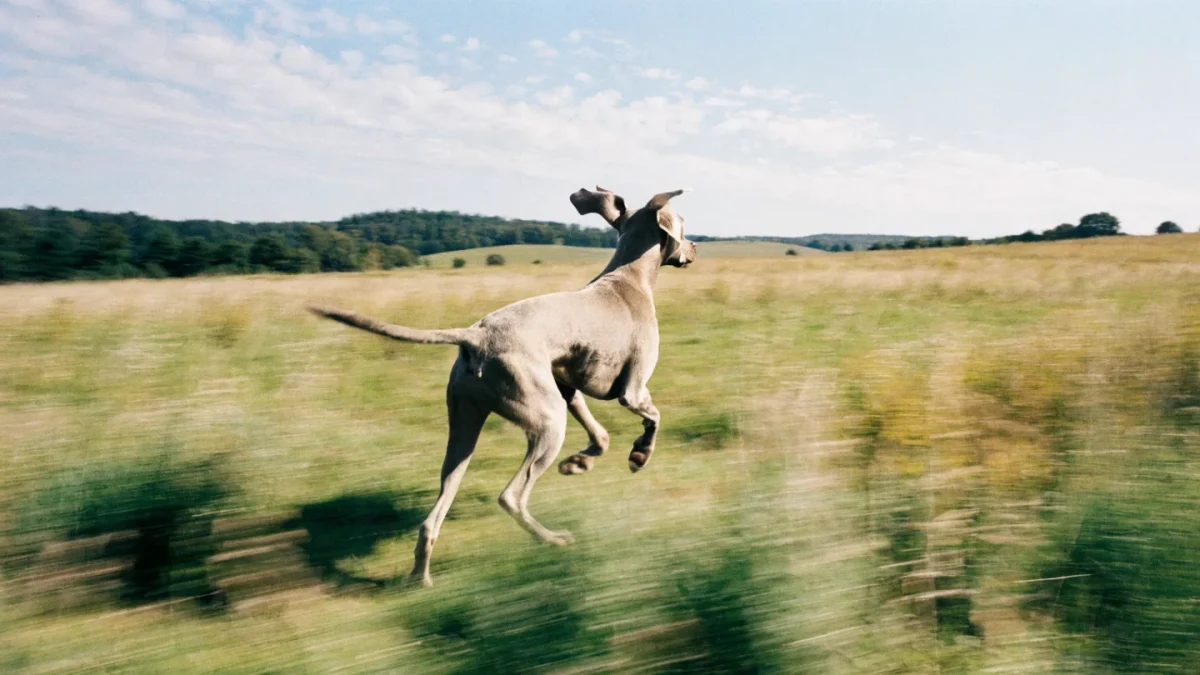
The weimaraner was developed in early 19th-century Weimar to hunt boar, bear, and deer across the forests of Thuringia. These weren't afternoon strolls through managed parkland. The dogs covered rugged terrain for hours alongside mounted hunters, tracking large game that could kill them. That athletic foundation didn't fade when the breed moved into homes — it just lost its original outlet.
A weimaraner needs a minimum of 90 to 120 minutes of vigorous exercise every single day. That number shocks people who are used to hearing "60 minutes" for most sporting breeds. But the weimaraner isn't most sporting breeds. This is a dog built for sustained, high-intensity work across open ground, and its energy reserves reflect that heritage.
What Actually Counts
Running and Jogging
Weimaraners are natural running partners. They have the stride length, cardiovascular endurance, and heat dissipation (through that short coat) to handle distance runs that would exhaust many breeds. A 5- to 10-kilometer run at a steady pace is a reasonable daily baseline for a fit adult weimaraner. Wait until the dog is at least 18 months old and growth plates have closed before introducing repetitive running on hard surfaces.
Off-Leash Exploration
This is where weimaraners thrive. A fenced area, safe trail, or open field where the dog can run at its own pace, investigate scent trails, and move freely provides more stimulation than twice the time on a leash. The breed's prey drive means off-leash areas need to be genuinely secure — a weimaraner that spots a rabbit will pursue it with terrifying commitment.
Swimming
Most weimaraners take to water readily. Their lean build and webbed feet make them competent swimmers, and swimming provides excellent full-body exercise without the joint impact of running. Lakes, ponds, and clean rivers are ideal. Introduce water gradually if the dog wasn't exposed young.
Field Work and Scent Games
The weimaraner's nose is exceptional. Hide-and-seek games with treats, formal scent detection training, or mock tracking exercises tap into the breed's hunting instincts. Twenty minutes of focused scent work can tire a weimaraner as effectively as an hour of physical exercise because it demands intense concentration.
Organized Dog Sports
Agility, lure coursing, dock diving, and field trials all channel weimaraner energy productively. The breed's combination of speed, athleticism, and intelligence makes it a natural competitor in sports that reward both physical ability and handler responsiveness.
Age Adjustments
Puppies under 12 months need controlled exercise — five minutes per month of age, twice daily, as a rough guideline. Free play on soft ground is fine. Repetitive high-impact activities are not. Weimaraner puppies are deceptively energetic, and owners often assume the dog can handle more than its developing joints should absorb.
Adults between one and eight years are at peak demand. Some high-drive individuals from field lines genuinely need closer to two hours daily. If the dog is restless, destructive, or anxious after its exercise session, it needs more — the dog is the most honest metric you have.
Seniors slow down gradually. Reduce intensity before reducing frequency. A 10-year-old weimaraner still benefits from daily walks and moderate activity; it just doesn't need the distance or speed it demanded at three.
What Under-Exercising Looks Like
The consequences of insufficient exercise in this breed are dramatic. As the weimaraner temperament profile describes, this is an emotionally intense dog that doesn't handle boredom passively. Expect destructive chewing that targets furniture and walls, not just shoes. Expect barking — sustained, purposeless barking that escalates when ignored. Expect escape attempts. Weimaraners are accomplished escape artists even when exercised; an under-stimulated one will defeat fences, gates, and crate latches with remarkable ingenuity.
The full weimaraner breed guide covers how exercise fits into the broader ownership picture. But the short version is this: exercise isn't one component of weimaraner ownership. It's the prerequisite for everything else functioning — training, behavior, emotional stability, even the dog's relationship with you. Get this wrong, and nothing else works.