

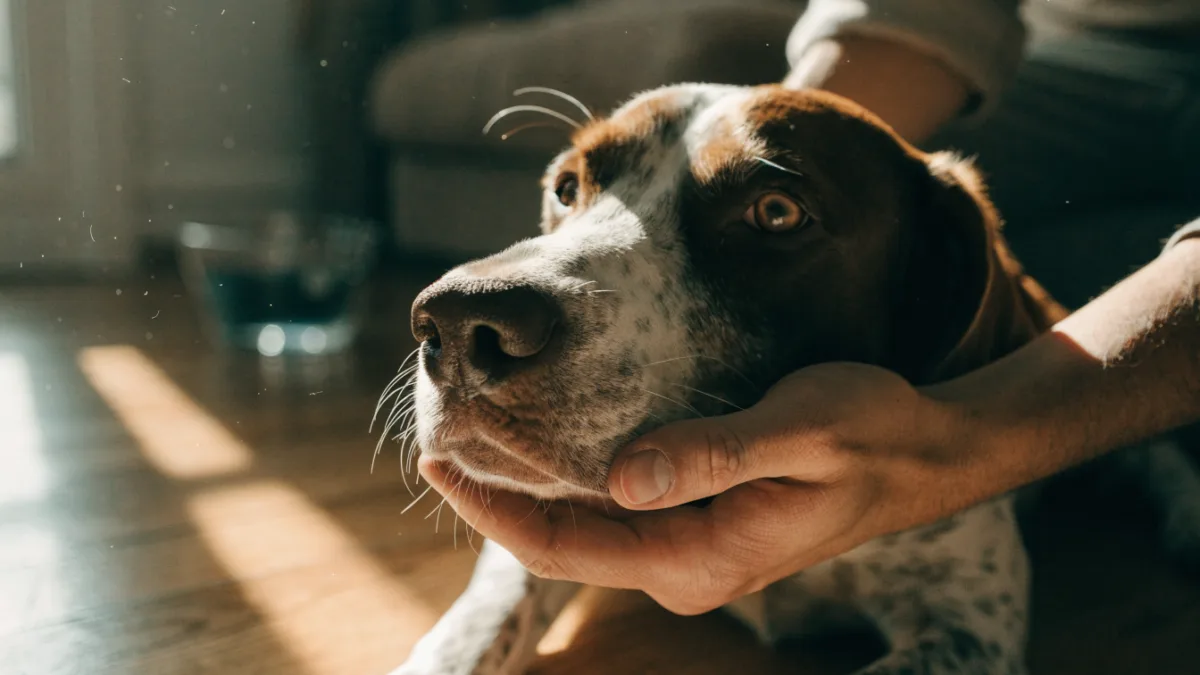
Just last week, a woman named Karen rushed her eight-year-old golden retriever, Biscuit, into my clinic. She was near tears, convinced something was terribly wrong. The reason? Biscuit’s nose felt warm and dry when she touched it that morning. I examined Biscuit — bright eyes, excellent body condition, normal hydration, perfect vital signs. The dog practically dragged Karen to the treat jar in my exam room. Biscuit was the picture of health. Karen left relieved but slightly embarrassed, and I told her exactly what I tell dozens of pet owners every year: a warm, dry nose means almost nothing on its own.
Where the Wet Nose Myth Came From
The belief that a cool, wet nose equals a healthy pet is one of the most stubborn myths in animal care. I hear it constantly — from first-time puppy owners, from experienced rescuers, even from veterinary technicians who grew up hearing it from their grandparents. It is such a pervasive piece of folklore that.[1] trying to dispel it.
There is a tiny kernel of truth buried in the myth, which is probably why it survives. Dogs and cats do produce a thin layer of mucus that helps them trap scent particles — it is part of how their extraordinary olfactory systems work. A healthy, alert animal often licks their nose, spreading this moisture around. So yes, a moderately moist nose can be one small sign that everything is functioning normally.
But here is the problem: it is only one small sign. And taken by itself, it is nearly meaningless.
The Old Wives’ Tale vs. Modern Veterinary Science
The disconnect between traditional wisdom and veterinary science creates two harmful situations. The first is false security — an owner assumes their pet is healthy because the nose feels wet, even though the animal has stopped eating, is hiding under the bed, or is visibly lethargic. I have seen this delay treatment for serious conditions like kidney infections and intestinal blockages. The second is unnecessary panic — like Karen with Biscuit, owners rush healthy pets to emergency clinics over a dry nose, spending money and adding stress when nothing is wrong.
I will be honest with you: early in my career, I used to gently humor this myth. I would tell owners “well, it is one thing to look at” because I did not want to make them feel silly. I have changed my mind on that approach. Now I am direct about it, because the myth genuinely causes harm when people rely on it instead of observing their pet’s actual behavior.
Why Your Pet’s Nose Changes Throughout the Day
Nose moisture and temperature fluctuate constantly, and most of these changes are completely benign. Understanding what causes normal variation can save you a lot of unnecessary worry.
- Sleeping and napping: When pets sleep, they stop licking their noses. A dog or cat waking up from a nap will often have a warm, dry nose. Within minutes of being awake and active, it returns to its normal state.
- Environmental factors: Dry indoor heating in winter, low humidity, sunbathing near a window, or lying in front of a fireplace can all temporarily dry out a nose.
- Age: Older pets often have naturally drier noses. Their tear and mucus production decreases slightly with age, just like ours does.
- Individual variation: Some perfectly healthy dogs simply have drier noses than others. Brachycephalic breeds like pugs and bulldogs are particularly prone to drier noses because of their facial structure.
- Hydration and activity: After vigorous exercise or on a warm day, a dog’s nose might feel warmer simply because their body temperature has risen slightly — the same way your skin feels warm after a workout.
I had a patient named Duke, a twelve-year-old boxer whose nose was perpetually dry and slightly crusty. His owner, Mark, worried about it for years. We ran every test imaginable. Duke was healthy through and through. Some dogs are just like that — and [2]
When a Wet Nose Is Actually a Warning Sign
Here is something that surprises most pet owners: a too wet nose can actually be more concerning than a dry one. This is the flip side of the myth that nobody talks about.
If your pet’s nose suddenly becomes drippy, runny, or produces discharge — especially if that discharge is thick, yellowish, green, or bloody — that is not a sign of health. It is often a sign of an upper respiratory infection, which is essentially a cold. Cats are particularly susceptible to viral respiratory infections like calicivirus and herpesvirus, both of which cause nasal discharge that owners sometimes mistake for a “healthy wet nose.”
A friend of mine, also a veterinarian, told me about a cat owner who brought in her two-year-old tabby, Pepper, specifically because she was pleased the cat’s nose was “so nice and wet lately.” Pepper had stopped eating two days earlier. The “wetness” was actually thick nasal discharge from a respiratory infection that had progressed to the point where the cat could no longer smell her food — which is why she had stopped eating. Pepper recovered with treatment, but it took far longer than it would have if the owner had recognized the symptom earlier.
What Actually Matters: Nasal Discharge Quality
Rather than focusing on wet versus dry, here is what I tell owners to watch for:
- Clear, thin moisture: Generally normal, especially if it comes and goes throughout the day
- Thick, colored discharge: Yellow, green, or cloudy discharge suggests infection and warrants a vet visit
- Bloody discharge: Always warrants investigation — could indicate anything from a foreign object to a growth to a clotting disorder
- One-sided discharge: If only one nostril is producing discharge, that is more concerning than both sides and should be checked
- Crusting or cracking that worsens: Mild dryness is normal, but severe cracking, bleeding, or crusting that gets worse over time could indicate an autoimmune condition or sun damage
What Really Tells You If Your Pet Is Healthy
If the nose is not a reliable health indicator, what is? After twenty years of practice, I can tell you that behavior tells you more than any single physical sign. Pets are masters at hiding illness — it is a survival instinct — but when they start acting “off,” you should pay attention regardless of what their nose feels like.
The Signs That Actually Matter
Here is what I want owners to watch for instead of checking noses:
- Appetite changes: Refusing food for more than 24 hours (or even one meal for a small dog or cat) is significant. Pets do not skip meals for no reason.
- Energy level: Lethargy, reluctance to walk, hiding, or sleeping much more than usual are all red flags. A dog who turns down a walk is telling you something.
- Water intake: Drinking significantly more or less than usual can indicate kidney disease, diabetes, or other serious conditions.
- Bathroom habits: Diarrhea, constipation, straining, blood in urine or stool, or accidents in a house-trained pet all warrant attention.
- Breathing: Panting at rest, coughing, wheezing, or labored breathing are never normal and require immediate evaluation.
- Gum color: Healthy gums should be pink. Pale, white, blue, or bright red gums are an emergency.
And if you genuinely need to know whether your pet has a fever? There is exactly one accurate method: taking their temperature with a thermometer..[3] I recommend every pet owner keep a digital pet thermometer and a tube of lubricant in their first-aid kit, and ask your veterinarian to show you the proper technique during a routine visit.
When to Call Your Veterinarian
So when should a nose actually concern you enough to pick up the phone? The answer is always about context. A dry nose in a happy, active, eating, drinking, playful pet is almost never an emergency. A dry nose — or a wet one — in a pet who is lethargic, not eating, vomiting, or showing any of the behavioral changes I described above needs veterinary attention.
I always tell owners to use what I call the “whole dog” or “whole cat” approach. Look at the entire animal. Are their eyes bright? Is their coat healthy? Are they engaged with their environment? Are they eating and eliminating normally? Do they respond to you the way they usually do? If the answers are yes, then whatever their nose feels like is probably fine.
But if something feels wrong — if your gut tells you your pet is not themselves — trust that instinct. You know your animal better than anyone. I would rather examine a hundred healthy pets whose owners were being cautious than miss one sick pet whose owner was reassured by a wet nose.
The next time someone tells you to check your pet’s nose to see if they are healthy, I hope you will smile and share what you know now. The real signs of health are not found on the surface of a nose — they are found in the way your pet greets you, the enthusiasm with which they approach their food bowl, and the spark in their eyes when you reach for the leash. That is the real “health test,” and it is one you are already performing every day without even thinking about it. Trust it. And when in doubt, call your vet — we are always happier to tell you everything is fine than to see a pet we could have helped sooner.
Sources
- veterinary hospitals actively run educational campaigns — tranimalhospital.com
- veterinary immunologists confirm that individual variation in nose moisture is entirely normal — vcahospitals.com
- Feeling the nose, the ears, or the forehead simply does not give you reliable information — facebook.com