

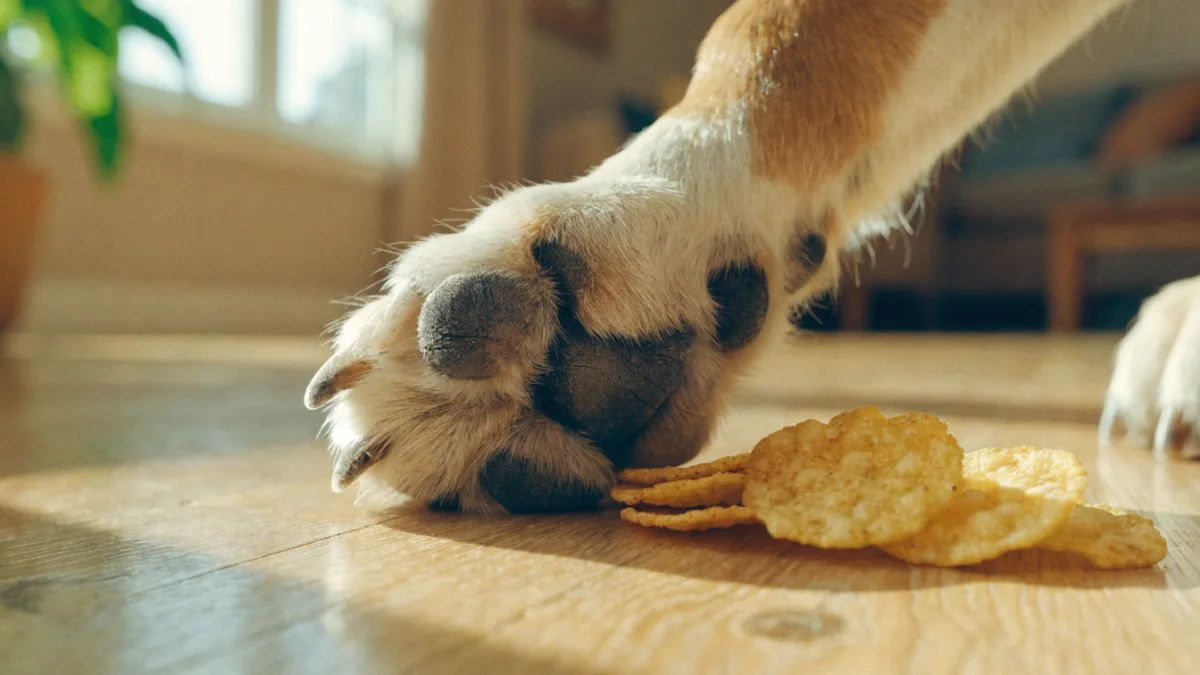
Picture a slightly embarrassed owner, Mark, bringing his four-year-old Beagle, Cooper, into a clinic. Mark sits on the floor, gently holding Cooper’s front paw, and leans in for a sniff. “I know this sounds crazy,” he says, “but my dog’s feet smell exactly like a bag of Fritos. Did he step in something at the park?” He isn’t crazy. Cooper’s paws had that distinct, warm, yeasty aroma of a freshly opened bag of corn chips — and more importantly, Cooper wasn’t sick. He was just experiencing a very normal, very common canine quirk known as “Frito feet.”
If you are a dog owner, you have probably experienced this phenomenon. You invite your dog up onto the couch for a cuddle, and suddenly you are hit with the unmistakable scent of a roadside diner. But why does this happen? And perhaps even more puzzling, if you also share your home with a feline, why do your cat’s paws remain completely odor-free? Let’s break down the science behind the smell.
The Science of the Snack: What Causes Frito Feet?
To understand why your dog’s paws smell like a convenience store snack aisle, we have to look at the microscopic world living right between their toes. A dog’s paw is home to a complex, living ecosystem called a microbiome. This invisible layer of microscopic organisms is a completely natural and healthy part of your dog’s skin.
The specific culprits behind the corn chip aroma are two types of naturally occurring bacteria: Pseudomonas and Proteus. These bacteria aren’t invaders; they are normal residents on your dog’s skin. When they go about their daily business of living, eating, and multiplying, they produce volatile organic compounds as a byproduct. It is these chemical byproducts that our human noses interpret as the smell of tortilla chips or popcorn.
But why do the paws smell so much stronger than the rest of the dog? It comes down to moisture and heat. Unlike humans, who have sweat glands all over their bodies, dogs only have merocrine sweat glands on their paw pads. When a dog gets hot, anxious, or exercises, they actually sweat through their feet. Combine that natural moisture with the fact that dogs walk barefoot, picking up dirt and water from the environment, and you create a dark, warm, and damp environment between the toe pads. It is the absolute perfect incubator for bacteria to thrive and produce that signature scent.
If Dogs Smell Like Corn Chips, Why Don’t Cats Smell Like Tuna?
This brings us to a fascinating question I hear from multi-pet households all the time. If dogs have microscopic ecosystems on their feet, cats must have them too, right? Absolutely. But when was the last time you snuggled up to your domestic shorthair and caught a whiff of bar snacks? Probably never. There are a few distinct biological and behavioral reasons why cats get a free pass on the Frito foot phenomenon.
The Grooming Obsession
First and foremost, cats are fastidious, obsessive self-groomers. If you have a cat, you know they spend a massive portion of their waking hours bathing. A cat’s tongue is covered in tiny, backward-facing barbs called papillae, which act like a built-in comb. When a cat licks its paws, it is actively removing dirt, debris, and excess moisture, effectively disrupting the environment that bacteria need to multiply. By constantly washing their feet, cats keep the bacterial load low enough that it never reaches the threshold required to produce an odor.
Less Sweating, Drier Pads
While cats do have sweat glands in their paw pads just like dogs do, they generally perspire much less. Cats do not rely on panting and paw-sweating to regulate their body temperature to the same extent that active dogs do. Furthermore, the typical housecat is an indoor pet that navigates mostly dry surfaces—carpet, hardwood, and the occasional sunlit windowsill. Without the constant trudging through damp grass, mud, or puddles that an active dog might experience on a daily walk, a cat’s paws simply do not trap the same level of environmental moisture. A drier paw means a less hospitable home for odor-producing bacteria.
When the Smell Goes From Salty to Sour
There is a common misconception among pet owners that “Frito feet” means a dog is unclean or poorly cared for. I constantly find myself redirecting well-meaning owners on this point. Even the most meticulously groomed, freshly bathed dog can have corn chip paws. It is simply the smell of a natural, functioning ecosystem doing its job.
However, there is a nuance to this. While a light, faintly yeasty scent is perfectly healthy, an overwhelming or foul odor can signify that the delicate balance of your dog’s skin microbiome is out of whack. In my early years of practice, I used to tell owners to ignore the smell completely. I’ve actually changed my mind on this as research into veterinary dermatology has evolved. We now know that when the good bacteria are overrun by opportunistic bad bacteria or yeast, the smell shifts from “mild snack” to “musty locker room.”
Take Daisy, a six-year-old English Bulldog, for example. Her owner brought her in because her “Frito smell” had suddenly become incredibly pungent and foul. On examination, the skin of her paws was an angry red, and she was obsessively licking her toes. Daisy hadn’t just stepped in something smelly; she had developed a full-blown case of pododermatitis. This is the medical term for inflammation of the paw, often driven by an overgrowth of yeast or bacteria in the deep skin folds of the toes.
If your dog’s paws smell overwhelmingly bad, look out for these accompanying signs that it is time to call your vet:
- Excessive licking or chewing: Dogs will often frantically lick their paws to soothe the itching caused by an infection.
- Redness and swelling: The skin between the pads or around the nails may look inflamed and angry.
- Discharge: You might see pus, crusty buildup, or a greasy residue between the toes.
- Limping or sensitivity: Severe inflammation can make standing or walking painful.
Keeping the Paws Balanced: Hygiene Tips
You don’t need to wage war on your dog’s microbiome. In fact, recent trends in veterinary dermatology are actively moving away from using overly harsh antibacterial shampoos and wipes. Stripping away the good bacteria can actually make your dog more susceptible to chronic skin issues and recurring infections. Instead, the goal is environmental management.
If your dog’s Frito feet are just a bit too potent for your liking, or if you want to prevent a mild smell from turning into a medical issue, here is what I recommend:
- Keep the toe tufts trimmed: Many dogs have long hair that grows between their paw pads. This hair acts like a sponge, trapping moisture and debris against the skin. Carefully trimming this fur with round-tipped scissors allows the paw to breathe and dry faster.
- Wipe, don’t sterilize: After a walk, wipe your dog’s paws with a damp cloth or a gentle, pet-safe grooming wipe to remove pollen, dirt, and excess yeast. You aren’t trying to sterilize the paw, just remove the heavy debris.
- Dry them completely: This is the most crucial step. After a bath, a walk in the rain, or wiping their feet down, take a dry towel and ensure you get right in between those toes. Moisture is the enemy of a balanced paw pad.
- Wash the bedding: Your dog’s paws touch their blankets and beds every single day. If their bedding is harboring old dirt and bacteria, your dog will immediately pick that flora right back up after a bath. Wash their bedding weekly in hot water.
Ultimately, a faint smell of corn chips coming from your dog’s paws is nothing to worry about. It is simply the byproduct of a healthy dog exploring the world barefoot, carrying a microscopic ecosystem along for the ride. It is a fascinating reminder of the hidden worlds that exist right under our noses. By focusing on gentle, proactive paw care rather than trying to sanitize our pets, we allow their natural defenses to do their job—a lesson that applies just as much to the world around us. Just as we strive to protect and preserve the delicate ecological balances of our planet’s natural habitats, we should respect and nurture the tiny, microscopic ecosystems living on the animals we love.