

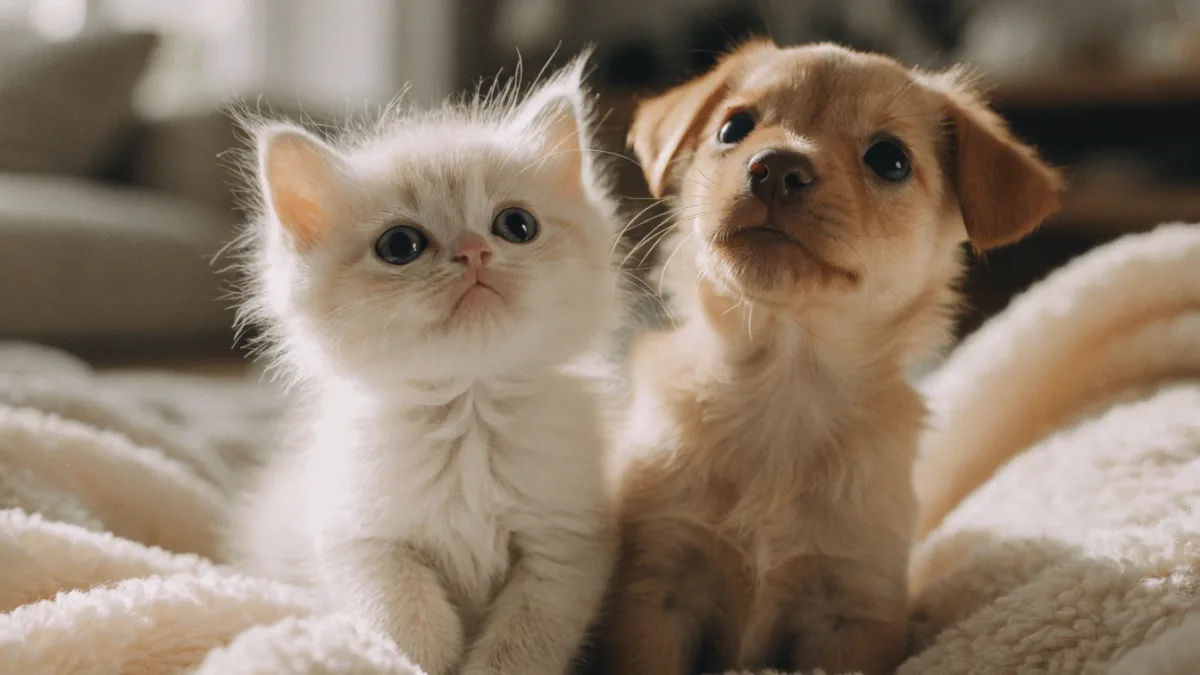
I’ll never forget the first time a client rushed a tiny, squirming puppy into my clinic, absolutely convinced something was terribly wrong. The puppy, a twelve-week-old Beagle named Buster, was perfectly round, bright-eyed, and wriggling with energy. But every few seconds, his little chest would give a sudden, involuntary jump, accompanied by a sharp, high-pitched squeak. His owner, practically in tears, mimicked the motion with her hands and asked, “Is it a seizure? Is his heart skipping beats? Do we need to do CPR?”
I leaned in, listened to the rhythmic squeaking, and smiled. I let out a small sigh of relief. Little Buster didn’t have a heart defect, and he certainly wasn’t having a seizure. He just had a textbook case of the hiccups.
If you’ve recently brought home a bouncing baby dog or cat, you might have experienced that exact same moment of panic. One minute your new furry best friend is wrestling with a stuffed toy, and the next, they’re involuntarily hiccuping like they just chugged a gallon of water. It sounds funny, but watching a tiny animal spasm can be genuinely alarming for a loving pet parent.
Let’s talk about what is actually happening inside those little bodies, why this phenomenon is a completely normal part of their development, and when you might actually need to give your vet a call.
The Science of the Squeak: What’s Happening Inside?
To understand why your pet is hiccuping, it helps to understand the basic mechanics of breathing. If you place your hand on your own stomach and take a deep breath, you’ll feel your chest and abdomen expand. That movement is controlled by a large, dome-shaped muscle called the diaphragm. It sits right below the lungs, separating the chest cavity from the abdomen.
Normally, the diaphragm moves up and down in a smooth, perfectly timed rhythm. But when a hiccup strikes, that smooth rhythm hits a literal speed bump. The diaphragm suddenly contracts involuntarily. When this happens, your pet’s vocal cords snap shut almost instantly. That sudden closure of the airway blocks the inflow of air, producing the classic “hic” sound.
Blame the Immature Wiring
So, why do puppies and kittens seem to get hiccups constantly, while older dogs and cats rarely do? The answer lies in their nervous system.
The diaphragm’s movements are orchestrated by the phrenic nerve, a crucial nerve that runs all the way from the brain, down through the neck, and into the chest to plug into the diaphragm. In young, growing animals, this nerve is still maturing. Because their neurological wiring isn’t completely finished yet, the phrenic nerve is highly sensitive and gets easily irritated.
Think of it like a new, slightly glitchy computer system. Sometimes the signals get a little crossed, and the phrenic nerve ends up firing unexpectedly. As your puppy or kitten grows and their nervous system matures, these neurological glitches happen less and less frequently.
The Usual Suspects: What Sparks the Spasms?
While an immature nervous system sets the stage, specific daily behaviors act as the match that lights the fuse. When I see a hiccuping puppy or kitten in my exam room, I can usually trace the root cause back to one of three common triggers.
- The Speed Eater: Just last week, I saw a six-month-old Maine Coon kitten named Luna. Her owner reported that Luna hiccuped almost every single afternoon. After asking a few questions, I found out that Luna was eating her dry food as if she were in a timed eating contest. When pets eat or drink too fast, they end up swallowing a lot of excess air. That trapped air distends the stomach, which pushes right up against the diaphragm, irritating the phrenic nerve and triggering a bout of hiccups.
- The Zoomies: Sudden bursts of high energy or excitement can alter an animal’s breathing pattern. When a puppy gets the zoomies and starts darting around the living room, they take rapid, shallow breaths. This erratic breathing can easily overstimulate the diaphragm.
- Temperature Fluctuations: Sometimes, a sudden change in body temperature—like a puppy coming in from a cold walk and drinking room-temperature water—can cause the muscle to spasm.
The Hiccup Hack: Practical Ways to Help
Here is the most important thing I can tell you about puppy and kitten hiccups: they are harmless. In the vast majority of cases, they will go away on their own within a few minutes without causing your pet any distress whatsoever. In fact, many times, a puppy will fall asleep right in the middle of a hiccuping fit!
However, I completely understand the impulse to want to help them. If you want to gently nudge those hiccups along, there are a few safe, effective strategies you can use to calm the diaphragm back down.
Slow Down the Dinner Bowl
If your pet is a chronic speed-eater, the best thing you can do is physically slow them down. Instead of pouring their kibble into a flat bowl, look for an interactive slow-feeder bowl. These bowls have built-in plastic ridges, mazes, or grooves. Your pet has to navigate the maze to get the food out, which prevents them from inhaling their meal and swallowing air. It provides excellent mental stimulation, too!
Offer a Calming Drink
Taking slow, steady sips of water can help regulate the breathing pattern and gently massage the diaphragm, much like it does in humans. Just make sure the water is fresh and room temperature. Always offer the water calmly—don’t shove their face into the bowl, as excitement will only make the spasms worse.
Encourage Gentle, Rhythmic Movement
I’ve changed my mind on this over the years. Early in my career, I used to tell clients to just ignore the hiccups entirely. But I’ve found that engaging your pet in a few minutes of light, gentle play—like slowly rolling a ball for them to track or doing some basic, calm training exercises—can alter their breathing pattern just enough to reset the phrenic nerve.
I also want to acknowledge that many well-meaning pet owners reach for home remedies they find online, like giving their pet a spoonful of sugar, maple syrup, or honey to reset the swallowing reflex. While the impulse to soothe your pet is a loving one, I generally advise against these tricks. Sudden spikes in blood sugar aren’t ideal for growing animals, and sticky sweets can cause stomach upset or stick to their teeth. Sticking to water and behavioral adjustments is always the safest route.
When Hiccups Aren’t Just Hiccups
While standard hiccups are a completely normal part of development, there is a boundary where a hiccup stops being a hiccup. The main debate in the veterinary community isn’t about the hiccups themselves, but rather recognizing when those spasms are actually a mask for an underlying gastrointestinal or respiratory issue.
I always tell my clients to keep an eye on the duration and the associated symptoms. You should reach out to your veterinarian if:
- The hiccups last for hours. A normal hiccuping fit resolves within ten to fifteen minutes. If your pet has been spasming for over an hour, something else might be going on.
- They are accompanied by wheezing or coughing. If you hear a rattling sound in their chest, or if the “hiccup” sounds more like a wet, productive cough, it could be a sign of a respiratory infection, like kennel cough in puppies.
- Your pet is regurgitating. Sometimes, what sounds exactly like a hiccup is actually a precursor to vomiting. If fluid or food is coming up, it’s not a hiccup.
- The spasms happen right after eating, every single time.
This can be a sign of gastroesophageal reflux disease (GERD). The stomach acid is irritating the esophagus, causing the same phrenic nerve response. Flat-faced breeds, like French Bulldogs or Persian cats, are particularly prone to this.
If you notice any of these red flags, don’t try to wait it out. Give your vet a call. We can listen to their chest, check their throat, and determine if we are dealing with a simple glitch in the nervous system, or if we need to investigate something deeper.
Embracing the Squeaks
Raising a puppy or a kitten is a chaotic, messy, and beautiful journey. It is entirely too short, and before you know it, your tiny, hiccuping furball will be a fully grown, dignified adult.
The next time your little one starts squeaking after devouring their dinner or finishing a high-speed game of fetch, take a deep breath. You don’t need to panic, and you don’t need to rush them to the emergency room. Just snap a quick video for your social media feed, maybe offer them a slow sip of water, and appreciate the fact that their body is doing exactly what it is supposed to do: growing up.
Remember, responsible pet parenting isn’t about preventing every little hiccup in the road—it’s about knowing how to recognize when a hiccup is just a hiccup, and when it’s a sign that your loyal companion needs a helping hand.