

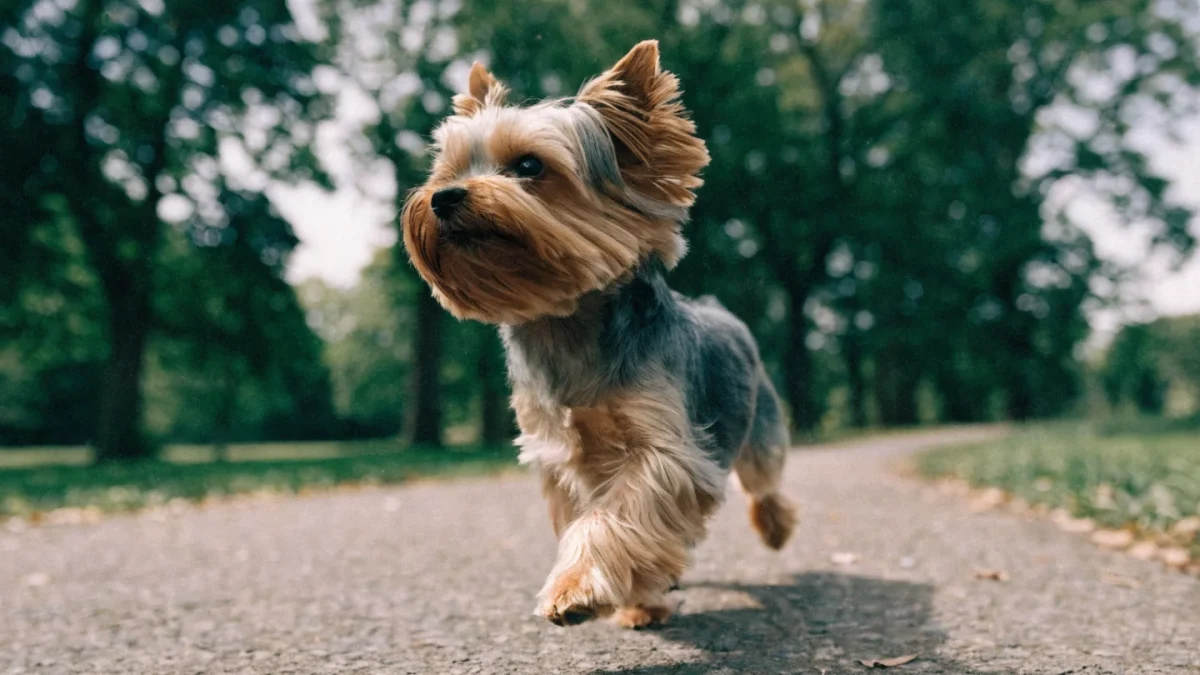
A Yorkshire terrier descended from dogs that worked twelve-hour shifts in textile mills, running between looms and chasing rats through spaces barely wider than their own bodies. The modern Yorkie still carries that energy — it just has nowhere obvious to put it. Getting the exercise equation right for this breed is less about distance or intensity and more about understanding what a 3 kg terrier actually needs to stay physically sound and mentally stable.
The two most common mistakes with yorkshire terrier exercise needs run in opposite directions. The first is assuming a tiny dog needs no exercise at all — just carry it everywhere and let it trot around the apartment. The second is treating it like a scaled-down hiking companion and expecting it to handle distances and terrain that its body wasn't built for. Both errors cost the dog.
The Daily Baseline
A healthy adult Yorkshire terrier needs approximately 20 to 30 minutes of walking per day. Split this into two sessions — a morning walk and an evening walk of 10 to 15 minutes each — rather than one long outing. Shorter, more frequent activity fits the breed's metabolism and joint capacity better than a single extended walk.
The pace should be the dog's natural trot. Yorkies have short legs and a correspondingly short stride; forcing them to keep up with a brisk human walking pace puts unnecessary stress on small joints already predisposed to luxating patella. Let the dog set the rhythm. If it slows, shorten the route.
Puppies under a year need even less structured walking — five minutes per month of age is a commonly cited guideline, though individual variation matters. Puppy bones and joints are still developing, and over-exercising young Yorkies increases the risk of growth plate injuries and worsens existing orthopedic predispositions.
Senior Yorkies typically self-regulate. A dog that once trotted eagerly for twenty minutes but now slows after ten is telling you its needs have changed. Arthritis, dental pain, and general age-related stiffness are common in older Yorkies, and the exercise routine should adapt accordingly.
Mental Exercise Matters More Than You Think
Physical activity alone doesn't satisfy a Yorkshire terrier. This is a breed with terrier-level intelligence and curiosity — the complete breed guide covers that terrier wiring in detail — and a Yorkie that gets walked but never challenged mentally will redirect its brain into behaviors you don't want: obsessive barking, furniture destruction, compulsive licking, or fixating on sounds and movements.
Effective mental stimulation for Yorkies includes:
Puzzle feeders. Dispensing meals through a puzzle toy instead of a bowl turns eating into a fifteen-minute problem-solving session. Most Yorkies engage immediately — the food motivation is high, and the terrier persistence keeps them working at it.
Scent games. Hide treats around a room and let the dog search. This engages the prey-drive circuits in a constructive way and tires a Yorkie out more effectively than twice the equivalent walking time.
Short training sessions. Five to ten minutes of practicing commands or learning new tricks channels the breed's intelligence and strengthens the handler-dog bond. Yorkies learn quickly when motivated, though their terrier temperament means they also decide quickly whether a given exercise is worth their effort.
Novel environments. Rotating walking routes, visiting new parks, and exposing the dog to different surfaces, sounds, and smells provides sensory enrichment that a repetitive daily route does not.
Weather Limitations
Yorkshire terriers have a single-layer silk coat with no insulating undercoat. This makes them vulnerable to temperature extremes in both directions.
Cold weather. The breed loses body heat rapidly due to its small mass and thin coat. When temperatures drop below roughly 7 degrees Celsius (45 degrees Fahrenheit), most Yorkies need a fitted coat or sweater for outdoor walks. This isn't an indulgence — it's thermal management for an animal that simply doesn't have the insulation to regulate its own temperature in cold conditions. If the dog is shivering, lifting its paws, or reluctant to move, the walk needs to end.
Hot weather. Small dogs overheat faster than most owners expect. Yorkies walking on hot pavement are also at risk for paw pad burns — their proximity to the ground means they're absorbing radiant heat that a taller dog stands above. During summer, move walks to early morning or evening when surfaces have cooled.
Rain and wet conditions. The silk coat absorbs water and mats when wet. Wet Yorkies lose body heat even faster than dry ones. Brief walks in light rain are fine; prolonged exposure to wet, cold conditions is not.
Indoor Alternatives
For days when outdoor exercise isn't practical, Yorkies adapt well to indoor activity. A game of fetch down a hallway, a tug session with a rope toy, or a structured indoor training exercise can substitute for a walk. The key is consistency — skipping exercise entirely because it's raining teaches the dog that inactivity is normal, and the behavioral consequences accumulate.
Yorkies living in apartments without yard access should have a predictable indoor activity routine for days when weather prevents outdoor walks. The dog's exercise needs don't pause for bad weather, even if the format changes.
Exercise Red Flags
Stop activity and consult a veterinarian if you observe:
- Persistent limping or favoring one leg (possible luxating patella or Legg-Calve-Perthes)
- Honking cough during or after exercise (possible tracheal collapse — use a harness, never a collar)
- Rapid or labored breathing that doesn't resolve within a few minutes of rest
- Reluctance to walk that develops suddenly rather than gradually
These aren't signs of laziness. They're signs of conditions that the breed carries genetic predisposition for, and catching them early makes a measurable difference in outcomes.
The Right Balance
The Yorkshire terrier's exercise needs are moderate by any standard. Twenty to thirty minutes of walking, supplemented by mental enrichment, keeps most Yorkies physically healthy and behaviorally stable. The breed doesn't need long hikes, agility courses, or running partners. It needs daily, consistent, appropriately scaled activity from an owner who understands that small doesn't mean sedentary — and that a bored Yorkie is a louder, more destructive Yorkie.