

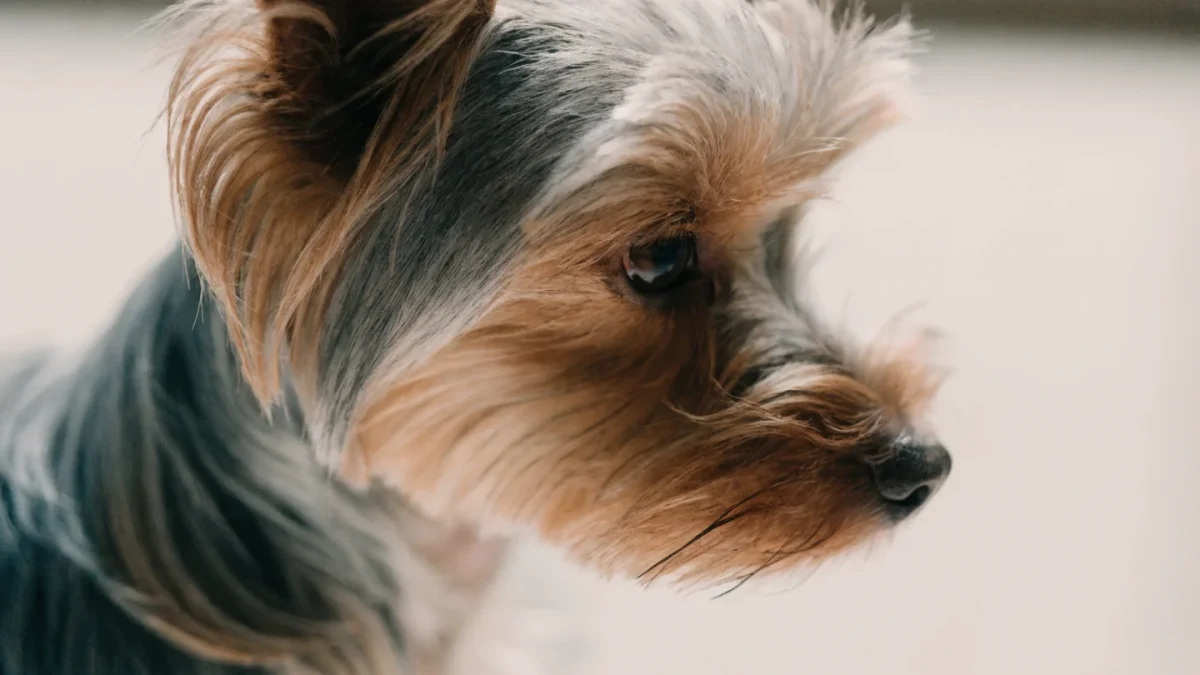
Every Yorkshire terrier puppy is born wearing a disguise. The black-and-tan coat that a newborn Yorkie carries into the world is not the coat it will wear as an adult. Over the first two to three years of life, a progressive genetic mechanism transforms that black into steel-blue — a specific shade with metallic depth — while the tan areas shift toward a rich golden hue. No other popular breed undergoes such a visible, prolonged color change, and understanding yorkshire terrier genetics coat color patterns explains not only why it happens but why individual dogs end up looking so different from one another.
The interaction between pigment genes, the graying gene, coat texture determinants, and modifier genes produces the wide variation breeders and owners observe — from deep steel-blue to washed-out silver, from silk-fine hair to cottony waves.
The Color Change Mechanism
The foundational color in Yorkshire terriers is produced by two pigment types common to all dogs: eumelanin (black/brown pigment) and phaeomelanin (red/yellow pigment). In Yorkies, the distribution is controlled by the Agouti locus (A locus), specifically the at/at genotype — the tan-point pattern that places eumelanin on the body and phaeomelanin on specific points: above the eyes, on the muzzle, chest, legs, and under the tail.
What makes the Yorkie distinctive is what happens to the eumelanin after birth. The breed carries a progressive graying gene, associated with the G locus, that gradually dilutes the eumelanin pigment over time. The black doesn't disappear — it clears. The melanin granules in the hair shaft become less densely packed as the dog matures, shifting the perceived color from black through dark steel-blue and eventually, in some dogs, to lighter shades.
This process is not instantaneous. The complete breed guide notes that the transition typically unfolds over the first two to three years, with the most visible changes occurring between six months and eighteen months of age. Some dogs continue to lighten throughout their lives.
The tan areas undergo a parallel but opposite shift — becoming richer and more golden as phaeomelanin expression matures. The interplay between clearing blue and intensifying gold is what produces the breed's characteristic adult coloring.
Steel-Blue: What the Standard Means
The breed standard specifies "dark steel-blue" for the body and tail — a precise description. Coats that clear too far appear silver or platinum, faulted in the show ring as excessive graying. Adult coats that retain puppy-black suggest the graying gene isn't expressing fully, possibly due to modifier genes — black-coated adult Yorkies are not uncommon in pet populations. During the transition period, many Yorkies display a patchwork of clearing blue and residual black, which is a normal intermediate stage.
The "correct" steel-blue — dark with metallic quality, without silver washout or residual black — represents a specific genetic balance between eumelanin density and graying gene expression. The variation around it reflects how many genetic variables are in play.
Silk Coats vs. Cotton Coats
The most significant genetic divide in Yorkshire terrier coats isn't color — it's texture. Two fundamentally different coat types occur in the breed, and the difference affects appearance, grooming requirements, and show eligibility.
Silk coat. The breed standard describes the ideal coat as fine, silky, and straight — hair that hangs flat, parts naturally down the spine, and has a glossy, almost liquid quality when well maintained. Silk-coat Yorkies produce hair that is thin in diameter, smooth in cuticle structure, and flows rather than puffs. This is the coat seen in show rings and breed photography.
Cotton coat. The alternative is a thicker, wavier, more voluminous coat with a matte or woolly texture. Cotton-coated Yorkies look fluffier — their hair stands out from the body rather than lying flat, and it tangles more readily. This coat type is considered a fault in conformation showing but is extremely common in pet-quality dogs.
The genetic basis for the silk/cotton distinction is not fully characterized in published literature, though it's clearly heritable — silk-coated parents overwhelmingly produce silk-coated offspring, and the same holds for cotton coats. The difference likely involves multiple genes affecting hair shaft diameter, cuticle smoothness, and follicle density.
For owners, the practical difference is real. Silk coats mat less when maintained but show damage (breakage, splitting) more visibly. Cotton coats mat aggressively and require more frequent detangling but are more forgiving of missed grooming sessions in terms of hair breakage. Neither coat type is inherently healthier — the difference is structural and aesthetic.
Non-Standard Colors
Several coat colors appear outside the standard steel-blue and tan:
Parti-color Yorkies carry a recessive allele at the S locus (MITF gene region) that produces white patches. Both parents must carry the recessive allele. Some registries recognize them in a separate class.
Chocolate/brown dogs carry a homozygous recessive genotype at the B locus (TYRP1 gene), replacing black eumelanin with brown. The graying gene clears brown to a lighter shade rather than steel-blue.
Golden or blonde Yorkies typically show extreme clearing — the graying gene has diluted eumelanin so thoroughly that blue areas are barely distinguishable from tan.
These are real genetic outcomes, not health defects. However, marketing them as "rare" at premium prices often correlates with breeding practices that prioritize color novelty over health screening — a concern the history of the breed contextualizes, given that the shift from function to appearance has driven problematic breeding decisions since the Victorian era.
Frequently Asked Questions
At what age does a Yorkshire terrier's coat change color?
The color transition typically begins between three and six months of age, with the most visible changes occurring between six and eighteen months. Full adult coloring — the mature steel-blue and golden-tan pattern — usually establishes by two to three years of age. Some individuals continue to lighten gradually beyond that point.
Can you predict a Yorkie puppy's adult coat color?
Predicting adult color with certainty is not possible at eight weeks. Early indicators include root color (lightening at the hair root suggests active clearing toward blue) and coat texture (silk-coated puppies tend to clear more evenly). Parental coat quality provides the best general indicator, but individual variation is significant.
Is a cotton coat unhealthy in a Yorkshire terrier?
No. A cotton coat — thicker, wavier, more voluminous than the breed-standard silk texture — is a cosmetic variation, not a health concern. Cotton-coated Yorkies are faulted in conformation showing but are otherwise healthy, normal dogs. The coat type does affect grooming needs: cotton coats tangle more readily and require more frequent brushing to prevent matting.