

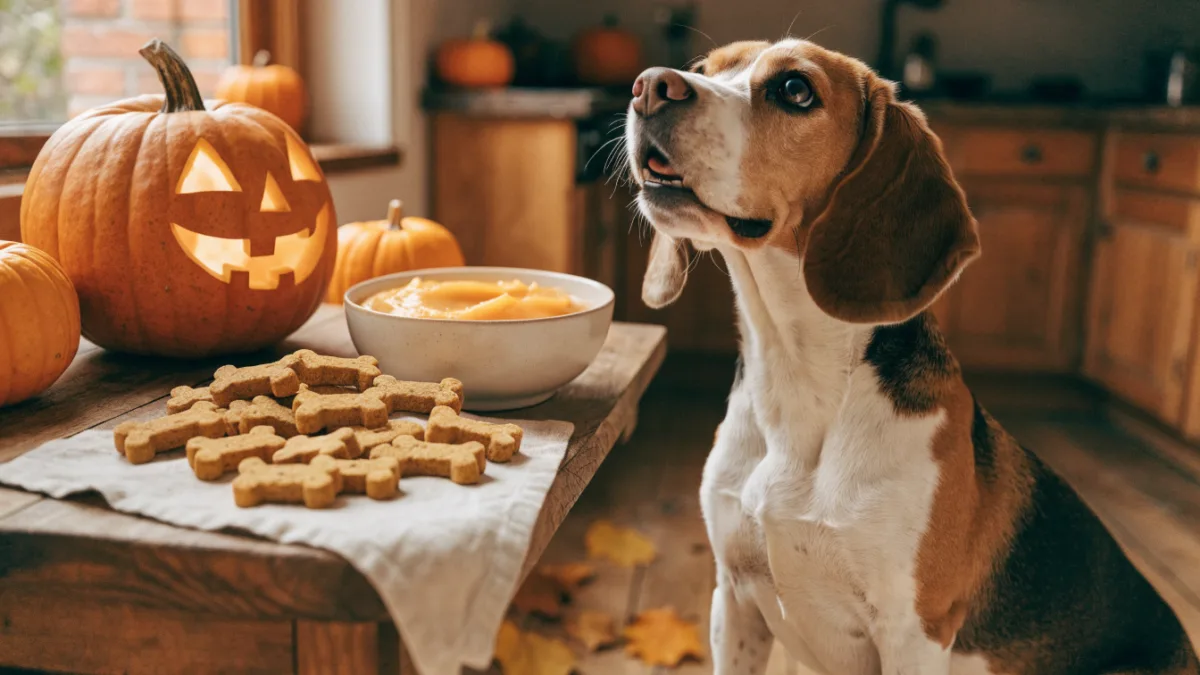
Every November 1st, I see the same thing in my neighborhood. Porches lined with sagging, sunken jack-o’-lanterns that are destined for the trash. I completely understand the impulse to toss them. Once the spooky season is over, those carved gourds go from festive décor to a slimy nuisance practically overnight. But as someone who spends her days thinking about canine digestion and sustainability, I always look at those discarded pumpkins and see wasted potential.
Plain pumpkin is actually a digestion-friendly, nutrient-rich superfood for our dogs. It is packed with fiber, low in calories, and fantastic for firming up loose stools or soothing an upset gastrointestinal tract. While I regularly recommend canned pumpkin to my patients, fresh pumpkin leftover from the autumn season is an excellent, environmentally conscious alternative if you process it correctly.
If you want to embrace zero-waste pet care and turn your autumn leftovers into nutritious snacks, here is how to safely repurpose your seasonal gourds.
The Porch Pumpkin Caveat: When to Compost Instead of Cook
Before we get to the fun stuff in the kitchen, we have to talk about food safety. I learned this lesson the hard way with a patient of mine—a four-year-old Beagle named Buster. His owners thought they were doing something great by scraping the inside of their porch jack-o’-lantern into Buster’s bowl. Unfortunately, the pumpkin had been sitting out for four days. Buster ended up in the clinic with severe gastroenteritis (an inflammation of the stomach and intestines) because the raw flesh had begun to ferment and harbor bacteria.
A jack-o’-lantern that has sat out on a porch for days is a breeding ground for trouble. Before you even think about feeding it to your dog, you have to give it a strict inspection.
If your pumpkin shows any of the following signs, it belongs in the compost bin, not the dog’s bowl:
- Mold spots: Certain molds produce tremorgenic mycotoxins (naturally occurring poisons that cause severe neurological symptoms like tremors and seizures in dogs).
- Slimy texture: This indicates bacterial growth and early decay.
- Fermented smell: If it smells like cheap alcohol or sour vinegar, it is rotting.
- Candle wax residue: Melted paraffin or beeswax inside the pumpkin can cause gastrointestinal upset or blockages if ingested.
If the pumpkin was carved the night before and has been kept cool, you are generally in the clear. But if you are even slightly suspicious of its condition, do not risk it. Compost it safely instead.
From Jack-o’-Lantern to Puree: Proper Preparation Techniques
Let’s say you have a pristine pumpkin that passed the visual and smell test. Now what?
You might be wondering if you can just chop it up and hand it to your dog raw. While some owners advocate for feeding raw pumpkin chunks, I strongly prefer cooking or dehydrating it first. Raw pumpkin is incredibly fibrous and tough for a dog’s digestive enzymes to break down efficiently. Cooking breaks down that tough cellular structure, making the nutrients much easier for your dog’s gut to absorb.
Processing the Flesh
First, remove the stem completely—the stem is tough, splintery, and a choking hazard. Next, you need to scoop out the seeds.
A wonderful trick I picked up from a sustainable living community is to drop the whole pumpkin from a low height onto a hard surface, like a cement patio. This naturally cracks the interior structure and loosens the stringy guts and seeds, making them incredibly easy to scoop out with a large spoon.
Save those seeds! You can rinse them, dry them, and roast them plain (without salt or oil) for a healthy, anthelmintic (natural parasite-deterring) snack for both you and your dog.
Once the seeds are out, cut the pumpkin flesh into manageable chunks. Place them in a baking dish with a shallow layer of water, cover with foil, and bake at 350°F (175°C) until the flesh is fork-tender. Let it cool, then throw the cooked chunks into a blender or food processor until perfectly smooth.
The Great Pumpkin Spice Debate
Every autumn, the “pumpkin spice” debate flares up in my exam rooms. Some owners want to share their autumn lattes and pies with their dogs, while others are terrified to feed their dog anything but plain puree.
I’ve changed my mind on this over the years. Early in my career, I told owners to strictly avoid all spices. But as veterinary nutrition evolved, I realized that the issue isn’t spices themselves—it is the specific spice blends found in human foods.
Traditional human “pumpkin pie filling” is toxic to dogs. It is loaded with sugar and contains nutmeg and allspice. Nutmeg contains a compound called myristicin, which can cause hallucinations, elevated heart rate, and seizures in dogs if ingested in significant amounts.
However, using plain, single-ingredient spices in your DIY dog treats is absolutely fine and even beneficial.
If you are baking homemade treats, you can safely add:
- A small dash of cinnamon, which has anti-inflammatory properties.
- A tiny pinch of ginger, which is excellent for soothing a dog’s mild nausea.
Just keep the additions simple and dog-friendly.
Zero-Waste DIY Treats and Preservation
Once you have your fresh pumpkin puree, the possibilities are endless. You can freeze the puree in silicone ice cube trays for quick, daily digestive toppers, or you can bake it into festive treats.
Festive Baked Biscuits
To make a simple, shelf-stable biscuit, blend your fresh pumpkin puree with oat flour (a great alternative for dogs with wheat sensitivities). Add a dash of cinnamon and ginger, and roll the dough out on a floured surface.
This is where you can have fun. Use autumn-themed cookie cutters—think jack-o’-lantern faces, leaves, or bones—to cut out your treats. Bake them until they are completely hard and crunchy. For a festive finish, you can drizzle them with dog-safe yogurt (plain, unsweetened live-culture yogurt) melts before serving.
Dehydrating for Longevity
If you want to avoid baking altogether, a food dehydrator is an incredible tool for zero-waste pet care. You can slice fresh, raw pumpkin into thin strips—think natural sweet potato chews—and pop them into the dehydrator.
Dehydrating removes the moisture, which prevents bacterial growth, without cooking away the natural vitamins. The result is a healthy, natural, long-lasting chew that promotes excellent dental health by scraping plaque off your dog’s teeth as they gnaw. Plus, they require absolutely no preservatives or packaging.
A Final Takeaway for Our Planet and Our Pups
Repurposing your leftover pumpkins isn’t just a fun kitchen project; it is a meaningful step toward environmental conservation. Food waste is a massive contributor to greenhouse gases. When organic matter like a pumpkin ends up in a sealed landfill, it breaks down without oxygen, producing methane—a greenhouse gas that is drastically more potent than carbon dioxide.
By taking a leftover porch decoration and turning it into a nutrient-rich, digestion-friendly superfood for your dog, you are doing more than just spoiling your pup. You are actively reducing your household’s carbon footprint. Zero-waste pet care is a growing, beautiful movement, and it proves that we can prioritize our pets’ health while being gentle on the planet they love to run and play on.
Just remember: always consult with your veterinarian before making major changes to your dog’s diet, especially if they have a history of diabetes, chronic pancreatitis, or sensitive stomachs. Happy baking, and happy autumn!