

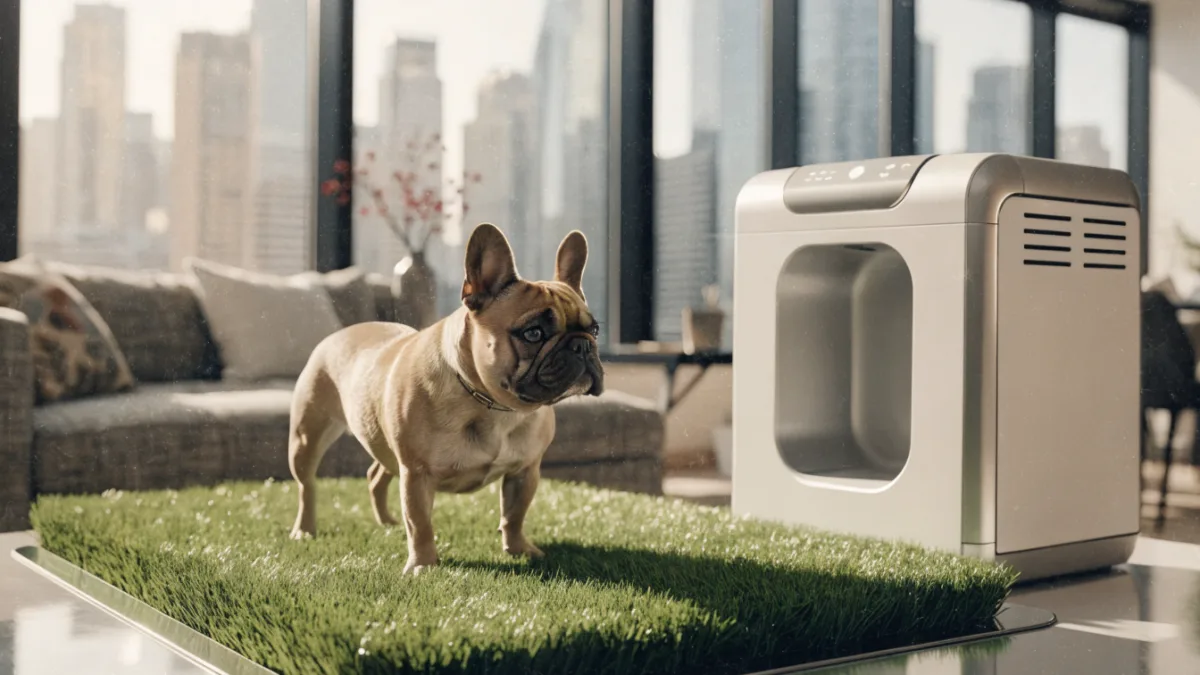
Picture this: it is 6:00 AM, it is raining sideways, and you are standing in your apartment hallway waiting for an elevator that is taking an eternity. Beside you, a three-month-old puppy is doing the desperate, wide-eyed pee-pee dance. You live on the third floor. By the time you get down to the street level, your shoes are wet, your patience is thin, and your rug is absolutely doomed.
If you have ever lived in a high-rise or an apartment without easy yard access, you know the specific type of anxiety that comes with canine bathroom breaks. Urban dog parenting is an adventure, but the logistics of pottying can feel like a part-time job. Fortunately, the pet care industry has realized that not everyone has a fenced-in backyard, and the market has exploded with indoor potty solutions. From farm-fresh grass delivered to your door to high-tech, self-cleaning litter boxes that look like they belong on a spaceship, the options are vast. But which one actually works for a busy apartment dweller?
The High-Rise Hustle: Why Indoor Pottying is a Survival Tactic
Let us be honest about the physical reality of apartment living with a dog. When nature calls, you have to leash up, grab the poop bags, and navigate hallways, stairs, or elevators before your dog’s paws even hit the grass. For a young puppy who is still building bladder control, or a small breed with a tiny tank, frequent outdoor trips are physically exhausting.
Then there is the reality of modern work schedules. I have read countless stories from pet parents who are suddenly asked to work twelve-hour shifts, leaving them in a absolute panic about how their dog will hold it. In these scenarios, an indoor potty solution is not a luxury or a symptom of a lazy owner; it is a vital necessity for animal welfare.
Indoor options alleviate the stress of the rushed outdoor trip and prevent the devastating “home alone” accidents that leave dogs feeling ashamed and owners coming home to a smelly disaster. But choosing the right setup requires navigating a few debates—namely, natural instincts versus modern convenience.
The Real Grass Revolution: Bringing the Outdoors In
If you want to tap directly into a dog’s primal brain, you need to look into real grass patches. Over the past few years, subscription services that deliver squares of hydroponically grown, soil-free grass right to your apartment door have gained massive popularity.
Why Real Grass Wins Hearts
Dogs have a powerful instinctual attraction to natural surfaces. The scent and texture of real grass send an immediate signal to their brains that this is an acceptable place to do their business. Because of this, training is often highly effective and incredibly fast. Instead of trying to convince a dog that a weird, squishy pad is a toilet, you are simply giving them a piece of their natural habitat.
From an odor standpoint, living grass actually helps neutralize the smell of urine through natural biological processes. For an apartment dweller, this is a massive win. Many urbanites place these grass patches on their balconies, creating a perfect middle-ground option: the potty is outside in the fresh air, but the dog does not have to survive a ten-story elevator ride to reach it.
The Catch: Cost and Maintenance
The downside? Real grass patches are expensive. Maintaining a subscription can easily cost as much as a monthly streaming service for a single square of turf. Additionally, while hydroponic grass is relatively clean, it is still a living plant. If you keep it indoors, you have to manage a tray system to catch runoff, and eventually, the grass will yellow and die, requiring you to swap it out for a fresh square.
The Pee Pad Dilemma and High-Tech Alternatives
Before the days of grass subscriptions, there were synthetic pee pads. They are cheap, widely available, and highly absorbent. But they come with a host of frustrations. Many dogs view the fluttering plastic corners of a pee pad as an open invitation to shred it into a thousand microscopic pieces. Others step off the pad halfway through their business, leaving you to clean the surrounding floor anyway.
This is where high-tech indoor litter boxes and reusable mat systems enter the chat. Designed to focus on reusability and serious odor control, these systems typically feature a plastic tray topped with a washable, synthetic turf or a specially designed grid.
For owners working those grueling 12-hour shifts, a sturdy, reusable synthetic mat placed over an absorbent pad can be a lifesaver. The initial investment is higher than a pack of cheap disposable pads, but you save money in the long run. The catch is the cleaning. Synthetic turf requires frequent washing, and if you do not have a balcony or a utility sink, hosing off a plastic mat in your bathtub is an experience that truly tests your limits as a pet parent.
Wait, Can Cats Use Dog Grass Patches?
Here is where my own interests truly lie. As someone who spends an inordinate amount of time analyzing cat logic, I am fascinated by the recent trend of cross-species bathroom hacking. Multi-pet households are starting to look at dog products and wonder: can my cat use this?
Traditional clay cat litter is a marvel of absorbency, but it is also incredibly messy. Cats fling it everywhere, the dust is terrible for feline respiratory systems, and tracking it across an apartment floor is basically a guarantee. Enter the dog grass patch.
Some brilliantly chaotic pet owners have discovered that dog-oriented grassy mats—specifically the real grass boxes—can successfully be used by cats. Cats are naturally drawn to earthy textures to do their business, and a patch of real grass appeals to their outdoor instincts just as much as it appeals to a dog’s. Using a dog patch for a cat can eliminate the need for messy clay litter entirely. It is a fascinating money-saving alternative, though it does deviate from traditional feline bathroom habits. If you want to try this, you have to be prepared for some behavioral resistance. Cats are notoriously picky about where they toilet, and while some will embrace the indoor meadow immediately, others might stage a protest on your favorite sweater.
The Training Debate: Will an Indoor Potty Ruin My Dog?
Whenever indoor potty solutions are discussed, a fierce debate inevitably sparks in the puppy training community: does providing an indoor pad confuse a dog and delay their transition to going potty strictly outdoors?
The fear is that if you teach a dog it is acceptable to pee on the living room floor—even on a designated patch of grass—they will never learn to hold it until they are taken outside.
I will not give you strict dog training advice here, because my partner Jake is the professional dog trainer in the family, and he has very strong opinions on canine structure. But Jake and I both agree on this: it depends entirely on your consistency and your goals. If your ultimate goal is for your dog to only ever go to the bathroom on city sidewalks, you have to be careful not to blur the lines. However, if you want your dog to use a balcony patch for the rest of their life because you live in a fifth-floor walk-up, then it is not a “training delay”—it is just their established routine.
Talk to your vet or a positive-reinforcement trainer about how to phase out indoor pads if your goal is strictly outdoor pottying. The transition requires clarity on your part, so your dog knows exactly what is expected of them.
The Environmental Elephant in the Room
When we talk about indoor pottying, we have to address the environmental impact of what we are throwing away.
Disposable, single-use pee pads are an ecological nightmare. They are essentially human-grade diapers made of plastic and super-absorbent polymers. Once soiled, they sit in landfills for hundreds of years. While they are undeniably convenient for a quick cleanup, the long-term cost to the planet is steep.
This is where real grass patches and high-tech reusable mats shine. A subscription box of real, soil-free grass is fully biodegradable. When the grass dies, you can often compost it (check your local municipal rules, and do not use dog-soiled compost on edible plants!). Similarly, reusable synthetic mats produce zero daily landfill waste because you simply wash and reuse them.
If you are an environmentally conscious pet parent, choosing a reusable or biodegradable potty system over disposable pads is a genuinely impactful way to reduce your household’s carbon pawprint.
At the end of the day, apartment living with a dog or a cat requires a healthy dose of humor and a willingness to experiment. Whether you opt for a high-tech synthetic mat that you can hose down in the shower, or you decide to embrace the farm-to-apartment lifestyle with a real grass patch, the right choice is the one that keeps your pet comfortable and your home accident-free. Do not let anyone make you feel guilty for using indoor potty aids. Living on the third floor with a small dog and a demanding job is hard enough—you deserve a bathroom solution that works for your reality.