

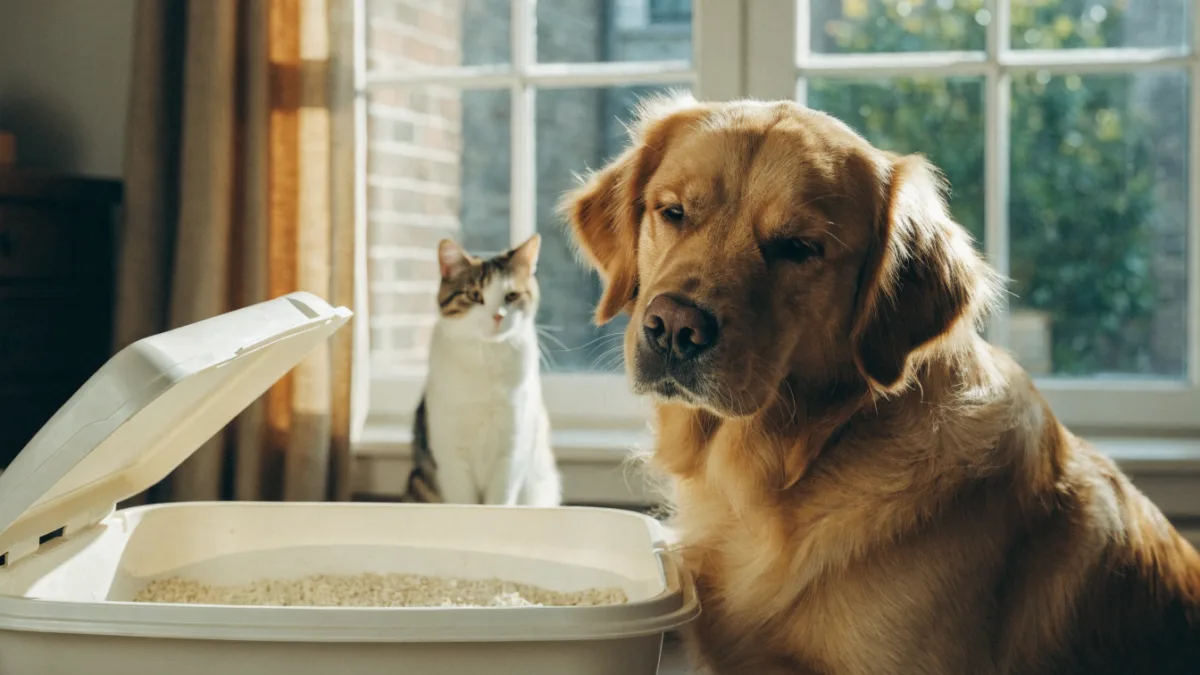
There’s a specific kind of horror that comes from watching your dog trot toward you with what you slowly realize is not a toy, not a sock, not a piece of kibble — but a clump of used cat litter dangling from their delighted mouth. I’ve lived it. The cat is glaring from across the room like she’s been personally violated. The dog is wagging. You’re standing there wondering if you ever truly knew either of them.
Welcome to the wonderful world of coprophagia — the scientific term for eating feces — and specifically, the deeply common phenomenon of dogs treating the litter box like an all-you-can-eat buffet. It’s gross. It’s also, somehow, extremely normal dog behavior. Let’s talk about why it happens and what you can actually do about it without losing your mind.
Why Dogs Find Cat Poop Irresistible
Here’s the thing that makes this easier to understand, even if it doesn’t make it easier to watch: dogs aren’t broken. They’re not being bad on purpose. They’re responding to biology.
Cats are obligate carnivores, which means their diet is built almost entirely around meat. Cat food is packed with protein — way more than most dog food. And because cats don’t fully absorb everything they eat, what comes out the other end still carries a strong, meaty scent and a high-protein profile that registers to a dog’s nose as food. To a dog, cat poop doesn’t smell like waste. It smells like a slightly fermented protein snack.
Gross? Absolutely. Incomprehensible? Not really.
But It’s Not Always Just About the Smell
Beyond the scent appeal itself, there are two main buckets of “why” that veterinarians and behaviorists point to:
- Behavioral causes: Boredom, habit, curiosity, stress, or anxiety. Some dogs develop the behavior because they’re under-stimulated and the litter box raid is the most exciting thing that happens in their day. Others start because the repetitive action is soothing. And some — let’s be honest — just really enjoy it and have decided this is their personality now.
- Medical or nutritional causes: Sometimes coprophagia points to something missing in the dog’s diet — a vitamin deficiency, poor-quality food, or a malabsorption issue where the dog isn’t actually extracting nutrients from what they eat. This is why, if the behavior shows up suddenly or escalates, the first call should be to your vet, not to the internet.
I’ll defer to Jake on the behavioral modification side of things — training a dog out of this habit is absolutely possible, but that’s his lane, not mine. My job is to make the box harder to raid in the first place.
The Health Risks (Because It’s Not Just Gross)
Okay, so it’s disgusting. But is it actually dangerous?
Sometimes, yes. Here’s what you’re realistically dealing with:
- Digestive upset: Vomiting, diarrhea, the works. Cat feces can irritate a dog’s GI tract, especially if they eat a lot at once.
- Parasites: Roundworms and other internal parasites can be transmitted through cat feces. If your cat goes outdoors or isn’t on a regular parasite preventative, this is a genuine concern worth discussing with your vet.
- Clumping litter ingestion: This one honestly freaks me out more than the poop itself. Clumping litter is designed to expand when wet. If a dog eats a clump of used litter, that material can swell inside their digestive tract and cause a blockage — which is a veterinary emergency, not a “wait and see” situation.
So no, this isn’t just a manners problem. It’s worth solving.
Litter Box Dog-Proofing: What Actually Works
The single most effective thing you can do is change the environment. You’re not going to reason with a dog about this. You’re going to make it physically difficult or impossible to access the box.
The Baby Gate Method (My Favorite)
Put the litter box in a room the cat can access but the dog can’t. A standard baby gate works beautifully if your cat is agile — most cats can clear a gate without a second thought, while most dogs cannot. If you have a small dog or a particularly determined jumper, look for a gate with a small cat-sized gap built into it.
This is my top pick because it doesn’t change anything about the litter box itself. The cat gets an open box with fresh air circulation. You get peace of mind. Everyone wins except the dog, who will get over it.
Covered Boxes With Small Entry Holes
A covered litter box with an entry opening sized for a cat can work — the cat slips in, the dog’s head doesn’t fit. This is a solid option if you can’t gate off a room.
But here’s the controversy worth knowing about: many cat behaviorists genuinely dislike covered boxes because they trap odors inside. Cats have extraordinarily sensitive noses, and a covered box can get rank fast. If your cat is at all fastidious about cleanliness — and let’s be real, most cats are — a covered box might push them toward eliminating outside the box entirely. That trade-off is not worth it.
If you go this route, scoop constantly. Like, more than you think you need to. And watch your cat’s behavior closely. If they start avoiding the box, the cover is the culprit.
Top-Entry Litter Boxes
These have become increasingly popular, and for good reason. The cat jumps in through a hole in the top. Most dogs can’t or won’t follow. They’re also great for reducing litter tracking, which is a lovely bonus. The catch: they’re not suitable for senior cats, kittens, or cats with mobility issues. Know your cat before you commit.
Elevated Spaces
If your cat is a confident jumper and your dog is small or not a climber, putting the box on a sturdy elevated surface can work. Just make sure it’s genuinely stable — the last thing you want is the box tipping over mid-use. I’ve seen some genuinely clever setups with boxes tucked into closet shelves with a cat-accessible ramp nearby.
Hidden Litter Box Furniture
There’s a whole market now for cabinets and furniture pieces designed to conceal a litter box, with a small cat-only entry hole on the side. These can be genuinely effective, and they also solve the “I don’t want a litter box visible in my living room” problem. Look for ones with real ventilation and enough interior space that the cat doesn’t feel cramped inside.
Microchip-Activated Pet Doors
If you want to go full tech, there are pet doors that read your cat’s microchip and open only for them. You can install one on a door to a closet, laundry room, or small space where the litter box lives. The cat gets in. The dog does not. It’s a bigger investment and requires some setup, but it’s essentially foolproof.
Booby Traps (Use With Judgment)
You can set up harmless deterrents around the box — motion-activated noisemakers, crinkly materials the dog has to walk over, things that startle without causing harm. The goal is to create a negative association with the area.
Honestly? I’m mixed on this one. It can work, but you have to be careful that you’re not also scaring the cat, which would defeat the entire purpose. If your cat is skittish, skip this approach entirely. If your cat is bombproof and your dog startles easily, it might be worth trying.
Don’t Forget the Cat
Here’s what I don’t want to get lost in all this problem-solving: your cat didn’t ask for any of it. The litter box is their space. It’s where they handle their business in peace, and they deserve to keep doing that without a dog barging in or without their bathroom becoming a source of stress and conflict.
Every solution above should be evaluated through the cat’s perspective too. Does this make the box harder to use? Does it trap odors? Does it make the cat feel cornered or exposed? If the answer to any of those is yes, it’s the wrong solution — no matter how effectively it keeps the dog out.
The Bottom Line
Dogs eat cat poop because it smells like food to them, because they’re bored or anxious, or sometimes because something’s genuinely off in their diet. The fix isn’t to lecture the dog — it’s to manage the environment so the behavior can’t happen, and to check in with your vet if anything seems medically suspicious.
And if all else fails? Scoop more often. The less time waste spends in the box, the less time your dog has to find it. It’s not glamorous advice, but it works every single time.
At the end of the day, the litter box is one small corner of your home — but it’s a corner that matters enormously to your cat. Protecting it well is part of giving both your animals a life where they feel safe, clean, and respected. Your dog doesn’t need access to the box to be happy. Your cat absolutely does need to feel secure in it. Get that balance right, and everyone’s quality of life goes up — including yours, once you stop finding suspicious “presents” on the carpet.