

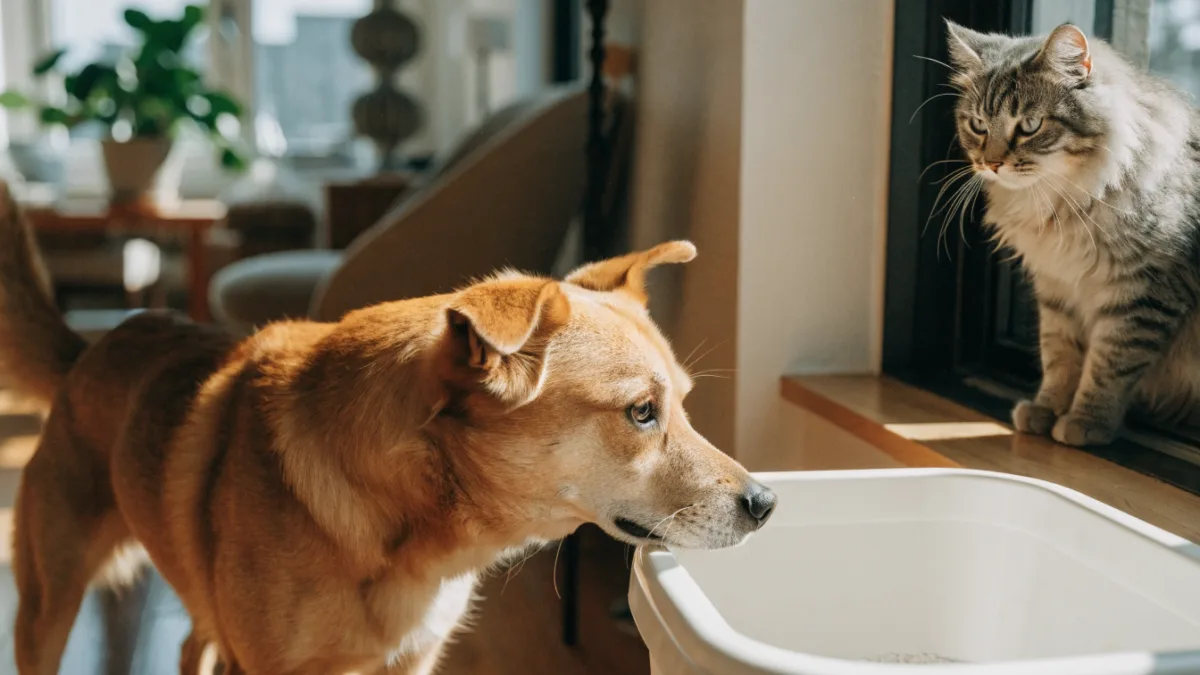
I’ll never forget the afternoon a frantic client named Sarah brought her two-year-old Golden Retriever, Cooper, into the clinic. Cooper was a happy, healthy boy, but Sarah was at her wit’s end. “He waits for my older dog to go,” she confessed, her face flushing with embarrassment, “and then he eats it like it’s a gourmet treat. Does he have some terrible nutritional deficiency? Is he sick?”
I reassured her immediately. While it’s completely understandable to be grossed out—and naturally, we worry about our pets’ health when they do something that seems so fundamentally wrong to us—poop-eating is actually one of the most common quirks I see in practice.
Officially, the behavior is known as coprophagia (from the Greek copros, meaning feces, and phagein, meaning to eat). When a dog specifically eats its own feces or that of another dog, we call it canine conspecific coprophagy. It sounds like a terrifying medical diagnosis, but more often than not, it’s a deeply ingrained behavioral trait. Let’s pull back the curtain on the science behind why our dogs—and cats—interact with waste the way they do.
The Surprising Statistics Behind the Snack
If your dog is a poop-eater, you aren’t alone, and you haven’t failed as a pet parent. Studies have shown that about 20% of dogs engage in this behavior. Within that group, roughly 16% are classified as “serious” offenders, meaning they do it frequently and with great enthusiasm.
Interestingly, social dynamics seem to play a massive role. In households with three or more dogs, the rate of poop-eating jumps significantly to 33%. When you have a multi-dog household, you often see competition. Even if they aren’t actively starving, the presence of other animals can trigger a competitive scavenge mentality—the “if I don’t eat it now, someone else will” approach.
Another fascinating detail I always share with clients like Sarah is the concept of “fecal freshness.” Dogs are incredibly selective. They aren’t usually interested in old, dried-out, weathered feces. They heavily prefer fresh stool. This tells us that they are drawn to the strong, volatile odors and the undigested fats and proteins still present in recently deposited waste.
Evolutionary Roots and the Maternal Instinct
To understand why our modern dogs do this, we have to look back at their wild ancestors. In the wild, a den is a nursery, and a nursery full of puppy poop is a neon sign inviting predators. Mother dogs and cats will actively consume the feces of their young. This keeps the den clean, eliminates odors that might attract threats, and stimulates the puppies or kittens to properly eliminate.
It’s completely normal behavior, and unfortunately for us, puppies and kittens observe this and mimic it. For young animals, exploring the world with their mouths is how they learn. Most puppies outgrow this phase by the time they are six to nine months old, but for some, the habit sticks around.
The Wolf Ancestry
Even beyond the maternal instinct, scavenging is built into canine DNA. Wolves don’t have the luxury of rejecting a food source just because it’s a bit unsavory. In the wild, eating feces—especially from herbivores like deer or rabbits—is a way to extract additional nutrients, like B-vitamins, that weren’t fully absorbed during the first pass through the digestive tract.
The Scientific “Poop Paradox”
For a long time, the scientific community was baffled by canine conspecific coprophagy. In a highly cited 2018 paper, researcher B.L. Hart highlighted what is now known as the “poop paradox.” Logically, eating feces is maladaptive. Poop harbors dangerous pathogens, harmful bacteria, and nasty intestinal parasites. Natural selection should have weeded out this behavior a long time ago.
Yet, the behavior persists. This leaves researchers and veterinarians debating three main drivers:
- Evolutionary Instinct: The deeply rooted, inherited drive for den sanitation and opportunistic scavenging that hasn’t been fully bred out of domestic dogs.
- Psychological Factors: Stress, anxiety, or plain boredom. Some dogs eat feces simply because it gets a massive reaction from their humans.
- Nutritional or Medical Deficiencies: Occasionally, dogs with malabsorption issues, diabetes, or thyroid problems will eat feces in an attempt to gain missing nutrients.
I’ve changed my mind on this over the years. Early in my career, I was quick to blame behavioral issues or a poor diet. But the more we learn about the evolutionary biology of domestic dogs, the clearer it becomes that for many dogs, this is simply a normal, albeit disgusting, ancestral quirk rather than a sign of illness.
What About Cats? The Fastidious Feline Approach
While dogs are the usual suspects when it comes to dining on waste, feline litter box habits are governed by that same deep-seated evolutionary drive: predator avoidance.
Just like dogs, mother cats will consume the waste of their kittens to keep the nest safe. But for cats, the instinct to bury their waste is incredibly strong. In the wild, dominant, unneutered male cats will often leave their feces unburied to mark their territory and assert dominance. Subordinate cats, and particularly females rearing young, will carefully bury their waste to avoid attracting the attention of predators or aggressive males.
This is why kittens take to the litter box so naturally. They have an innate biological drive to dig, deposit, and cover.
That said, I do see cats with coprophagia, though it’s much rarer. When a cat starts eating feces—either their own or the dog’s—it usually warrants a closer look. In cats, this behavior is more likely to be tied to an underlying medical issue, such as anemia, malnutrition, or feline cognitive dysfunction in older cats. If your feline friend suddenly develops a taste for waste, it’s time for a checkup rather than a behavior modification session.
Managing the Behavior: Practical Steps
If you’re dealing with a poop-eater, you’re probably wondering what you can actually do about it. It’s worth acknowledging the home remedies you might read about online, then redirecting energy toward evidence-based solutions.
Many people try adding pineapple, pumpkin, or meat tenderizers to their dog’s food, hoping it will make the resulting poop taste bad. To a dog who already enjoys eating feces, a little pineapple isn’t going to deter them. Instead of relying on these myths, here is what actually works:
- Ninja-Level Yard Maintenance: The absolute best way to stop coprophagia is to break the cycle. Pick up the yard immediately after your dog goes. If the opportunity isn’t there, the behavior can’t be practiced.
- Dietary Optimization: While nutritional deficiencies are rarely the cause, some dogs simply need a highly digestible diet or a specific probiotic to feel fully satiated and optimize their gut motility. Always consult your veterinarian before changing your dog’s diet or adding supplements—we can help you find the right balance of fiber and protein based on your dog’s specific needs.
- Enrichment and Training: If the behavior is driven by boredom or attention-seeking, increase your dog’s daily enrichment. Teach a rock-solid “leave it” command. If your dog goes for a pile in the yard, call them to you and reward heavily. Make coming to you more exciting than eating the poop.
Ultimately, understanding our pets means accepting that they don’t operate by human standards of hygiene. They operate by ancient instincts forged in the wild. While coprophagia and obsessive litter box digging aren’t exactly dinner-table conversation topics, they are incredibly normal facets of animal behavior. By managing their environment and keeping an eye on their overall health, we can peacefully coexist with our wonderfully weird, wild-at-heart companions.