

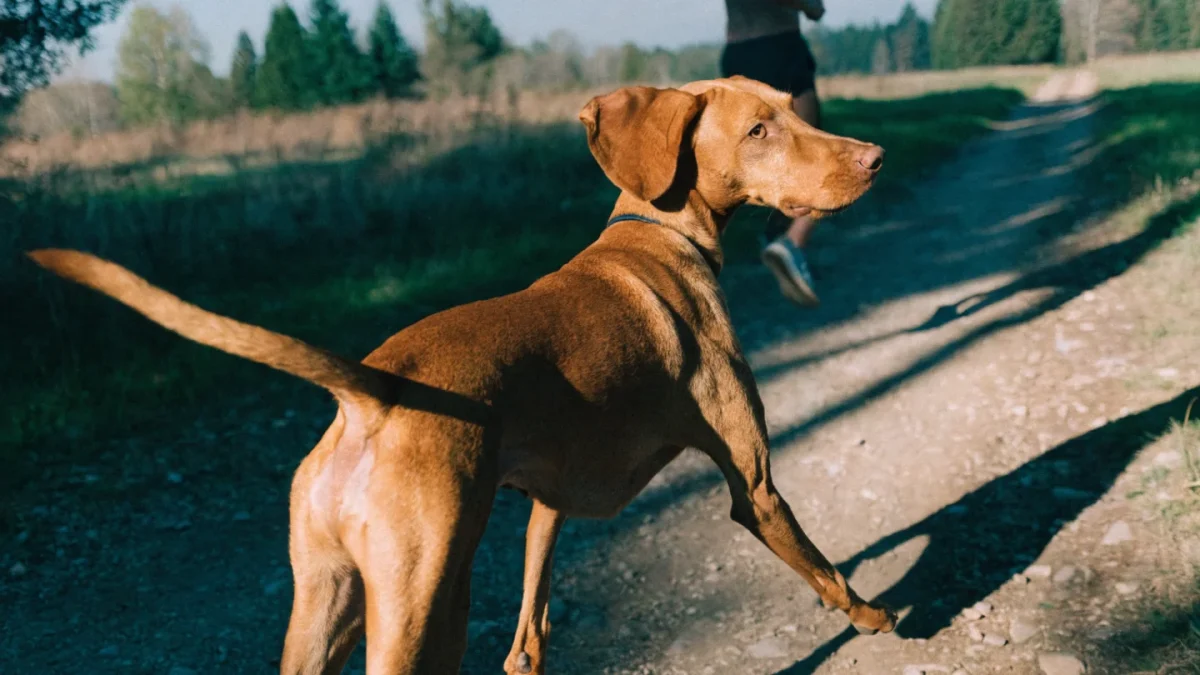
The most common mistake people make when choosing a running partner isn't picking the wrong breed. It's starting too young. No dog should run sustained distances on hard surfaces until growth plates have closed — typically between 12 and 18 months depending on breed size. Running a puppy creates orthopedic damage that compounds for life. Get the timing right, and these six breeds will match or exceed most human runners' endurance.
For the broader picture of matching a breed to your lifestyle, see choosing a breed that fits your activity level.
1. Vizsla
The Hungarian Vizsla was bred to cover vast terrain during hunts, and that endurance translates directly to distance running. At 20 to 29 kg with a lean, athletic build and short coat, they're built for sustained effort in warm and moderate conditions.
Why they fit runners: Vizslas maintain pace naturally, typically matching a 5:00 to 6:30 per km pace without overexertion. They have excellent heat dissipation thanks to their single coat. They bond intensely with their owners and run at heel instinctively once trained. Daily distances of 8 to 15 km are well within their capacity.
The tradeoff: Vizslas need this level of exercise. A Vizsla that doesn't run becomes anxious and destructive. They're a commitment, not a casual jogging companion. They also handle cold poorly — that thin coat offers minimal insulation.
2. Weimaraner
The Weimaraner was developed in early 19th-century Germany as a versatile hunting dog for large game. Their deep chest, long legs, and lean musculature make them natural distance runners. At 25 to 40 kg, they're larger than Vizslas but share the same athletic build.
Why they fit runners: Weimaraners have the stamina for long runs and the speed for interval work. Their short coat manages heat reasonably well. They're attentive to their handler during exercise and generally maintain pace without pulling ahead or lagging behind once trained.
The tradeoff: Weimaraners develop severe separation anxiety more frequently than most breeds. Running alone isn't the challenge — everything else about their management is intense. They're not a low-commitment breed in any dimension. For the full profile of the breed covering its 19th-century German origins and separation anxiety tendencies, see the Weimaraner complete breed guide.
3. German Shorthaired Pointer
If you need a dog that can handle both road running and trail running across varied terrain, the GSP is hard to beat. Developed in 19th-century Germany from crosses of German pointers with English foxhound and tracking hound bloodlines, they combine pointing, retrieving, and endurance in one package. At 20 to 32 kg, they're athletic and versatile.
Why they fit runners: GSPs have exceptional cardiovascular endurance and handle heat well. Their webbed feet provide traction on varied surfaces. They're comfortable at sustained paces and can cover 15 to 20 km runs without difficulty once conditioned. Their short coat requires zero grooming beyond basic maintenance.
The tradeoff: GSPs are extremely high-energy dogs that need 90 or more minutes of activity daily. Running needs to be part of a comprehensive exercise plan, not the entirety of it. They also have strong prey drive and may break pace to chase wildlife on trails.
4. Rhodesian Ridgeback
Originally developed in southern Africa to track lions and hold them at bay for hunters, the Rhodesian ridgeback is a powerful, heat-tolerant athlete. At 32 to 41 kg, they're the largest breed on this list and bring a different running style — steady, efficient, and built for hot conditions.
Why they fit runners: Ridgebacks were bred to work in extreme heat across vast distances. Their short, dense coat and lean build make them one of the few large breeds that maintain performance in warm climates. They run with an efficient, ground-covering stride that matches moderate-pace distance running well.
The tradeoff: Ridgebacks have a strong independent streak and moderate biddability. Loose-leash running requires dedicated training. They're also large enough that joint health must be monitored carefully — orthopedic issues can develop with improper conditioning or too-hard surfaces.
5. Australian Shepherd
Australian shepherds bring herding-dog endurance and agility to running. At 18 to 29 kg, they're medium-sized, athletic, and mentally engaged during exercise in ways that other breeds aren't. Trail running, in particular, suits them because it engages both their physical and mental drives.
Why they fit runners: Aussies have excellent stamina and handle varied terrain naturally. Their double coat provides weather protection across seasons. They're responsive to direction, which makes running in crowded parks or on trails manageable. Their drive to work means they rarely lose motivation mid-run.
The tradeoff: That double coat is a liability in extreme heat. Aussies overheat faster than single-coated breeds and need to run during cooler parts of the day in summer. They also shed heavily and require regular grooming. Their intelligence demands mental stimulation beyond running — physical exercise alone doesn't satisfy them.
6. Border Collie
Border collies are the endurance athletes of the herding world. At 14 to 20 kg, they're lighter than most breeds on this list, which translates to efficient movement and reduced joint stress over distance. They were bred to cover up to 80 km per day working sheep on hill farms.
Why they fit runners: Border collies can run farther and longer than most humans. Their cardiovascular efficiency is exceptional, and their nimble build handles trails, hills, and varied surfaces with ease. They're highly attuned to their handler and responsive to pace changes.
The tradeoff: A border collie that only runs is a border collie that's half-stimulated. They need mental work — training, puzzles, problem-solving — on top of physical exercise. They're also sensitive dogs that can develop anxiety if their considerable needs aren't met. This breed is a serious commitment that extends well beyond the run.
Running Safety for Every Breed
Regardless of breed, respect these fundamentals: always carry water for both of you; avoid running in temperatures above 25 to 27 degrees Celsius unless the breed has demonstrated heat tolerance (see breeds built for hot-weather running); check paw pads regularly for damage from hot pavement or rough trails; build distance gradually using the same progressive overload principles you'd apply to your own training; and watch for signs of overexertion — excessive panting, lagging, stumbling, or refusal to continue. A dog will often run past its limits to stay with you. That loyalty is admirable, but it can be dangerous if you're not paying attention.