

I want to be direct about something: no dog is truly low-maintenance. Every dog needs daily feeding, exercise, social interaction, and veterinary care. If your schedule genuinely doesn't allow for a living creature's daily needs, the honest answer isn't finding the right breed — it's waiting until your situation changes.
That said, there are real and significant differences between breeds in terms of daily time investment. A greyhound that needs two 20-minute walks and virtually no grooming is a fundamentally different time commitment than a standard poodle that needs an hour of exercise, daily brushing, and professional grooming every month. For busy people who can commit the baseline but need efficiency, these six breeds minimize the daily overhead. Start with the full breed selection guide for context.
1. Greyhound (Retired Racing)
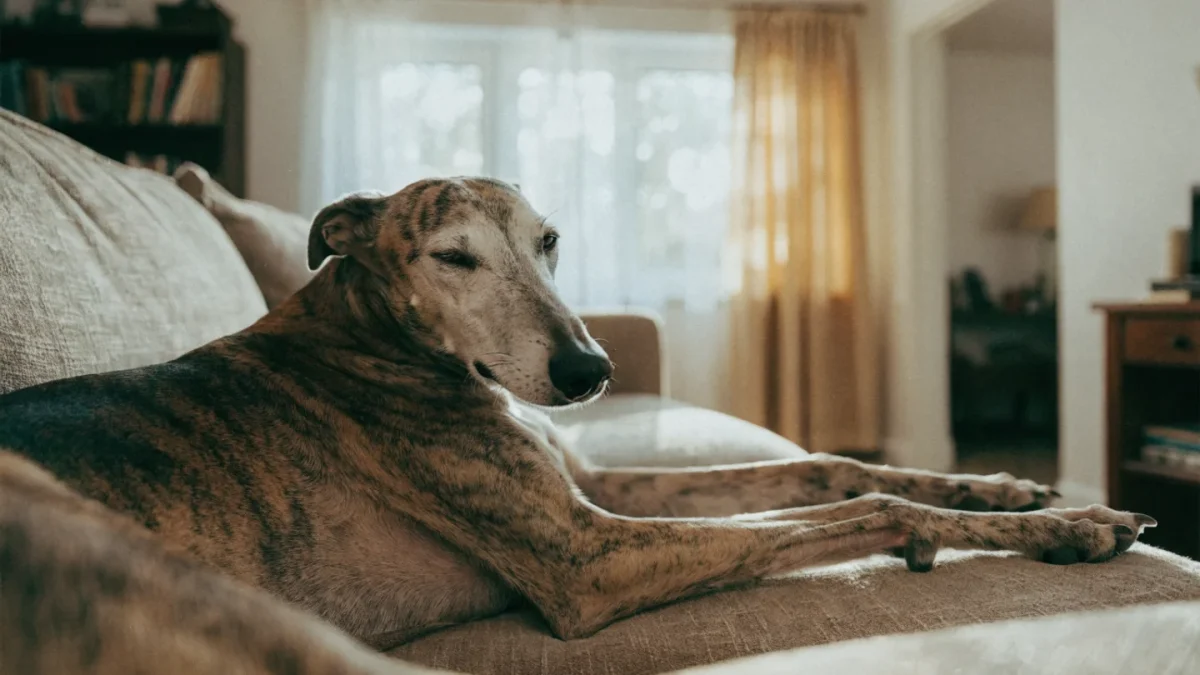
If there's a single breed that maximizes companionship while minimizing daily effort, it's the retired racing greyhound. Their sprint-then-sleep lifestyle means two moderate walks daily (20 to 30 minutes each) satisfies their physical needs. The rest of the time, they're sleeping.
Why they're low-maintenance: Short coat that needs almost no grooming — a weekly once-over with a brush is sufficient. Minimal shedding. Quiet disposition. They tolerate alone time well once settled into a routine. They don't need games, puzzles, or complex enrichment to stay content (though they appreciate it).
The tradeoff: Prey drive means off-leash trust is limited. They need soft bedding (their bony frames bruise on hard surfaces). Cold sensitivity requires coats in winter. Initial adjustment from racing life may include uncertainty with stairs, glass doors, and household objects they've never encountered.
2. Chihuahua
At 1.5 to 3 kg, the Chihuahua has the smallest exercise footprint of any breed. Short walks, indoor play, and basic daily interaction meet their physical needs. The short-coated variety requires almost zero grooming.
Why they're low-maintenance: Chihuahuas need 20 to 30 minutes of exercise daily — easily achieved with neighborhood walks and indoor play. Short-coated Chihuahuas rarely need more than a weekly brush. They're small enough to transport anywhere and don't require large quantities of food.
The tradeoff: Chihuahuas can be barky, territorial, and snappish if not properly socialized. They bond intensely with one person and may be hostile toward others. They're fragile — a fall from furniture can cause serious injury. They feel cold acutely and need warmth management in cooler climates.
3. Basset Hound
Bassets are among the least demanding breeds in terms of exercise. At 25 to 30 kg, they're not small dogs, but their default state is sleeping and their preferred pace is ambling. Two moderate walks of 20 to 30 minutes daily is sufficient.
Why they're low-maintenance: The basset's short coat needs only weekly brushing. Their exercise demands are genuinely low. They're content with routine and don't need complex stimulation to stay happy. They're gentle and non-destructive indoors.
The tradeoff: Bassets can howl — a deep, room-shaking bay that carries. Their ears need regular cleaning to prevent infections. They're prone to obesity because their low energy means they burn fewer calories. Stubbornness during training is a breed feature, not a bug.
4. Dachshund
Dachshunds (standard: 7 to 15 kg; miniature: under 5 kg) are small, portable, and moderate in their demands. Originally bred to hunt badgers in 15th-century Germany — requiring courage disproportionate to their size — modern pet dachshunds retain the confidence but not the extreme activity level.
Why they're low-maintenance: Short-coated dachshunds need minimal grooming. Exercise needs are moderate (30 to 40 minutes daily). They adapt to apartments and small homes. They're independent enough to tolerate reasonable alone time without anxiety.
The tradeoff: Intervertebral disc disease is the breed's primary health concern — their elongated spine is structurally vulnerable. Stairs, jumping on and off furniture, and obesity all increase risk. They can be territorial and bark-prone. Some individuals are notoriously stubborn about house training.
5. Whippet
Whippets deliver greyhound-like low maintenance in a smaller package (8 to 14 kg). Their short coat, quiet nature, and sprint-then-sleep energy pattern make them one of the most time-efficient breeds available.
Why they're low-maintenance: Minimal grooming (weekly brush at most). Low exercise needs relative to their athletic appearance — 30 to 40 minutes daily with some running opportunity is sufficient. They're quiet, clean, and naturally tidy dogs. They settle quickly indoors and don't demand attention.
The tradeoff: Prey drive limits off-leash options. They're cold-sensitive and need coats in winter. Their thin skin is vulnerable to cuts and abrasions. They can be timid if not socialized properly.
6. French Bulldog
Frenchies' low exercise needs (20 to 30 minutes) and short coat make them one of the lowest daily-time-investment breeds. They're content to be near you without requiring structured activities or complex enrichment. Before committing, read the French Bulldog complete breed guide — brachycephalic health costs can offset the time savings in ways worth understanding upfront.
Why they're low-maintenance: No grooming beyond occasional brushing. Exercise needs are genuinely minimal. They adapt to varying schedules and don't punish owners for an occasional lazy day. They're portable and easy to include in errands and outings.
The tradeoff: Health costs can offset the time savings. Brachycephalic issues — breathing, temperature regulation, skin fold infections, spinal problems — mean veterinary visits and expenses may be higher than average. The breed's popularity has driven overbreeding, increasing health risks in many lines.
The Honest Truth About "Low-Maintenance"
Low-maintenance means lower daily time investment, not no investment. Every breed on this list still needs: daily exercise (even if modest), consistent feeding, routine veterinary care, socialization, and genuine companionship. A dog that's left alone all day, walked for five minutes, and otherwise ignored isn't a low-maintenance success story — it's a neglected animal.
The real question is whether your schedule can accommodate the baseline needs of any dog. If it can, these breeds minimize the additional overhead. If it can't, the most responsible choice is waiting. For breeds for first-time owners, many of these same breeds appear — low-maintenance and beginner-friendly often overlap.