

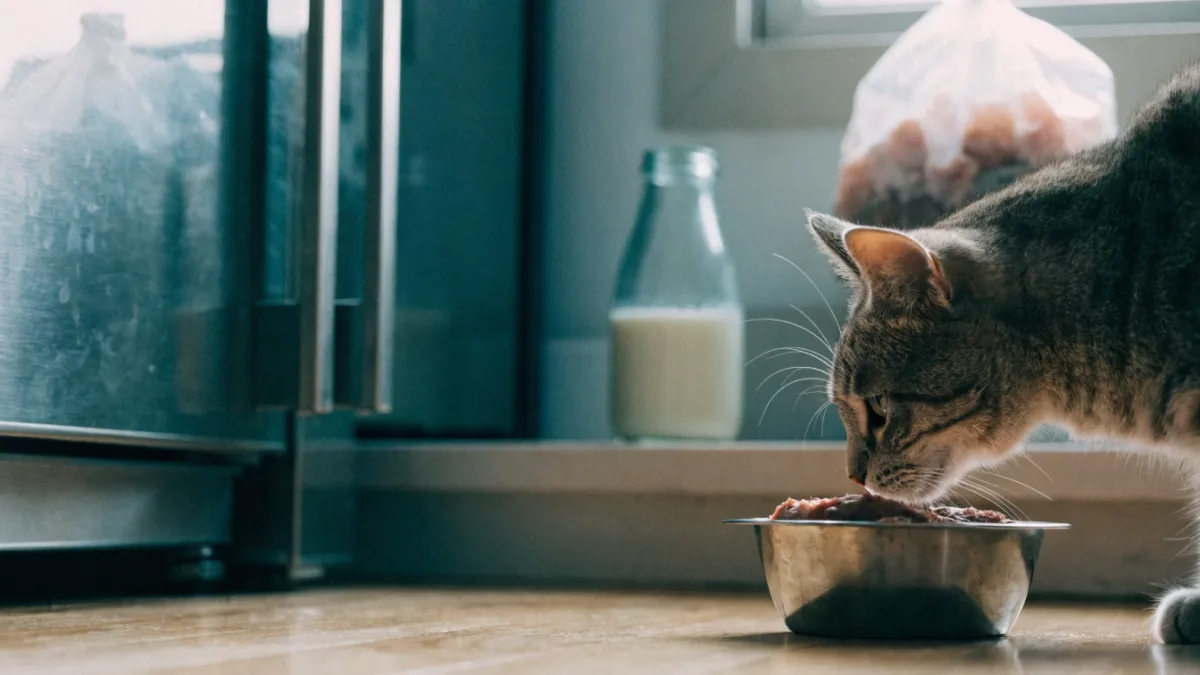
The call I remember best from last winter wasn’t an emergency — it was fear. A client of mine, a woman with a two-year-old Bengal named Mochi, phoned because Mochi had goopy eyes and was sleeping more than usual. She feeds raw — carefully sourced, frozen poultry — and she’d just read about an indoor cat in Oregon that died of H5N1 after eating a recalled raw diet.
“Tell me what to do,” she said. “I’m standing in front of my freezer with the bag in my hand.”
We tested Mochi, and it turned out to be a flare of feline herpesvirus — one of the most routine diagnoses in cat medicine. But her instinct to call immediately was exactly right. Bird flu in cats has quietly shifted from a farm problem to a kitchen problem, and if you share your home with a cat — especially a raw-fed one — here’s what the past two years of detections actually mean for you.
From Barn Cats to Kitchen Freezers: A Two-Year Timeline
The barn-cat warning
In March 2024, H5N1 was confirmed in U.S. dairy cattle for the first time, in Texas and Kansas. The outbreak spread steadily — by late 2025, roughly 900 herds across more than a dozen states had been affected. That matters for cats because infected cows shed live virus at high levels in their milk.
On Texas dairy farms that spring, barn cats with free access to raw milk from the bulk tank began dying at staggering rates. In one documented outbreak, about half the farm’s cats — roughly two dozen out of 40 — died, many showing severe neurological signs first. It was one of the clearest early warnings of the whole outbreak, and honestly, it shouldn’t have surprised us: cats’ susceptibility to H5N1 has been known since zoo tigers and leopards in Thailand died after eating infected poultry back in 2004.
When the outbreak reached the freezer aisle
Two events moved this story from the dairy barn into urban kitchens. In December 2024, a California raw milk producer recalled product after H5N1 detection, and Los Angeles County health officials linked multiple infected house cats — several of them fatal cases — to raw milk consumption. Then in January 2025, an indoor cat in Oregon died after eating Northwest Naturals raw frozen turkey pet food; genomic testing matched the virus in the cat to virus in the leftover food, prompting a Class I recall of the 2-pound Feline Turkey Recipe bags.
Since 2024, the USDA has confirmed H5N1 in more than 200 domestic cats across dozens of states — cats account for the overwhelming majority of infected companion animals, with only a couple of dogs on the list. And the exposure pattern has shifted from farm cats to indoor city cats via commercial raw food. (These counts move weekly, so check the USDA and CDC trackers for current numbers.)
One detail I find fascinating: investigators can actually trace where a cat’s virus came from. Dairy-linked cat cases carry the cattle-lineage B3.13 genotype, while several raw-pet-food cases carry the wild-bird D1.1 lineage. It’s genomic fingerprinting, and it’s how a bag of frozen food in Oregon got tied to a specific death.
The Kitchen Risk Ladder: What’s Safe and What Isn’t
When I talk to clients about H5N1 in pets, I draw a simple ladder on the exam room whiteboard:
- Bottom rung — lowest risk: cooked commercial diets and pasteurized dairy. The FDA’s 2024 retail survey found viral fragments in about one in five milk samples, but zero viable virus. Pasteurization works. Your regular cat food and the milk in your fridge are fine.
- Top rung — the current risk zone: raw milk and raw or raw-frozen pet diets, especially poultry-based. Here’s the part that surprises people: freezing does not kill influenza viruses. Your freezer is a pause button, not a kill switch. Cooking to 165°F (74°C), on the other hand, inactivates the virus completely.
- Also on the top rung: hunting. A cat that catches or mouths a sick or dead wild bird is exposed the same way those Thai zoo tigers were.
If your cat is indoors and eats a cooked diet, I don’t want you losing sleep over this. Their risk is genuinely very low. The concern concentrates in three groups: raw-fed cats, cats who drink raw milk, and cats with outdoor access.
Symptoms That Warrant an Immediate Call
The cats in these reports don’t present like ordinary flu. The hallmark pattern is fever, lethargy, and loss of appetite, often with copious clear discharge from the eyes and nose — and, most distinctively, neurological signs: wobbliness, circling, tremors, seizures, or a stiff, strange gait. Deterioration can be brutal, sometimes within 24 to 72 hours, and roughly two-thirds of confirmed symptomatic cats have died.
So here’s my practical rule: any combination of lethargy plus not eating plus neurological signs or unusual eye discharge gets a phone call today — not Monday. And when you call, mention any raw food exposure up front. It changes what we test for and how we protect our staff.
That said, keep perspective. Most sniffling cats do not have H5N1 — routine upper respiratory infections are still a thousand times more common, which is exactly why testing matters rather than guessing. Cat owner groups online are full of this anxiety right now; I’ve seen members describe cats like “Bagel,” quarantined with flu-like symptoms and then recovering fully once.[1] That’s the far more common outcome.
The multi-cat household protocol
If one cat looks suspicious, don’t wait for the diagnosis to act:
- Isolate the sick cat in a separate room with its own bowls and litter box.
- Wash your hands after every handling session, and skip the face-to-face nuzzling until you know what you’re dealing with — this is now explicit CDC guidance.
- Call the clinic before you arrive so the team can take precautions at the door.
- Watch your other cats for appetite and energy changes twice daily.
For Raw Feeders Who Aren’t Ready to Switch
Let me be fair here: raw feeders tend to be among the most devoted owners I work with. They research sourcing, they balance calcium-to-phosphorus ratios, they’re engaged in a way many pet parents aren’t. I understand the impulse, and I’m not dismissing it.
But I’ve changed my mind about how to talk about it. Earlier in my career, I treated raw feeding as a philosophy debate about coats and stool quality. During an active H5N1 outbreak, it stops being a debate and becomes an acute infectious-disease question — and the recalls of 2024 and 2025 directly challenge the idea that “tested” means “safe,” because screening is voluntary and batch-based. A negative batch test doesn’t guarantee every bag.
So what are the honest raw pet food risks and workable middle paths?
- The safest move: switch to cooked during the outbreak — a balanced cooked commercial diet, or a lightly cooked home-prepared recipe designed with a veterinary nutritionist.
- If you’re staying raw: avoid poultry ingredients for now, and ask manufacturers directly about batch PCR testing and high-pressure processing (HPP). Both reduce risk — neither eliminates it. The official bottom line from every major health body is that no raw product carries zero risk while this outbreak continues.
- No raw milk — for your cats or anyone else in the house.
What Health Officials Are Advising Now
The guidance from the CDC, FDA, AVMA, and state veterinarians is consistent: don’t feed raw milk or raw diets, keep cats indoors, keep pets away from dead birds, and report unexplained illness or sudden death to your veterinarian — [2] lay this out clearly for pet owners.
Why did the advice tighten in 2025? Because the virus crossed a line it hadn’t crossed before. Since April 2024, the U.S. has recorded 70+ human H5N1 cases, mostly dairy workers and mostly mild, with only a small number of deaths. But in June 2025, the CDC documented the first known U.S. [3] — a veterinarian infected while treating sick cats, with no farm exposure at all. Then in October, a Nebraska household cluster: four cats died, and a human contact was infected. That’s why officials now say don’t snuzzle a sick cat, and why vets are masking up and gowning for suspicious cases.
For the record, the general public’s risk is still considered low. There’s also an H5N1 vaccine authorized for zoo animals — several zoos began vaccinating their big cats in 2025 — but nothing available for pets yet.
Here’s the takeaway I’d leave you with: H5N1 doesn’t respect the boundaries we draw between the dairy field, the kitchen, and the wild. The same virus that emptied a Washington wild cat sanctuary of some 20 cougars, bobcats, and lynx in late 2024, and killed 21 endangered California condors in 2023, is the one showing up in frozen pet food. Keeping your cat’s diet on the cooked and pasteurized side of the ladder right now isn’t fear — it’s the same act of conservation, just at the scale of your own kitchen. Feed thoughtfully, call fast if something seems off, and you’re doing right by your cat, your community, and the wild world outside your window.
Sources
- testing ruled out bird flu — facebook.com
- state health department toolkits like Illinois's — dph.illinois.gov
- cat-to-human transmission — cdc.gov