

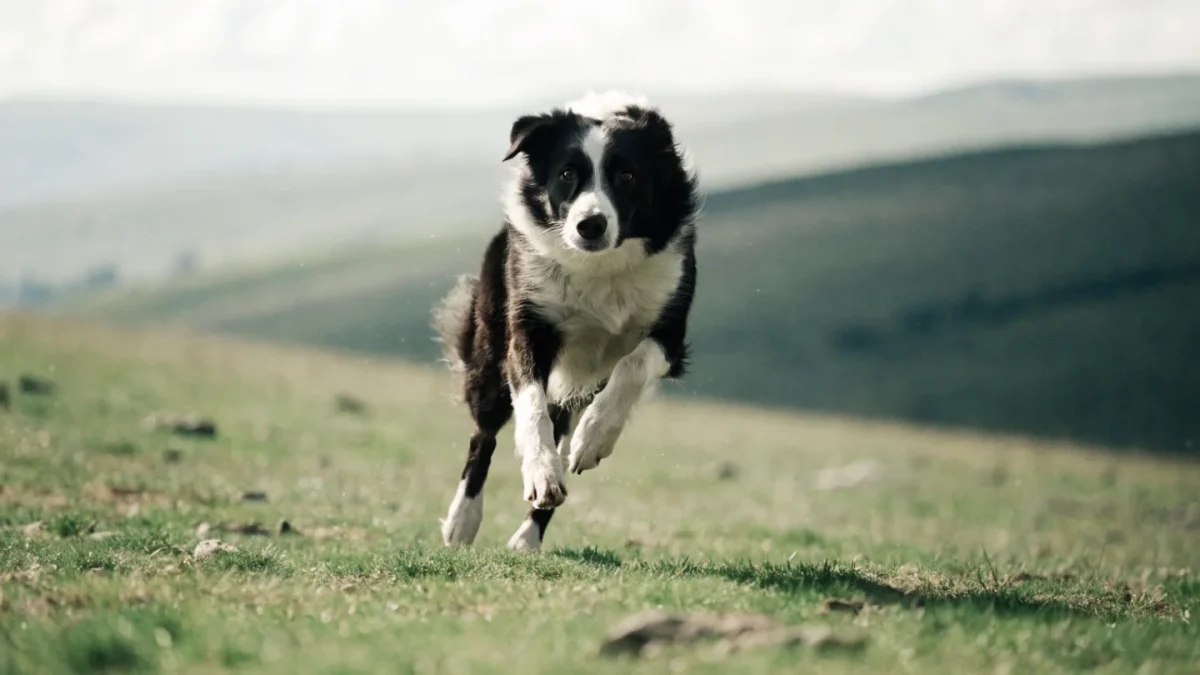
Border collies were built to cover up to 50 miles of rugged hillside in a single working day. They did this in rain, wind, mud, and cold — for years, without complaint, because the work itself was the reward. That engine didn't downsize when the breed moved into pet homes. It's the same engine, running at the same capacity, and it needs somewhere to go.
A border collie needs a minimum of two hours of combined physical and mental activity every day. That number is not aspirational. It is the baseline below which behavioral problems become predictable.
The Two-Hour Minimum: What It Actually Means
Two hours is a combined target, and the split matters. Pure physical exercise — running, fetching, swimming — addresses the body but not the mind. A border collie that runs for two hours returns home with a fitter cardiovascular system and a brain that is still completely unsatisfied. As covered in the full border collie breed guide, the breed's intelligence demands cognitive engagement on par with its physical capacity.
A better split is roughly 60 to 90 minutes of physical activity and 30 to 60 minutes of structured mental work. Some days will lean more physical; others more mental. The balance can flex, but neither component should be dropped entirely.
Physical Activities That Work
Not all exercise is equal for a border collie. Effective physical activities share two qualities: they engage the dog's natural drives and they vary in terrain or challenge.
Herding. Nothing satisfies the breed's instinctive drives like actual herding work. Herding instinct courses and tending-style exercises provide structured access to the behavior border collies were built for. If you live near a farm or herding facility that offers sessions, this is the single best physical and mental outlet available.
Agility. The combination of speed, obstacle navigation, and handler communication makes agility an outstanding outlet. Border collies dominate competitive agility for a reason — the sport mirrors the cognitive and athletic demands of herding at a scaled-down distance.
Running and hiking. Both work well, particularly on varied terrain that requires the dog to navigate, balance, and make decisions. A trail run through uneven ground is substantially more engaging than a jog on flat pavement. Border collies are natural trail dogs with the endurance to outlast most human runners.
Swimming. Excellent low-impact exercise that works particularly well in warm weather. Not all border collies are natural swimmers — some take to water enthusiastically, while others need gradual introduction. Once comfortable, swimming provides intense cardio without joint stress.
Retrieving and disc dog. Fetch and disc games tap into the chase instinct and provide bursts of sprint-level activity. The caution here is ball obsession: border collies can develop compulsive fixation on the ball. Keep sessions structured with clear start and stop points, and rotate between fetch and other activities.
Mental Activities That Matter
The mental component is where most border collie owners fall short, and it is the piece that makes the difference between a settled dog and a restless one.
Training sessions. Ten to twenty minutes of focused training — new tricks, advanced obedience, or shaping exercises — is mentally demanding for a border collie. The breed learns quickly, so the challenge must escalate. A border collie that mastered a behavior three weeks ago doesn't need to keep rehearsing it. It needs something new.
Scent work. Nose-based problem-solving is exhausting in the best possible way. Hide treats, toys, or scent articles and let the dog work. Competitive scent detection courses offer formal structure for this work and give the dog's brain a serious workout.
Puzzle feeders and enrichment. Feeding meals through puzzle toys, snuffle mats, or scattered in grass forces the dog to work for food and slows consumption. Rotate puzzle types regularly — border collies solve them quickly and lose interest once the puzzle is no longer novel.
Novel experiences. New environments, new surfaces, new smells, new challenges. A walk through an unfamiliar neighborhood provides more mental stimulation than the same route through the familiar one for the hundredth time. Variety is a form of enrichment in itself.
Age-Specific Guidelines
Puppies (Under 12 Months)
Border collie puppies seem to have limitless energy, but their developing joints are fragile. The general guideline of five minutes of structured exercise per month of age, twice daily, protects growth plates that don't fully close until 12 to 18 months. A four-month-old puppy gets two 20-minute sessions of structured activity, supplemented by free play on soft surfaces.
Mental enrichment can start immediately with no age restriction. Short training sessions, socialization experiences, and simple puzzle toys are appropriate from the day you bring the puppy home and help establish the patterns the adult dog will rely on.
Adolescents (12-24 Months)
This is the peak difficulty period for most border collie owners. The drive is fully online but impulse control is still immature. Exercise can gradually increase toward adult levels as the dog matures physically. This is also the stage where obsessive behaviors are most likely to emerge if mental needs are not met — as described in detail when examining border collie temperament.
Adults (2-8 Years)
Full adult exercise requirements apply: two hours minimum, split between physical and mental. Working border collies in their prime can handle significantly more. Adjust upward based on the individual dog's needs rather than assuming the minimum is sufficient.
Seniors (8+ Years)
Activity levels naturally decline, but the mental component remains important throughout the dog's life. Older border collies benefit from lower-impact physical exercise — shorter walks, gentle swimming, modified agility — paired with continued mental enrichment. A senior border collie's body slows down before its brain does.
The Consequence of Under-Exercise
An under-exercised border collie does not simply become lazy. It becomes destructive, anxious, and creative in ways that make household management significantly harder. Common outcomes include obsessive behaviors (shadow chasing, light fixation, spinning), destructive chewing, excessive barking, herding family members or other pets, and compulsive ball fixation.
These behaviors are not character flaws. They are a high-performance brain running without a task. The fix is always the same: more structured engagement, not more punishment.