

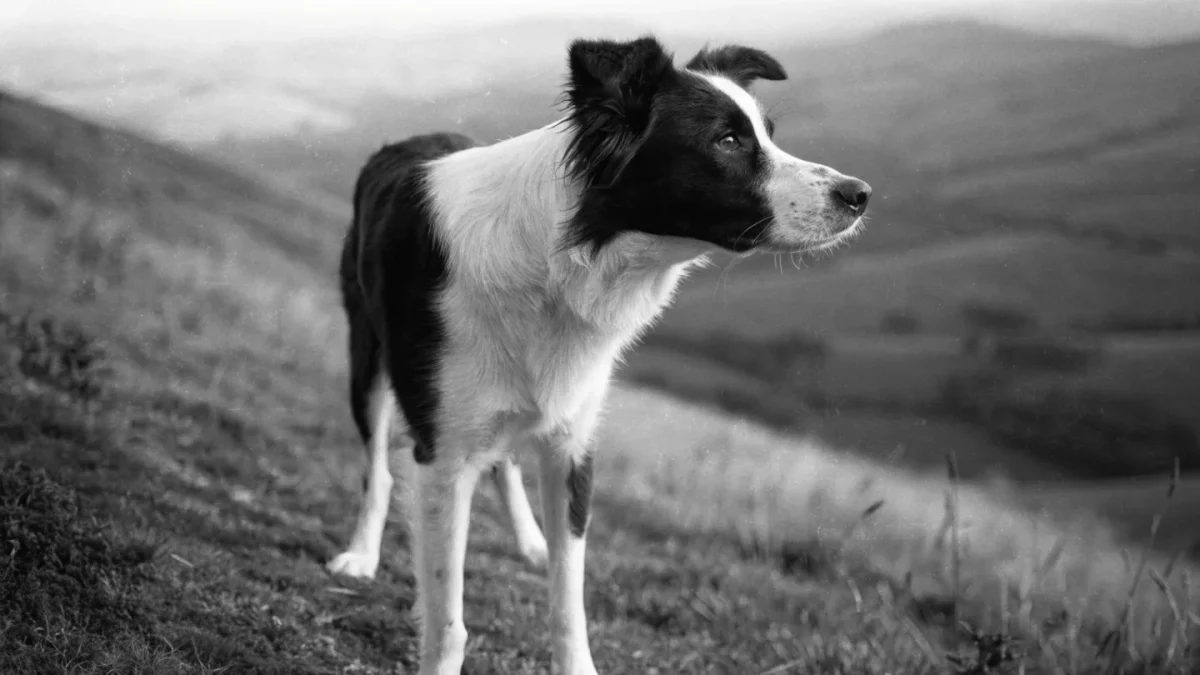
Every border collie alive today traces back to a single dog. His name was Old Hemp, he was born on a farm in Northumberland in September 1893, and he changed sheep herding forever. While other sheepdogs of the era worked by barking and nipping at livestock, Old Hemp controlled sheep with something no one had seen before at that scale — a silent, crouching approach driven entirely by eye contact. He was so effective that shepherds across northern England and Scotland bred their best females to him obsessively. By the time he died in 1901, Old Hemp had sired over 200 puppies. The modern border collie is his legacy.
Border collies are medium-sized herding dogs from the Anglo-Scottish border region, consistently recognized as the most intelligent dog breed in structured working evaluations. They combine extraordinary drive, relentless focus, and physical stamina that far exceed what most dog owners have ever experienced. If you're looking for a border collie breed guide that covers what matters — the breed's real history, health profile, temperament, and what it actually takes to live with one — this is the honest version.
The border collie's intelligence is both its greatest asset and the primary reason people surrender them. This is not a breed that tolerates boredom, and it is not a breed that forgives owners who underestimate it.
Origins and History
The border collie developed in the rugged hill country straddling the border between England and Scotland — a landscape of steep fells, exposed moorland, and scattered sheep farms where a single shepherd might manage hundreds of animals across thousands of acres. Dogs were not a luxury there. They were essential labor.
Before Old Hemp, working sheepdogs in Britain varied enormously. Some were loud and physical, rushing at sheep with barks and bites. Others were calmer but lacked range or stamina. What Hemp's owner, Adam Telfer, noticed immediately was that this dog worked differently. He approached sheep in a low, stalking crouch, moved with deliberate precision rather than frantic energy, and controlled flock movement through the sheer pressure of his gaze. Sheep responded to him without panic — they moved where he directed them because his method was calm enough that flight instinct didn't override obedience.
The International Sheep Dog Society, founded in 1906, began organizing formal sheepdog trials that became the proving ground for the breed. Trial performance — not appearance — determined which dogs were bred. This is a critical distinction. For over a century, the border collie was selected almost exclusively for working ability. Conformation shows played virtually no role in shaping the breed until much later.
The name "border collie" itself didn't become official until 1915, when James Reid, the first secretary of the ISDS, used it to distinguish the breed from other collie types — Rough Collies, Smooth Collies, and Bearded Collies among them. The word "collie" likely derives from the Scots word for sheepdog, though its exact etymology remains debated by linguists.
Border collies arrived in other sheep-farming regions during the early twentieth century, establishing working populations in Australia, New Zealand, and North America. In each region, the breed was valued for the same reason: nothing else could do the job as efficiently.
Physical Characteristics
Size and Build
Border collies are medium-sized, athletic dogs. Males typically stand 48 to 56 cm at the shoulder and weigh 14 to 20 kg. Females are slightly smaller, generally 46 to 53 cm and 12 to 19 kg. The body is slightly longer than tall, with a deep chest and strong, flexible spine that allows the characteristic crouching posture used during herding.
There is considerable variation in physical appearance within the breed, more so than in many other breeds. Dogs from working lines tend to be leaner, lighter-boned, and built for all-day endurance. Dogs bred for show or sport often carry heavier coats and slightly stockier frames. Both types are border collies. The breed standard has always been secondary to function.
Coat
Border collies come in two coat varieties: rough (medium to long, with feathering on the legs, chest, and belly) and smooth (shorter, coarser, with minimal feathering). Both have a dense, weather-resistant double coat that sheds moderately year-round and heavily during seasonal coat blows in spring and autumn.
The breed comes in a wide range of colors and patterns. Black and white is the most recognized combination, but border collies also appear in red (chocolate), blue, lilac, sable, brindle, merle, tricolor, and various other patterns. Color has no bearing on working ability or temperament, despite persistent folk beliefs to the contrary.
The Eye
The most distinctive feature of the border collie is not physical — it's behavioral. "The eye" refers to the breed's characteristic intense, fixed stare used to control livestock. It's a modified predatory gaze, and the strength varies between individuals. Strong-eyed dogs can hold sheep in place with a look. Loose-eyed dogs work with broader body movement and less direct stare. Both styles are effective; the preference depends on the type of livestock and terrain.
In non-working contexts, "the eye" often manifests as staring at moving objects — joggers, cyclists, cars, children, other animals. This is herding instinct without sheep, and it's one of the behaviors that catches unprepared owners off guard.
Temperament and Behavior
If the golden retriever is the eager-to-please valedictorian and the Labrador is the amiable class president, the border collie is the intensely focused student who finishes the exam in half the time and then starts reorganizing the teacher's filing system because sitting idle is physically uncomfortable.
Intelligence
Stanley Coren's 1994 assessment in The Intelligence of Dogs placed border collies first among all breeds for working and obedience intelligence. A border collie named Chaser, trained by psychologist John Pilley at Wofford College, learned the names of over 1,000 distinct objects and could retrieve them by name, demonstrating a capacity for referential understanding previously thought exclusive to primates and cetaceans. Chaser's abilities, published in Behavioural Processes in 2011, remain the benchmark for vocabulary comprehension in a non-human animal.
But intelligence in border collies is not the easy, biddable kind that golden retrievers offer. Border collie intelligence is active, problem-solving, and self-directed. They learn what you teach them — and they also learn things you never intended. A border collie will figure out how to open doors, manipulate latches, unzip bags, and circumvent barriers with an inventiveness that is impressive until you're the one dealing with it at 6 AM.
What Most People Get Wrong About This Breed
The most damaging misconception about border collies is that intelligence makes them easy. The opposite is true. A highly intelligent dog with insufficient stimulation doesn't become lazy — it becomes neurotic. Border collies without adequate work develop obsessive behaviors: shadow chasing, light fixation, spinning, compulsive ball fixation, excessive herding of children or other pets, and destructive anxiety-driven behaviors that are genuinely difficult to reverse once established.
The second misconception is that exercise alone solves the problem. A border collie that runs for two hours but receives no mental challenge is like a gifted student forced to do nothing but run laps. The body is tired. The mind is still unsatisfied. Border collies need both — and the mental component is arguably more important.
Drive and Working Instinct
Border collies have among the highest prey drive of any herding breed, expressed as an intense desire to chase, control, and gather moving objects. In a working context, this drive is managed through training and directed at livestock. In a pet home without livestock, it redirects to whatever moves — squirrels, cats, skateboards, cars, running children.
This is not aggression. It is misplaced instinct without an appropriate outlet, and the distinction matters. A border collie chasing a child is not trying to harm the child. It is trying to herd the child. But the behavior — nipping at heels, circling, body-blocking — is unacceptable in a domestic setting and must be redirected, not punished.
Social Behavior
Border collies bond intensely with their primary handler, often to the point of being labeled "one-person dogs." They can be reserved or cautious with strangers, which is normal for the breed and shouldn't be mistaken for aggression. Early socialization broadens their comfort zone, but expecting a border collie to display golden retriever-level enthusiasm for every stranger is unrealistic.
With other dogs, border collies vary. Some are social and playful. Others are indifferent or controlling — attempting to herd other dogs during play, which not all dogs appreciate. Dog park dynamics can be problematic for border collies whose herding drive triggers conflict with dogs that don't enjoy being circled and stared at.
Health Profile
Border collies are generally healthy dogs with a lifespan averaging 12 to 15 years — longer than most breeds of comparable size. However, the breed carries several genetic health conditions that prospective owners need to understand.
Collie Eye Anomaly (CEA)
CEA is a congenital, inherited eye condition caused by a mutation in the NHEJ1 gene. It affects the development of the choroid and retina and ranges from mild (barely detectable, no vision impact) to severe (retinal detachment, significant vision loss). A DNA test exists to identify carriers and affected dogs. Both parents should be tested before breeding. Carrier frequency isn't trivial — a 2021 study of 334 Italian border collies found nearly 30% were carriers, even though dogs actually affected by the mutation made up just 1.5% of the sample. That gap is the DNA testing working as intended: breeders have gotten good at screening out affected puppies, but carriers keep slipping through in the gene pool.
Hip Dysplasia
Hip dysplasia occurs in border collies at lower rates than in many large breeds but is still a meaningful concern. Screening through standardized evaluation programs is recommended for all breeding stock. Environmental factors — growth rate, exercise intensity during puppyhood, and body condition — influence expression even in genetically predisposed dogs.
Epilepsy
Idiopathic epilepsy is one of the more common neurological conditions in border collies. The mode of inheritance appears complex, likely involving multiple genes. Seizures typically first appear between one and five years of age. The condition is manageable with medication in most cases but requires lifelong veterinary oversight and consistent medication schedules.
Trapped Neutrophil Syndrome (TNS)
TNS is a fatal immune disorder specific to border collies, caused by an autosomal recessive mutation in the VPS13B gene. Affected puppies have a non-functional immune system and rarely survive past their first year. A DNA test identifies carriers, and responsible breeding programs screen for it. No affected puppy should ever be produced when both parents are tested.
Other Health Concerns
- Progressive retinal atrophy (PRA): Several forms affect border collies, leading to progressive vision loss. DNA tests are available for known variants.
- Osteochondritis dissecans (OCD): A developmental joint condition affecting growing puppies, particularly in the shoulder. Proper nutrition and controlled exercise during growth help reduce risk.
- Multidrug resistance (MDR1): Some border collies carry the MDR1 gene mutation, making them sensitive to certain common medications including ivermectin. A simple DNA test identifies affected dogs. Veterinarians should be informed of MDR1 status before prescribing medication.
- Deafness: Congenital deafness occurs in the breed, particularly associated with excessive white coloring on the head (linked to the piebald gene). BAER testing can identify hearing status in puppies.
Longevity
The 12 to 15-year average lifespan makes border collies one of the longer-lived medium breeds. Working dogs that remain physically and mentally active throughout life often reach the upper end of this range. Obesity, which is less common in border collies than in many breeds but still occurs in underexercised pet dogs, significantly reduces both lifespan and quality of life.
Grooming Requirements
Border collie grooming is moderate compared to heavily coated breeds but more demanding than most owners expect going in.
Coat Care
Brush the coat two to three times per week to prevent matting and manage loose undercoat. During the twice-yearly coat blows, daily brushing with an undercoat rake becomes necessary to keep shedding manageable. The areas behind the ears, under the armpits, and the feathering on the legs and tail mat fastest — check these spots during every session.
Rough-coated border collies require more grooming attention than smooth-coated ones. The longer feathering picks up burrs, seeds, and debris during outdoor activity, and mats form more quickly in the finer undercoat beneath the longer outer hair.
Bathing
Bathe every six to eight weeks or as needed — border collies that work in muddy fields or swim regularly may need more frequent washing. Use a mild shampoo that preserves the coat's natural oils. The double coat takes longer to dry than you'd expect; a damp undercoat left untreated can develop hot spots, particularly in warm weather.
Nails, Ears, and Teeth
Trim nails every two to three weeks. Working border collies on hard terrain may wear nails down naturally, but house dogs rarely do. Check ears weekly — the semi-erect or erect ear set provides better airflow than fully dropped ears, reducing but not eliminating infection risk. Dental care through regular brushing prevents the periodontal disease that is common across all breeds.
Exercise and Activity Needs
A border collie needs a minimum of two hours of combined physical and mental activity every day. Not occasionally. Not on weekends. Every single day.
This is the number that separates casual interest from actual commitment. Two hours is the floor, not the ceiling. Working border collies on active farms routinely put in six to eight hours of physical work daily. The breed's stamina is not a marketing claim — it is a biological reality shaped by over a century of selection for all-day endurance in harsh terrain.
Physical Exercise
Running, hiking, swimming, and retrieving games all serve the physical component. Structured activities like agility, flyball, disc dog, and canicross channel the breed's athleticism into focused outlets. Free running in safe, enclosed spaces allows the burst-speed sprinting that border collies are built for — these dogs can reach speeds of over 30 mph in short sprints.
Mental Stimulation
This is where most owners fall short. Physical exhaustion without mental engagement leaves a border collie physically tired and mentally restless — a combination that produces anxiety rather than contentment. Puzzle toys, scent work, trick training, herding instinct courses, and obedience at competition level all engage the working brain.
Training sessions are not a chore for border collies — they are a need. The breed thrives on learning new skills and solving problems. A border collie that learns something new every week is a border collie with a purpose. One that repeats the same routine indefinitely grows bored and starts freelancing.
Puppy Exercise Caution
Border collie puppies are deceptively energetic, and the temptation is to let them run hard early. Resist it. Growth plates in medium breeds typically close between 12 and 18 months. The general guideline of five minutes of structured exercise per month of age, twice daily, protects developing joints. Free play on soft surfaces is fine — forced running, jumping from heights, and repetitive impact on hard surfaces is not.
Nutrition Fundamentals
Two measured meals daily for adults is standard. High-activity border collies benefit from higher protein and fat content to support muscle maintenance and sustained energy. Caloric needs vary significantly based on activity level — a working border collie running sheep daily needs substantially more calories than a pet border collie at moderate exercise, even at the same body weight.
Body condition matters more than the number on the scale. A border collie at healthy weight has a visible waist from above, easily palpable ribs without excess covering, and a clear abdominal tuck from the side. The breed should look lean and athletic — never bulky. Obesity is less prevalent in border collies than in retrievers, but inactive pet dogs absolutely can become overweight, and excess weight compounds joint problems and reduces the agility that defines the breed.
Training
Border collies are simultaneously the most trainable and the most demanding breed to train. The capacity for learning is immense. But that capacity comes with expectations — from the dog toward the handler.
Training Approach
Positive reinforcement methods work well, but border collies also require clarity and consistency to a degree that casual training doesn't provide. Vague commands, inconsistent criteria, and irregular training schedules frustrate a border collie faster than almost any other breed. They notice patterns instantly and exploit inconsistency.
Harsh corrections are counterproductive and damaging. Border collies are sensitive to tone and handler emotion. A sharp voice or physical punishment doesn't teach compliance — it produces a fearful, anxious dog that shuts down or becomes defensive. This breed reads body language better than most humans do. They know when you're frustrated before you've raised your voice.
Key Training Priorities
- Recall: Non-negotiable. A border collie in chase mode can cover ground at extraordinary speed. A reliable recall that overrides prey drive is the single most important skill to train — and one of the hardest.
- Impulse control: "Leave it," "wait," and "settle" commands manage the breed's intensity. Without impulse control training, the border collie's reactivity becomes a management problem.
- Off-switch training: Teaching the dog to disengage and relax on cue. Border collies do not naturally know how to turn off. Left to their own devices, they will work until they physically collapse. An active, trained "settle" or "place" command gives them permission to rest.
- Loose-leash walking: The border collie's desire to control movement makes leash walking challenging. Consistent loose-leash training prevents a lifetime of pulling and lunging at stimuli.
Living Situation Compatibility
A home with secure outdoor space, an active owner, and access to varied exercise environments is the best fit. Rural properties where the dog can run safely are ideal but not strictly required. Suburban homes work well when the owner commits to daily exercise and mental enrichment.
Apartments are difficult — not impossible, but the breed's activity needs and sensitivity to environmental stimuli make apartment living a constant management challenge. Border collies and young children can coexist, but the herding instinct — chasing, nipping at heels, circling — is triggered by running, screaming children. Supervision is always necessary, and the dog needs a herding outlet that doesn't involve the kids. For a thorough look at lifestyle fit, see whether a border collie is right for you.
Choosing a Border Collie
At minimum, parent dogs should have hip and eye evaluations, plus DNA testing for CEA, TNS, and MDR1. The decision between working, show, and sport lines matters more in border collies than in most breeds — working lines are more intense and demanding, show lines are somewhat calmer, and neither is universally "better."
Border collie rescue organizations regularly have dogs available, often young adults surrendered by owners who underestimated the breed. Adopting an adult has a real advantage: temperament and behavior patterns are already visible rather than predicted.
The Right Owner for This Breed
A border collie is the right dog for you if:
- You have two or more hours daily for structured physical and mental activity — in all weather, without exception
- You enjoy training as a hobby, not just a puppy necessity — border collies need ongoing learning throughout their lives
- You understand that "smartest breed" means the dog will outsmart you regularly
- You can provide a job or structured activity that satisfies herding instinct
- You're prepared for a dog that watches you constantly, reads your emotional state, and reacts to your household's stress levels
- You want a partnership, not a passive pet
A border collie is the wrong dog for you if:
- Your daily schedule leaves the dog alone for extended periods without mental engagement
- You want a dog that relaxes naturally without training to do so
- You're looking for an easygoing companion for casual walks and couch time
- You have young children and no plan for managing herding behavior
- You believe that a large yard substitutes for active, engaged exercise
- You're attracted to the breed's intelligence but unprepared for its intensity
Border collies are not hard dogs for the right person. They are nearly impossible dogs for the wrong one. The breed rewards commitment like no other — but it requires a level of daily engagement that most people, honestly, are not willing to sustain. Know which category you fall into before you bring one home.
Frequently Asked Questions
Are border collies really the smartest dog breed?
Border collies consistently rank first in assessments measuring working and obedience intelligence — the ability to learn commands quickly and follow handler direction. However, "intelligence" in dogs is multidimensional. Breeds like the Basenji or Shiba Inu show high problem-solving independence that scores differently. What border collies possess is an unmatched combination of learning speed, working memory, and willingness to apply what they've learned. Whether that makes them "smartest" depends on how you define the term.
How much exercise does a border collie actually need?
Plan for a minimum of two hours daily, split between physical activity and mental stimulation. Working border collies routinely exceed this. The physical component can include running, hiking, swimming, agility, or retrieving. The mental component — trick training, puzzle work, scent games, or learning new skills — is equally important. A border collie with only physical exercise and no mental challenge will still develop behavioral problems.
Can border collies live in apartments?
Technically, yes. Practically, it's very difficult. Border collies are sensitive to environmental stimuli and need substantial daily outdoor activity. Apartment living works only for owners who are away from home at structured activities with the dog for much of the day and who can provide sufficient mental enrichment during time indoors. A border collie staring out an apartment window at moving pedestrians and cyclists all day is a recipe for frustration-driven behavior.
Do border collies get along with cats?
It depends on the individual dog and the individual cat. Border collies may attempt to herd cats, which involves staring, circling, and sometimes nipping. Some cats ignore this; others find it deeply stressful. Early introduction, supervision, and providing the dog with appropriate herding outlets reduce the intensity of the behavior. A border collie raised with cats from puppyhood generally learns boundaries faster than one introduced to cats as an adult.
Why do border collies stare so much?
The fixed, intense gaze is "the eye" — the herding tool that defines the breed's working method. Border collies were selectively bred for over a century to control livestock through the pressure of direct eye contact. In a home setting, that stare redirects to anything the dog finds interesting or wants to control: other pets, moving objects, their owner. It is normal breed behavior, not a sign of aggression or anxiety. However, if the staring is accompanied by obsessive fixation on lights or shadows, that can indicate a compulsive behavior pattern that needs professional intervention.