

There's a difference between giving your dog something to do and giving your dog something their DNA was designed to want to do.
Generic enrichment — puzzle feeders, scatter feeding, lick mats — is good for every dog. But when I give a Beagle a puzzle feeder and then watch a nose work session, the difference in engagement is immediate and obvious. The nose work taps something the feeder doesn't.
Match enrichment to drive. The engagement increases. The behavior problems decrease.
Herding Breeds (Border Collies, Aussies, Shelties, Cattle Dogs)
The primary drive: movement control. These dogs want to gather, direct, and monitor moving things.
Best enrichment:
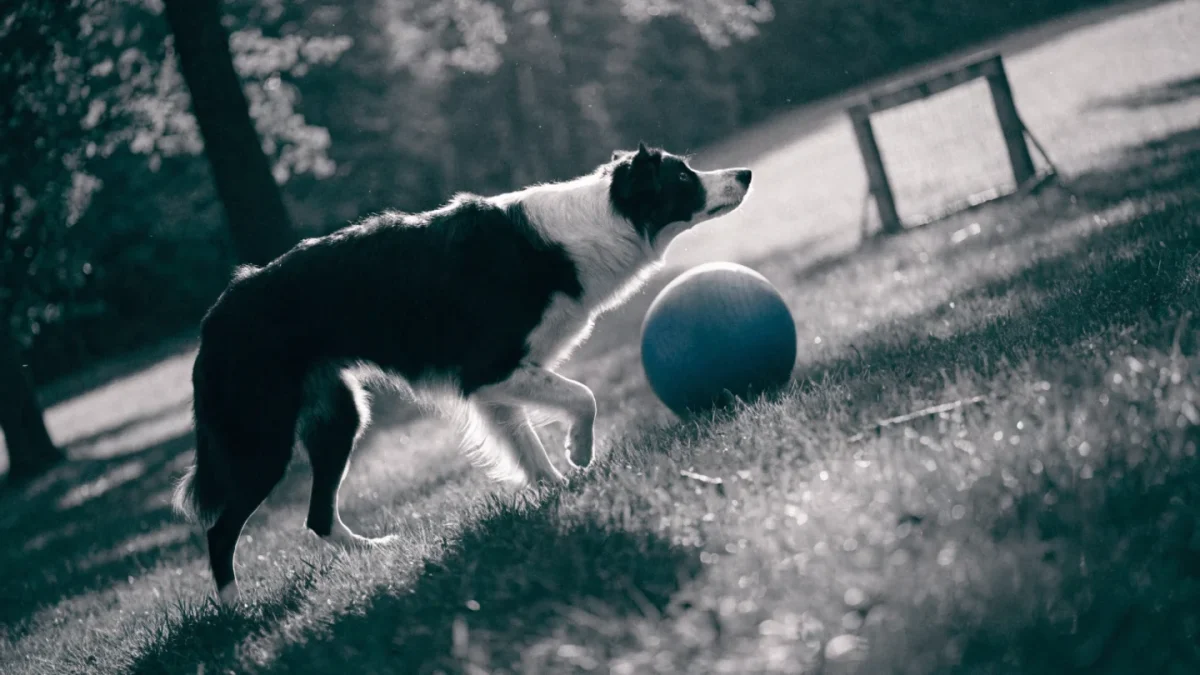
- Treibball: Guide exercise balls into a goal with body pressure alone. Purpose-built herding outlet for dogs without livestock.
- Herding instinct work: If available in your area, herding on actual livestock is the gold standard for these breeds.
- Directional games: Teach left, right, out, and come-by directional commands and play games where the dog moves objects or themselves to specific positions on cue.
- Agility and disc dog: Uses the directional sensitivity and drive for movement and precise response to handler cues.
- Flirt pole: Chase-and-grip in a legal format that satisfies prey-drive extension of the herding instinct.
What doesn't satisfy: Static puzzle feeders work fine but don't hit the movement drive. These dogs need activities where something moves and they direct or respond to that movement.
Scent Hounds (Beagles, Bassets, Bloodhounds, Coonhounds)
The primary drive: following scent trails and hunting by nose.
Best enrichment:
- Nose work: The most efficient enrichment for scent hounds. Hiding target odors engages the primary sensory system completely.
- Scatter feeding: Scatter every meal in grass, in the yard, or through snuffle mats. The dog hunts each piece.
- Tracking: Follow a scent trail laid by a person walking a defined path. A humanized version of their natural job.
- Sniff walks with a long line: Allow 30 minutes of unstructured sniffing on a long line in a scent-rich environment. Mental stimulation games are excellent supplementation.
What doesn't satisfy: High-movement, fast-paced games. Scent hounds are built for sustained methodical searching, not chasing. Matching sports to your dog's breed explains the options in detail.
Retrievers (Labs, Goldens, Spaniels, Setters)
The primary drive: find, carry, and retrieve objects.
Best enrichment:
- Fetch variation: Different toys, different distances, different locations, water retrieves. Vary the game to keep it engaging.
- Multiple object retrieves: Hide several toys and ask the dog to find and retrieve each one.
- Object name training: Build a vocabulary of named objects the dog retrieves on command.
- Water activities: Swimming and water retrieves tap the amphibious hunting drive in many sporting breeds.
- Hunting and field sports: Formal field trials and hunt tests for the most driven sporting dogs.
Terriers
The primary drive: pursue, find, and dispatch small prey.
Best enrichment:
- Barn hunt: Searching through straw bales for rat scent. Purpose-built for terrier drives.
- Earthdog: For small terriers, underground tunnel hunting for quarry.
- Flirt pole and chase games: Activates prey-drive in a structured, legal way.
- Digging zone: A designated area where the dog can dig freely. Suppressing digging entirely in a terrier is a losing battle. Channel it.
- Interactive tug: Grab-and-shake play that satisfies the grip drive.
Guardian Breeds
The primary drive: monitor territory, patrol, assess threats.
Best enrichment:
- Decompression walks in new territory: These dogs like to investigate and assess new environments. Novel route walks satisfy the patrol drive.
- Protection sport (if breed-appropriate and handler-experienced): Provides structured outlet for guarding and protective behavior under handler control.
- Nose work: High cognitive engagement without the social stress that can accompany guardian drives.
- Advanced obedience and sport: Gives these dogs a job-like structure.
The Universal Baseline
Every dog, regardless of breed, benefits from: daily sniff opportunities, regular training sessions, calming lick activities, and some form of physical exercise. Breed-specific enrichment goes on top of this baseline, not instead of it.
Start with what the dog naturally wants to do. Find the organized version of that activity. The engagement difference is immediate.