

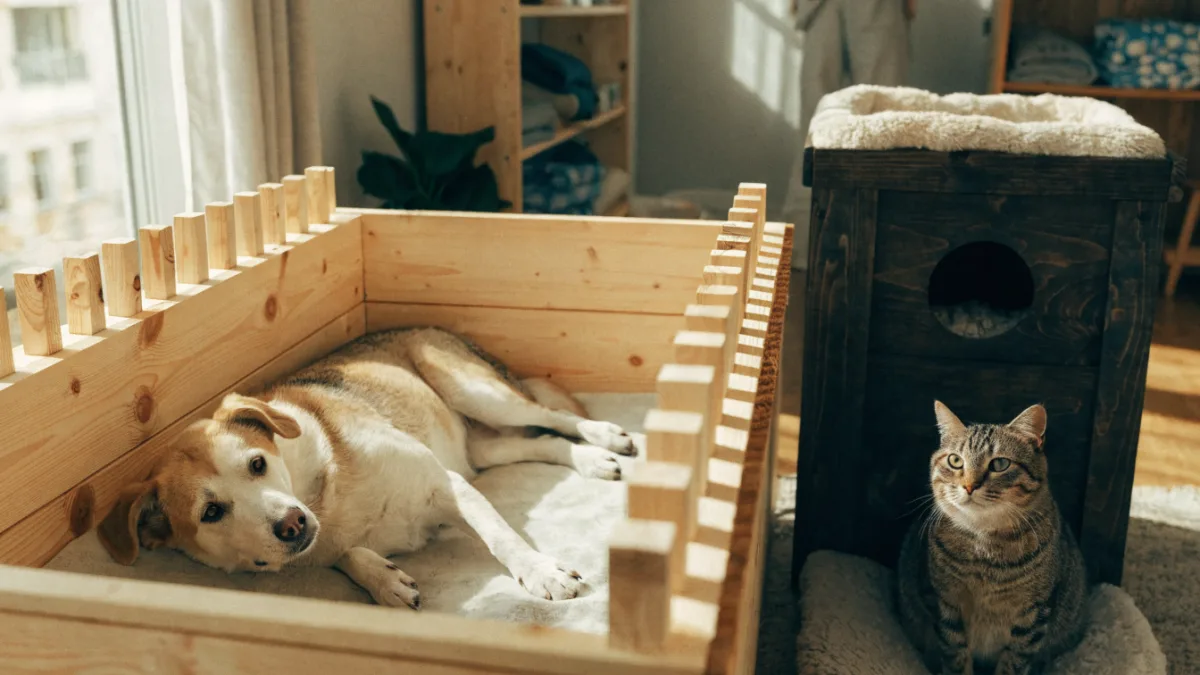
There is a specific kind of tension in the air when a pregnant pet is nearing her due date. You might notice your dog pacing heavily, dropping to the floor, and letting out long, exhausted sighs as she tries to get comfortable. A pregnant cat, on the other hand, might suddenly vanish, only to be found hours later wriggling under the back of a dresser drawer. Whether you are an ethical breeder preparing for a planned litter or a rescue owner navigating a surprise pregnancy, providing a secure, controlled environment is a massive part of proper pregnant pet care.
While our domestic dogs (Canis lupus familiaris) and cats (Felis catus) share our homes, their instinctual needs during labor and the early neonatal period are drastically different. Dogs generally want an open, accessible nest where they can keep an eye on their surroundings. Cats want a dark, impenetrable fortress. Letting a pet give birth on your bed or under a porch isn’t just messy—it exposes fragile newborns to drafts, predators, and the very real risk of being accidentally crushed by a tired mother. Building the right nursery is the first step in preventing neonatal mortality.
Essential Pregnant Pet Care: Foundations, Timing, and Materials
Before you ever pick up a saw or a roll of tape, you have to think about the biological realities of birth. The delivery process is incredibly messy. Amniotic fluids, blood, and placentas will inevitably end up on the floor of your enclosure. Because of this, hygiene is just as important as comfort.
You should introduce the mother-to-be to her new nursery one to two weeks before her due date. Animals need time to investigate, sniff, and claim the space. If you wait until she is already in active labor to introduce the box, she will likely reject it and find a less suitable spot—like the back of your closet.
Choosing the Right Materials
There is an ongoing debate in the animal husbandry community between using disposable boxes and investing in reusable ones. For a single rescue litter, a heavy-duty, thick cardboard box can work perfectly fine for a cat, as it can simply be thrown away afterward to prevent disease transmission between litters.
However, if you plan to keep the box for future use, or if you are building for a larger dog, wood, PVC pipe, or heavy-duty veterinary-grade plastics are vastly superior. Wood is excellent for durability and natural temperature retention, but it is porous. If you choose wood, it must be thoroughly sealed or covered with a waterproof, non-toxic liner. Recently, there has been a major push toward antimicrobial plastics. Unlike wood, these materials do not absorb odors, fluids, or bacteria, making them incredibly easy to disinfect.
For the flooring, always opt for a waterproof, seamless surface. Linoleum or peel-and-stick vinyl tiles are absolute lifesavers. You can wipe them down, sanitize them, and replace them easily if they become permanently stained.
Building a Dog Whelping Box: Space and Safety
Designing a dog whelping box requires a focus on spatial awareness. Dogs, particularly large breeds, are heavy, and when they are exhausted from hours of labor, their spatial awareness drops to zero.
The Golden Rule: Pig Rails
The absolute most critical feature of a canine whelping box is the installation of “pig rails” (also known as roll rails). These are horizontal rails mounted along the inner perimeter of the box, a few inches off the floor.
Picture a exhausted mother retriever flopping down heavily to nurse her pups. Without pig rails, a puppy can easily become trapped and crushed between the heavy mother’s back and the solid wall of the box. Pig rails create a life-saving gap. The mother’s back hits the rail, but the puppy safely slides into the space beneath it.
Sizing and Accessibility
The box needs to be large enough for the mother to stretch out completely on her side for nursing, but not so large that the puppies get lost in a vast expanse, struggling to find their mother’s warmth. A good rule of thumb is to measure the mother from nose to the base of her tail, and add about one to two feet of extra space on all sides.
The walls should be high enough to safely contain the puppies once they become mobile at around three to four weeks of age, but they must have a lowered entry point or a ramp. The mother needs to be able to step out easily to relieve herself and drink water without jumping awkwardly and jarring her milk-swollen mammary glands.
Unlike cats, dogs usually prefer an open-top design. A roof can make an already anxious mother feel trapped and claustrophobic, and an open top allows you to easily step in to assist if a puppy gets stuck during delivery.
Designing a Cat Birthing Box: Privacy and Security
If a dog wants a sprawling maternity ward, a cat wants a hidden bunker. Designing a cat birthing box—often called a queening box—is all about satisfying the queen’s instinctual drive for absolute secrecy.
The Den Aesthetic
A cat giving birth is incredibly vulnerable. In the wild, a laboring cat would seek out a dark, tight, elevated space to hide from predators. To replicate this indoors, your cat birthing box needs to be enclosed. A roof is essential. It makes the space feel like a dark, secure cave, which lowers the mother’s stress levels. An overly stressed mother cat might delay her labor or, tragically, abandon or cannibalize her kittens. However, because human intervention is sometimes necessary, you should build the roof with hinges or a latch so you can easily lift it to check on the kittens.
Do Cats Need Pig Rails?
This is a point of confusion for many first-time breeders. Because domestic cats are so much lighter and far more agile than dogs, they generally do not need pig rails. A mother cat is highly unlikely to crush her kittens against the wall of the box. In fact, putting pig rails in a smaller cat birthing box takes up valuable floor space and can make it difficult to fit a clean litter box and food bowls alongside the nesting area. Most veterinarians advise against them for feline enclosures.
The Entryway
Instead of a ramp, a cat birthing box should feature a cut-out doorway. This hole should be high enough off the floor—usually about five to six inches—so that blind, wobbly newborn kittens cannot accidentally tumble out, but low enough that the mother can gracefully slip in and out. Hanging a heavy, washable cloth flap over this doorway adds an extra layer of privacy and helps block drafts.
Climate Control: The Graduated Heat Zone
This is where even experienced keepers can run into trouble. For the first two to three weeks of their lives, puppies and kittens cannot thermoregulate. They cannot shiver to warm up, and they rely entirely on environmental heat and their mother. If they get cold, their digestive tract shuts down, they fail to nurse, and they quickly fade.
You must ensure the room itself is warm—kept steadily between 75°F and 80°F (24°C – 27°C). On top of that, you need a localized heat source providing a concentrated warm zone of about 85°F (29.5°C).
The Heat Source Debate
There are generally two camps here: heat lamps and electric heating pads. Heat lamps are favored by some because there are no electrical cords inside the enclosure for a bored mother to chew on. However, a lamp can dry out the mucous membranes of the babies and easily overheat the mother, who is already generating a massive amount of body heat by nursing.
Electric heating pads designed specifically for animals (featuring chew-resistant steel-wrapped cords) provide excellent, steady, localized warmth. However, they carry a slight risk of electrical hazards if water seeps into them or if the mother digs heavily.
The Gradient is Crucial
No matter which heat source you choose, never heat the entire box. Place the lamp or the pad on only one half of the enclosure. This creates a “graduated heat zone.” If the babies get too warm, they can physically wiggle away toward the cooler side. Mothers are usually very good at moving their young toward or away from heat sources if given the option.
Always defer to an exotic or reproductive veterinarian if you notice your mother ignoring her young, running a fever, or producing foul-smelling discharge. Temperature and humidity control can prevent illness, but they cannot cure an existing infection.
Bedding Strategies and Smart Monitoring
Bedding will be your greatest ally and your biggest chore. Forget cedar shavings or straw—these are dusty and can cause severe respiratory distress in neonates.
Instead, line the waterproof floor with layers of newspaper or absorbent puppy training pads. On top of that, lay down thick, washable fleece blankets or clean towels. The beauty of this system is modularity. When a mess happens, you can strip the top layer of wet towels, toss them in the wash, and immediately reveal a dry layer beneath, disturbing the mother and babies as little as possible.
Finally, if you want to minimize stress, consider integrating smart technology into your pregnant pet care routine. You can mount an inexpensive, night-vision Wi-Fi camera above the box. This allows you to monitor the mother’s labor progression from your smartphone without hovering over her, which can cause anxiety. Pairing the camera with a Bluetooth hygrometer or thermometer ensures you can track exact climate fluctuations in real-time.
Conclusion
Building a nursery for a litter of puppies or kittens is a beautiful, demanding responsibility. While domestic dogs and cats might seem like similar animals to live with, their hardwired evolutionary needs tell two completely different stories. By understanding that a dog needs open space and protective pig rails, while a cat needs a secure, dark cave, you are honoring the deep biological instincts of the animals in your care. Providing a clean, thermally regulated, and safe environment gives these fragile neonates the absolute best start at a healthy, thriving life.