

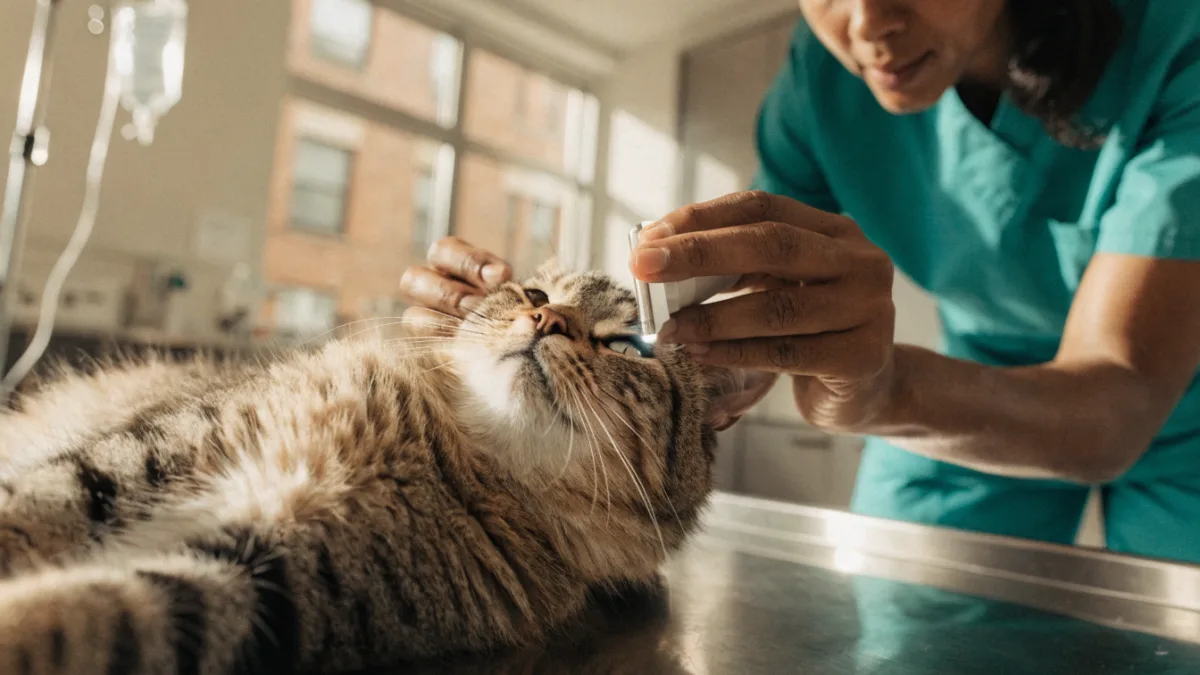
Just last month, I had a patient named Miso — an eight-year-old domestic shorthair with a glossy coat, bright eyes, and an owner, Elena, who swore the cat was “perfectly fine.” Elena almost canceled the appointment. The only reason she didn’t was that Miso’s rabies vaccine was due, and her apartment complex required proof of it. When I listened to Miso’s chest, I heard a soft heart murmur that hadn’t been there the year before. When I palpated her abdomen, I felt a small but definite mass on her left kidney. That “perfectly fine” cat had early-stage kidney disease and a heart condition that, left unchecked, could have shortened her life by years. Miso isn’t unusual. She’s representative of something every veterinarian sees constantly: cats are extraordinary at hiding illness, and by the time they show obvious symptoms, disease is often advanced.
The Evolutionary Disappearing Act
To understand why annual exams matter so much for cats specifically, you have to look at what they are underneath the cuddles and the 3 AM zoomies. Domestic cats share over 95% of their DNA with wild felids, and they’ve retained the survival instincts of prey animals. In the wild, a visibly sick or weak cat becomes someone’s dinner. So evolution gave them a remarkable talent: the ability to appear completely normal even when something is genuinely wrong.
I’ve seen cats with jaw fractures still grooming themselves. I’ve treated cats in kidney failure who were still eating — just slightly less, and only if the owner had been free-feeding and couldn’t track the difference. One of my patients, a twelve-year-old tabby named Copper, came in for a routine checkup purring and rubbing against my hands. His bloodwork revealed a thyroid hormone level nearly triple the normal range. His owner had noticed he’d been “a little more vocal at night” but assumed it was just age-related quirkiness. That’s the thing about cats: their symptoms don’t look like symptoms. They look like personality.
This is precisely why the annual physical examination is so critical. It’s not a formality. It’s the investigative process that unmasks problems before they become emergencies.
The Detective Work: What Your Vet Actually Does
When I examine a cat, I’m running through what amounts to a systematic investigation. The American Animal Hospital Association and the American Association of Feline Practitioners outline comprehensive standards for feline wellness exams, and most practitioners break the physical into a series of distinct checkpoints. Here’s what’s actually happening during those fifteen to twenty minutes:
Listening to the Engine
With a stethoscope pressed to the chest wall, I’m listening for several things at once. Heart murmurs — those turbulent blood flow sounds that can indicate valve disease or hypertrophic cardiomyopathy, a thickening of the heart muscle that’s disturbingly common in cats. I’m also listening for arrhythmias, which are irregular heartbeats that can suggest electrical conduction problems in the heart. And I’m assessing lung sounds, checking for wheezes, crackles, or diminished airflow that might point to asthma, infection, or fluid accumulation.
Hypertrophic cardiomyopathy, or HCM, deserves special mention. It’s the most common heart disease in cats, and it frequently produces zero symptoms until a cat suddenly goes into heart failure or throws a blood clot. I lost a patient a few years ago — a five-year-old Maine Coon named Sven — because his owner didn’t think an indoor cat needed annual exams. By the time he presented to the emergency clinic with difficulty breathing, his heart was severely enlarged and there was little we could do. I think about Sven a lot.
The Abdominal Assessment
Palpating a cat’s abdomen is one of the most diagnostically valuable things a veterinarian does, and it takes about ten seconds. I’m feeling for the size and shape of the kidneys — enlarged kidneys can indicate infection or cancer, while small, irregular kidneys suggest chronic kidney disease. I’m checking the bladder for thickness or stones. I’m feeling the intestines for thickening, masses, or gas patterns that might suggest inflammatory bowel disease or lymphoma. I’m assessing the liver edge. And I’m feeling for any unexpected masses that shouldn’t be there.
I found a splenic mass during a routine exam on a ten-year-old Siamese named Cleo just last year. Her owner hadn’t noticed anything wrong. Cleo was still eating well, still playing with her feather wand. But I could feel a firm, irregular mass in her cranial abdomen, and ultrasound confirmed a splenic tumor. We removed her spleen the following week, and the pathology report showed it was caught before it had spread. Cleo is now twelve and still chasing that feather wand.
The Mouth Matters More Than You Think
Dental disease in cats is epidemic, and it’s painfully underdiagnosed by owners. I don’t use the word “painfully” loosely here. Cats hide dental pain so effectively that I regularly see animals with fractured teeth, resorptive lesions (a uniquely feline condition where the tooth structure is essentially eaten away), and advanced periodontal disease — and their owners report no change in eating behavior whatsoever.
Tooth resorption affects an estimated 30-40% of cats over five years old. The erosions are excruciating, but cats will often continue eating dry food even with multiple affected teeth because their drive to appear normal overrides everything. I’ve had patients who required extraction of six or more teeth, and the owners universally report afterward that the cat is “like a kitten again.” They had no idea how much pain the cat had been in because the cat never showed it.
Skin, Eyes, Ears, and the Whole Picture
The remaining checkpoints cover coat condition (dry, flaky skin or hair loss can indicate everything from allergies to hyperthyroidism), eye health (retinal changes can reveal high blood pressure, which often accompanies kidney disease), ear canals (mites, polyps, chronic infections), and joint mobility. I watch how the cat moves around the exam room. A subtle stiffness when jumping onto the scale or a reluctance to bear full weight on a hind limb can be the first clue to osteoarthritis, which we now recognize as vastly underdiagnosed in cats.
“But My Cat Never Goes Outside”
This is the single most common reason owners give for skipping annual exams, and I understand the logic. If a cat isn’t exposed to other animals, isn’t roaming the neighborhood, isn’t getting into fights — what’s the risk?
The risk is time. Indoor cats are absolutely protected from many infectious diseases and traumatic injuries, and that’s wonderful. But they’re not protected from aging. Kidney disease, hyperthyroidism, diabetes, dental disease, heart disease, arthritis, and cancer don’t care whether your cat watches birds through a window or chases them through the yard. These conditions develop regardless of lifestyle, and indoor cats actually face elevated risks for obesity and its associated diseases due to lower activity levels.
The AAFP-AAHA Feline Life Stage Guidelines, published in 2017 and recently updated, divide a cat’s life into six stages: kitten, junior, adult, mature, senior, and geriatric. Each stage carries specific risk profiles and preventative care recommendations. A mature cat — roughly seven to ten years old — should ideally be seen annually with baseline bloodwork. Once a cat crosses into senior status, around eleven years, I recommend twice-yearly exams. Things change quickly in aging cats, and six months can be the difference between managing a disease and confronting a crisis.
Bloodwork: The Information You Can’t Feel
I’ll be honest — I used to be more casual about recommending annual bloodwork for apparently healthy adult cats. I’ve changed my mind on this, and the research backs me up. A study published in the Journal of Feline Medicine and Surgery found that approximately one in four cats over the age of seven had clinically significant abnormalities on bloodwork despite showing no external signs of illness. That’s a quarter of outwardly healthy cats walking around with early kidney disease, elevated liver enzymes, or thyroid imbalances that their owners — and their veterinarians — couldn’t detect on physical exam alone.
Baseline bloodwork at a young age gives us something invaluable: a normal reference point for your individual cat. When I compare a twelve-year-old cat’s kidney values to population-wide reference ranges, I’m working with averages. When I can compare them to that same cat’s values from age eight, I can spot a trend before it ever crosses into officially “abnormal” territory. That trend is where intervention matters most.
Making the Visit Bearable
I know why people avoid bringing cats to the vet. The carrier battle. The howling car ride. The stressed-out cat who turns into a pufferfish of fury on the exam table. I see it every day, and the veterinary profession has finally started taking this seriously.
The Fear Free movement and the AAFP’s Cat Friendly Practice certification program have transformed how clinics handle feline patients. Waiting rooms with separate cat areas. Exam rooms with vertical shelving so cats can perch rather than cower on a cold table. Synthetic feline pheromone diffusers. Towels and blankets to provide hiding spots. Gentle handling techniques that prioritize the cat’s emotional state over speed. If your last veterinary experience with a cat was stressful and chaotic, I’d encourage you to ask whether local clinics have adopted these protocols. It can genuinely change the experience.
You can also help at home. Leave the carrier out permanently as a cozy hiding spot rather than producing it only for vet visits. Feed treats inside it. Put a familiar-smelling blanket inside. The goal is to make the carrier a neutral or positive space rather than a signal of doom.
And please — always consult your veterinarian before giving any supplements, medications, or home remedies you’ve read about online. I never dismiss an owner who comes to me having researched natural options. I welcome those conversations. But I’ve also treated cats for toxicity caused by well-meaning owners who gave them essential oils or human supplements that are dangerous to feline physiology. Your vet can help you separate evidence-based options from marketing hype.
The annual exam isn’t about selling you services or making your cat miserable. It’s about the systematic, evidence-based investigation of an animal who is biologically programmed to hide everything from you. When Elena brought Miso in for that “just vaccines” appointment, she gave me the chance to detect a heart murmur and a kidney mass that we’re now managing with medication and dietary changes. Miso will likely live years longer because of it. That’s what these visits do. They decode the silence. They read the messages your cat can’t send. And they transform a fifteen-minute checkup into the most powerful preventative tool you have for the animal who shares your home and your life. Don’t wait for symptoms. By the time a cat shows you they’re sick, they’ve often been suffering silently for a long time. Schedule the exam. Ask questions. Be the advocate your cat needs but will never ask for.