

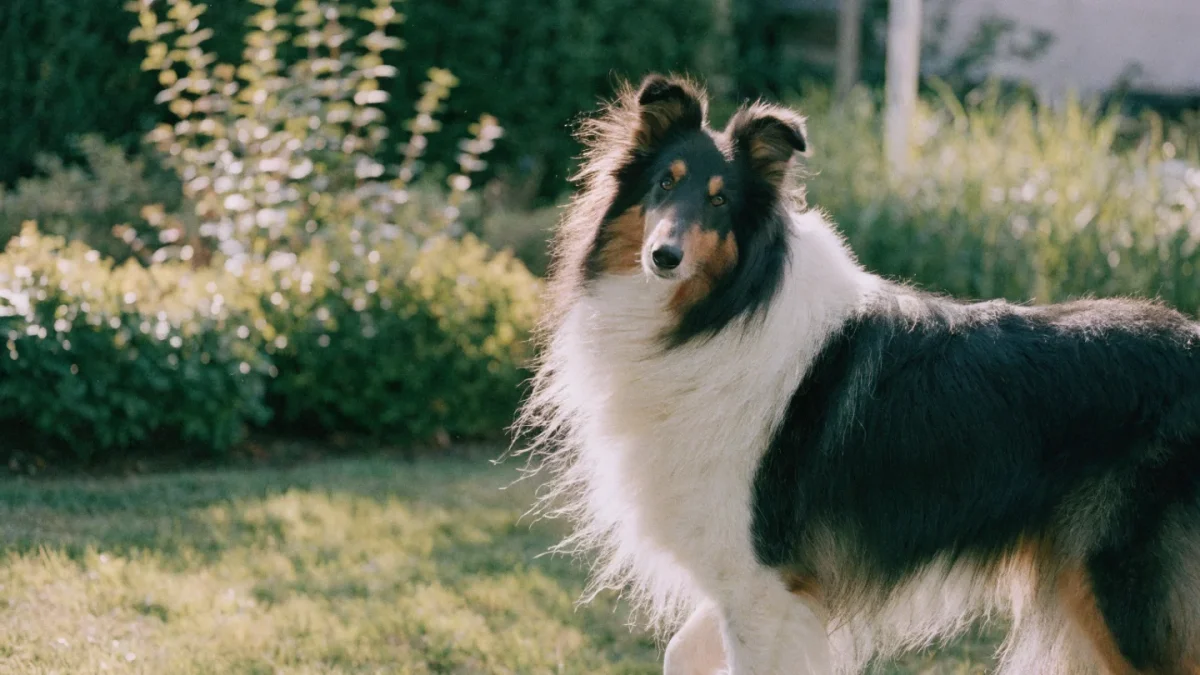
The collie has a public image problem — and unusually, the problem is that the image is too positive. Decades of Lassie reruns created a picture of the breed so idealized that the real dog inevitably disappoints people who took the fiction at face value. Here are the five misconceptions that most consistently mislead prospective owners.
1. "They're Just Like Lassie — Calm, Silent, and Naturally Obedient"
Lassie was played by a succession of professionally trained male rough collies (yes, male — the males' larger size and fuller coat looked better on camera) working with some of the best animal trainers in Hollywood. The result was a fictional character that bore limited resemblance to a pet collie in a normal household.
Real collies are not silent. They bark — frequently, loudly, and at stimuli that range from the doorbell to a leaf blowing across the yard. Real collies are not effortlessly obedient. They're intelligent and trainable, but they need actual training, consistently applied, to develop the manners Lassie displayed on screen. Real collies are affectionate and loyal, but they're also sensitive enough that household tension, schedule changes, or unfamiliar situations can produce anxiety rather than the heroic composure the TV show suggested.
The Lassie myth sets owners up for disappointment and — more importantly — sets the dog up for correction when it fails to be something it was never going to be.
2. "Collies and Border Collies Are Basically the Same Dog"
The names create the confusion, but these are fundamentally different breeds. The Border Collie is an obsessive, high-drive working dog bred for precision stock work — the breed that crouches, gives "eye," and controls sheep through intense, sustained focus. The collie (rough and smooth) was bred for a different style of herding — upright, patrolling, using bark and body position to guide flocks over large areas.
That breeding difference produces dramatically different pets. Border Collies need extreme mental and physical stimulation. Collies need moderate exercise and mental engagement. Border Collies are relentless problem-solvers. Collies are watchful companions. Border Collies will herd your children, your other pets, and your vacuum cleaner. Collies may nudge and circle, but with far less intensity.
Choosing a collie because you want a "calmer Border Collie" isn't entirely wrong — but understanding what collie temperament actually looks like on its own terms prevents the false equivalence from causing problems.
3. "They Need Intense Herding-Breed Exercise"
People hear "herding breed" and assume collies need the two-plus hours of high-intensity activity that Border Collies or Australian Shepherds demand. They don't. Sixty to ninety minutes of moderate daily exercise — walking, light hiking, training, and play — satisfies most adult collies. The breed's working heritage involved steady, sustained trotting over long distances, not explosive sprints or high-intensity agility courses.
Collies that are over-exercised can actually become more anxious rather than calmer, because the breed's sensitive temperament responds to physical stress differently than harder-driving breeds. A reasonable, consistent exercise routine produces a better collie than an extreme one.
4. "The Rough Coat Makes Them Miserable in Warm Climates"
The collie's double coat insulates in both directions — it protects against cold and also shields the skin from direct heat and UV radiation. Shaving a rough collie in summer removes that insulation and often makes the dog hotter, not cooler, while risking sunburn on exposed skin and permanent coat texture changes.
Collies in warm climates need shade access, fresh water, exercise scheduled for cooler hours, and regular coat maintenance to keep the undercoat from trapping excessive heat. They don't need to live in Scotland. Collies thrive across a wide range of climates when managed sensibly.
5. "They're Not Really Smart — They Just Look Elegant"
This one confuses working drive with intelligence. The collie doesn't display its intelligence through the Border Collie's obsessive task focus or the Poodle's flashy trick-learning. Collie intelligence manifests as perceptiveness — reading human emotion, anticipating household routines, remembering patterns, and responding to subtle communication. Multiple canine intelligence assessments have placed collies in the top 20 breeds for working and obedience intelligence.
The breed is smart. It simply expresses that intelligence through sensitivity and observation rather than compulsive task repetition. That's a different kind of intelligence, not a lesser one.
Why These Myths Persist
The collie breed guide covers the full reality of the breed. The myths persist because Lassie was too good at her job — she sold a version of the collie that was appealing precisely because it was simplified. The real collie is more complex, more vocal, and more emotionally demanding than the TV version. It's also more rewarding, if you know what you're actually getting.