

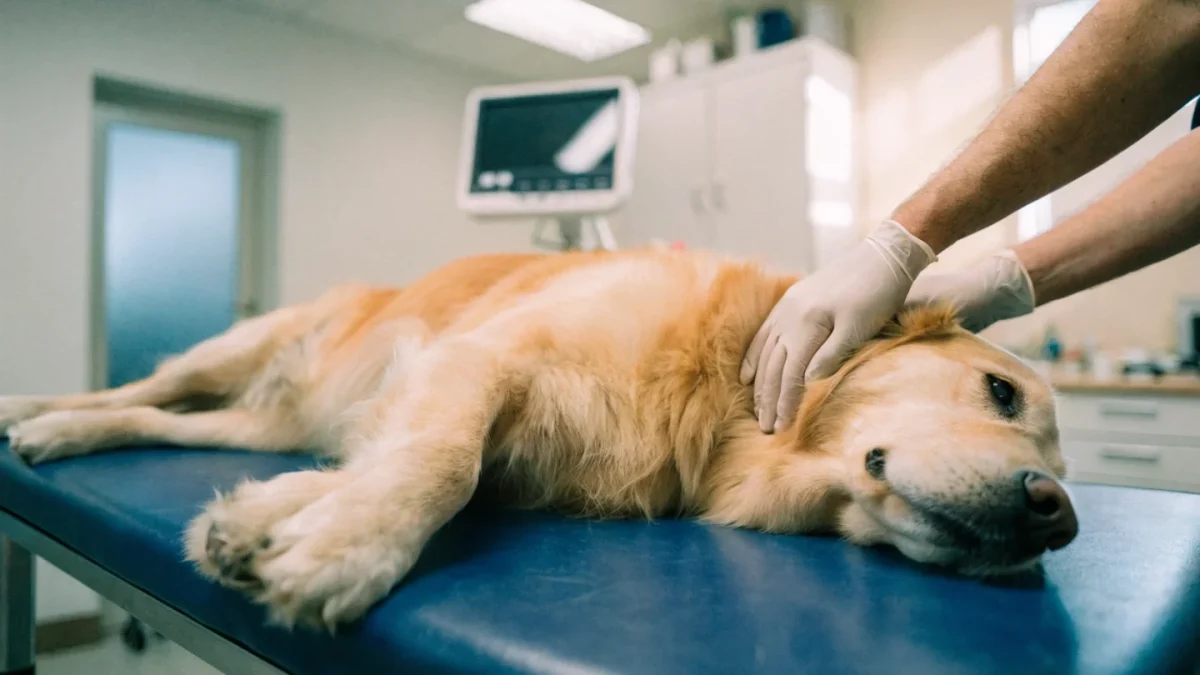
A decade ago, a German Shepherd named Rex came into my clinic with what his owner described as "just a swollen bump under his jaw." Rex was energetic, eating well, and otherwise his usual self. That swelling turned out to be high-grade lymphoma. His owner had no idea cancer could look so subtle.
That experience shaped how I talk to every dog owner I see. The most common cancer types in dogs often don't announce themselves with dramatic symptoms — at least not at first. Understanding what you're dealing with is the first step toward getting your dog the right care.
What Makes Canine Cancer So Variable
Dogs develop cancer at rates comparable to humans, and the range of cancer types is similarly broad. Some canine cancers grow slowly and respond well to treatment. Others are aggressive from the start. The key variable isn't just the diagnosis — it's which type, where in the body, and how early it's caught.
For a full overview of how cancer develops and what pet owners should know about the big picture, see what every pet owner should know about cancer in dogs and cats.
What follows is a practical breakdown of the most common types I see in practice.
Lymphoma: The Most Diagnosed Canine Cancer
Lymphoma accounts for roughly 15-20% of all canine cancers and is the type most dog owners encounter. It originates in lymphocytes — immune cells — and can affect lymph nodes throughout the body, the digestive tract, the skin, or the chest cavity.
Multicentric lymphoma (involving multiple lymph node groups) is the most common presentation. Owners often notice firm, painless swellings under the jaw, in front of the shoulder, or behind the knees. The dog may feel fine initially.
Alimentary lymphoma affects the gastrointestinal tract and typically causes vomiting, diarrhea, and weight loss. It's harder to detect early because the signs look like many other GI conditions.
Mediastinal lymphoma involves lymph nodes in the chest, sometimes causing breathing difficulty or a cough.
Staging (grades I through V) determines how widespread the disease is and guides treatment decisions. Grade V means the cancer has spread to bone marrow or blood. See lymphoma in dogs, including staging and prognosis for a deeper look at what each stage means.
Most dogs with multicentric lymphoma respond well to chemotherapy protocols, with many achieving remission. The challenge is that remission isn't always permanent.
Mast Cell Tumors: The Great Mimics
Mast cell tumors (MCTs) are the most common skin tumors in dogs and are notorious for being unpredictable. Some look like harmless skin tags. Others are internally invasive from the start. They can appear anywhere on or under the skin — a lump on the belly, a bump on the leg, a growth on the eyelid.
What makes MCTs particularly tricky is their grading. A low-grade MCT on the skin can often be cured with surgery alone. A high-grade MCT may have already spread by the time it's found. Grade is determined by pathology after removal — not by how the lump looks to the naked eye.
Certain breeds are predisposed: Boxers, Labrador Retrievers, Golden Retrievers, and Staffordshire Bull Terriers show higher rates. If your dog is a breed with known MCT risk and develops any new skin lump, have it evaluated promptly rather than waiting to see if it changes.
Osteosarcoma: Aggressive Bone Cancer
Osteosarcoma is the most common primary bone tumor in dogs and is predominantly a disease of large and giant breeds — Great Danes, Rottweilers, Irish Wolfhounds, and Saint Bernards are among those most affected. It typically develops in the long bones: the radius near the wrist, the distal femur near the knee, or the proximal humerus near the shoulder.
The presenting sign is lameness — often subtle at first, then progressive. The affected limb may feel warm to the touch, and swelling develops around the tumor site. Pain is significant, often more than it appears from the outside.
Osteosarcoma is aggressive. By the time the primary tumor is diagnosed, microscopic spread to the lungs is presumed to have already occurred in most cases, even though it's rarely visible on radiographs at that stage. This doesn't mean treatment is pointless — it means treatment goals must be realistic. Amputation combined with chemotherapy can extend comfortable life by many months to over a year in responsive cases.
Hemangiosarcoma: The Hidden Threat
Hemangiosarcoma originates in blood vessel cells and has a well-earned reputation as one of the most frightening canine cancers — not because it's the most common, but because it often provides almost no warning before a crisis.
The spleen is the most common location. A splenic hemangiosarcoma can grow silently until the tumor ruptures, causing sudden internal bleeding. The dog collapses, is pale or white in the gums, and needs emergency surgery. Golden Retrievers and German Shepherds are disproportionately affected.
Cardiac hemangiosarcoma (originating in the heart wall) causes fluid accumulation around the heart — cardiac tamponade — which compromises heart function. Signs include exercise intolerance, fainting, and sudden collapse.
The prognosis for hemangiosarcoma is unfortunately poor even with aggressive treatment, largely because it's vascular and spreads early. Earlier detection through routine ultrasound screening in at-risk breeds is an area of ongoing interest.
Mammary Tumors: Prevention Is the Best Medicine
In intact (unspayed) female dogs, mammary tumors are among the most common cancers diagnosed. The risk increases significantly with age and with each heat cycle. Dogs spayed before their first heat have a dramatically reduced lifetime risk compared to those spayed after multiple heat cycles.
About half of mammary tumors in dogs are benign and about half are malignant. Malignant types can spread to regional lymph nodes and the lungs. Any new mass found along the mammary chain — the row of glands running from the chest to the groin — warrants veterinary evaluation. Surgical removal is the standard approach, with pathology guiding decisions about further treatment.
Other Cancers Worth Knowing
Soft tissue sarcomas develop in connective tissue — muscle, fat, fibrous tissue — and usually present as firm subcutaneous lumps. They tend to grow locally and invade surrounding tissue more than they spread distantly. Surgical margins matter enormously with this type.
Transitional cell carcinoma (TCC) is the most common bladder tumor in dogs, causing urinary symptoms — straining, blood in urine, frequent accidents — that can be mistaken for a UTI. Scottish Terriers are significantly overrepresented, carrying an 18- to 20-fold higher risk than other breeds, along with several other breeds at more modestly elevated risk.
Melanoma can be benign or malignant depending on location. Oral melanoma is among the most aggressive cancers in dogs. Skin melanoma may be less so.
Histiocytic sarcoma is less common overall but overrepresented in Bernese Mountain Dogs, Rottweilers, and Flat-Coated Retrievers. It's a rapidly progressive cancer with limited treatment options.
The Importance of Early Evaluation
Knowing which cancer types exist is less useful than knowing when to seek evaluation. The early warning signs of cancer in dogs are often subtle — but recognizing them is what gives your dog the best chance at earlier diagnosis and more treatment options.
A new lump that wasn't there last month, unexplained weight loss, persistent lameness, changes in urination or defecation — none of these automatically mean cancer, but all of them deserve a veterinary visit rather than a wait-and-see approach.
FAQ
What is the most common cancer in dogs?
Lymphoma is consistently among the most commonly diagnosed cancers in dogs, accounting for a significant proportion of all canine cancer cases. Mast cell tumors are the most common skin tumor specifically.
What dog breeds are most prone to cancer?
Golden Retrievers have particularly high cancer rates overall. Boxers are prone to mast cell tumors and brain tumors. Rottweilers and large breeds generally face higher rates of osteosarcoma. Bernese Mountain Dogs have an elevated risk of histiocytic sarcoma. Breed predispositions are well-documented but don't mean individual dogs of those breeds will develop cancer.
Can you tell if a lump on a dog is cancerous just by looking at it?
No — and this is one of the most important things for owners to understand. Neither appearance, texture, firmness, nor whether a lump is painful reliably distinguishes benign from malignant growths. A fine needle aspirate or biopsy is the only way to know.
At what age do dogs typically get cancer?
Most cancers occur in middle-aged to older dogs, typically seven years and older. However, some cancers — including osteosarcoma and certain lymphomas — can occur in younger dogs, especially in large breeds. There's no age at which cancer can be considered impossible.