

There’s a sound every dog owner recognizes instantly — that hollow, clattering thwack of a plastic e-collar bumping into a doorframe, a kitchen cabinet, or your shins at two in the morning. It’s the soundtrack of post-surgical recovery, and it’s usually accompanied by a pair of enormous, mournful eyes pleading with you to end their suffering. I sent a four-year-old Greyhound named Oliver home with a traditional cone after his neuter last spring, and his owner, Diane, called me the next day close to tears. “He won’t even walk to his water bowl,” she said. “He just stands in the corner looking like he’s been arrested.” That phone call is one I’ve fielded hundreds of times in practice, and honestly, it’s one of the reasons I’ve spent the last few years rethinking how we approach post-operative protection for our patients.
Why the Cone Exists (And Why That’s Not the Whole Story)
The traditional Elizabethan collar — affectionately and tragically dubbed the “Cone of Shame” — does exactly what it was designed to do. It creates a rigid physical barrier between your pet’s mouth and their surgical site, hot spot, or wound. Dogs and cats instinctively lick wounds. It’s hardwired behavior. Saliva contains some mild antibacterial compounds, which is probably why the instinct evolved, but in a modern surgical context, that licking introduces far more bacteria than it removes, disrupts healing tissue, and can rip out sutures in seconds flat. The cone works. There’s no debate about that.
But “working” and being the best option aren’t always the same thing.,[1] the cone’s effectiveness has to be weighed against its significant downsides — and those downsides aren’t trivial. Pets wearing rigid cones routinely experience reduced spatial awareness, difficulty navigating doorways, inability to access food and water bowls normally, and disrupted sleep patterns. For cats in particular, the cone can turn a dignified creature into a trembling, flattened puddle of stress that refuses to eat or use the litter box. And when a cat stops eating after surgery, we’re suddenly dealing with a secondary problem that can be more dangerous than the original surgery.
Enter the Recovery Suit
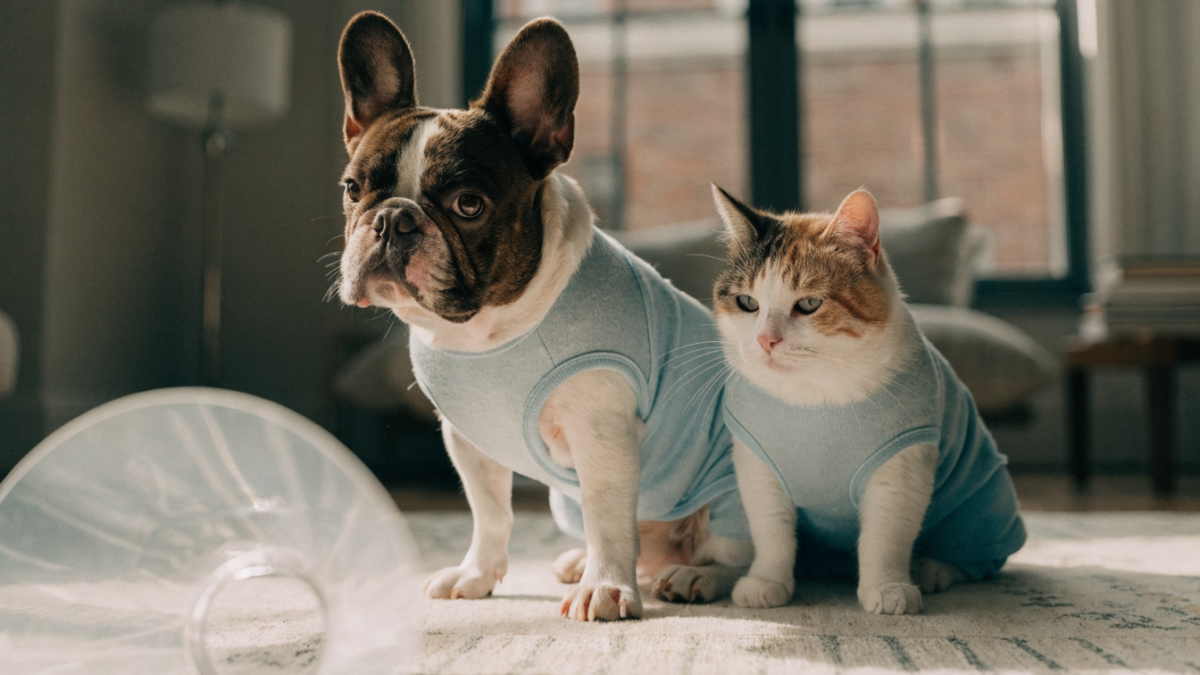
Over the past several years, a different approach has gained real traction — and not just among anxious owners. Soft fabric recovery suits, designed essentially as full-body onesies for dogs and cats, have evolved from a niche curiosity into a genuinely useful clinical tool. These garments are typically made from breathable, elastic, durable fabric that provides full coverage of the abdominal area while still allowing the pet to move, eat, sleep, and relieve themselves normally.
I first started recommending them seriously after a client brought in a nine-year-old Cocker Spaniel named Rosie who’d had a mast cell tumor removed from her flank. Rosie’s owner had tried the cone for two days, and Rosie — a normally food-motivated, tail-wagging goofball — had stopped eating entirely. Her owner found a recovery suit online out of desperation. When Rosie walked into my exam room for her suture removal wearing a snug blue bodysuit, she was bright, alert, and practically vibrating for the treat jar. The incision had healed beautifully. No interference, no infection. That was the moment I stopped being a cone traditionalist.
How They Actually Work
Recovery suits function on a simple principle: rather than preventing your pet’s mouth from reaching the wound, they place a soft, physical fabric layer between the wound and the outside world. The snug fit means the fabric stays close to the body, making it difficult for the pet to push the material aside and access the incision directly. Most are designed with openings or strategic tailoring that allow urination and defecation without removing the suit — a feature that reduces handling of the surgical site and makes life dramatically easier for owners managing a post-op pet.
The fabric itself matters enormously. The best recovery suits use tightly-woven, stretchy materials that balance breathability with durability. You want something that keeps the pet cool, wicks moisture, and resists the determined yanking of a persistent chewer. The textile technology has improved significantly — early versions were essentially repurposed baby clothes, but today’s purpose-built garments are engineered specifically for the biomechanics of how dogs and cats move and how they attempt to groom themselves.
The Real-World Tradeoffs
Here’s where I need to be honest with you. Recovery suits aren’t a perfect replacement for cones in every situation. There’s a genuine tension between medical efficacy and comfort, and choosing the right tool depends heavily on the individual patient, the location of the wound, and the pet’s personality.
When a Suit Shines
- Spay and neuter recoveries — These are the bread-and-butter use case. Abdominal incisions are well-covered by the suit’s design, and most pets tolerate the garment without issue.
- Hot spots on the trunk or back — Full coverage prevents the persistent licking that turns a small area of irritated skin into a massive, infected wound.
- Cats who shutdown with cones — Feline patients often respond dramatically better to soft garments than rigid plastic.
- Senior pets with mobility issues — A dog who’s already unsteady on their feet doesn’t need the added spatial confusion of a cone extending their silhouette by a foot in every direction.
When You Probably Still Need a Cone
Suits have real limitations. If the wound is on a paw, leg, or face, a bodysuit simply can’t provide adequate coverage. And for highly determined self-mutilators — pets who will chew obsessively at a site regardless of what’s covering it — fabric can become a liability. I’ve seen dogs chew through recovery suits in under an hour. A determined Labrador with a compulsive need to address a surgical site will make quick work of even durable fabric, and the risk is that they’ll not only reach the wound but also ingest pieces of the material, creating an entirely new medical problem.
I’m also cautious about suits for deep surgical sites where any pressure or friction could compromise healing. For example, after some orthopedic procedures, I prefer the rigid barrier of a cone because it provides absolute certainty that the site won’t be disturbed. With a suit, there’s always some degree of contact, and for delicate reconstructions, that’s not ideal.
The Feline Factor: Why Cats Have Changed the Conversation
Cats deserve special mention here because they’ve been the real beneficiaries of the recovery suit trend. Dogs complain loudly about cones, but cats suffer quietly. A stressed cat will simply stop eating, stop grooming, stop using the litter box, and sometimes stop moving entirely. For an older cat recovering from surgery, that cascade of stress responses can trigger hepatic lipidosis — a dangerous liver condition that occurs when cats go without food for even a few days.
I now recommend recovery suits almost as the default for feline abdominal surgeries. The transformation in patient demeanor is often remarkable. A cat who was crouched and immobile in a cone will start exploring, eating, and using their litter box within hours of switching to a soft garment. That behavioral recovery translates directly into physical healing — less stress means better immune function, better appetite, and better outcomes.
What to Look For If You Go This Route
If you’re considering a recovery suit — whether preemptively before a scheduled surgery or as a mid-recovery pivot when the cone isn’t working — here’s what matters from a clinical perspective:
- Snug but not restrictive fit. The suit needs to hug the body closely enough that the pet can’t bunch up the fabric and push it aside. But it shouldn’t be so tight that it restricts breathing or creates pressure on the surgical site itself.
- Breathable, stretchy fabric. Look for materials designed to wick moisture and allow airflow. Pets can overheat quickly in non-breathable garments, especially during warmer months.
- Appropriate openings for elimination. The suit should allow your pet to urinate and defecate normally without being removed. This is one of the most valuable features and one of the biggest quality differentiators between good and mediocre products.
- Machine-washable construction. Post-surgical pets are messy. You’ll want at least two so you can wash one while the other is in use.
- Durability appropriate to your pet. If you have a determined chewer, look for reinforced panels and heavier-duty construction. But remember — no fabric suit is truly chew-proof.
,[2] the surge in alternative recovery garments has been driven largely by pet owners who simply couldn’t bear watching their animals suffer in rigid plastic. That guilt-wracked impulse has pushed the market forward, and frankly, it’s pushed veterinary medicine forward too. We now have better options because owners demanded them.
A Final Thought on Recovery
I’ll tell you something I’ve genuinely changed my mind about over the years. Early in my career, I was firmly in the cone camp. They work, they’re cheap, they’re standard. Why mess with success? But years of watching patients — especially cats and senior dogs — struggle with cones have convinced me that we were accepting unnecessary suffering as the cost of medical efficacy. Recovery suits aren’t perfect, and they’re not always the right choice, but they’ve given us a middle ground that didn’t exist before. When Oliver the Greyhound went home with a soft recovery suit instead of a cone after I saw Diane’s second Greyhound through his neuter, she sent me a photo of him curled up on the couch sleeping peacefully. “He’s himself again,” she wrote. That’s what we’re going for — not just a healed incision, but a healed animal who feels like themselves throughout the process.
Whatever recovery tool you and your veterinarian choose, the takeaway is the same: healing isn’t just about preventing infection and protecting sutures. It’s about helping your pet move through a stressful, painful experience with as much comfort and dignity as possible. The right recovery garment — whether that’s a cone, a suit, or a combination of both — is the one that keeps your pet safe while letting them rest, eat, and be themselves. Always talk to your vet about what’s appropriate for your specific situation, and never hesitate to speak up if the recovery plan isn’t working for your animal. You know them better than anyone.