

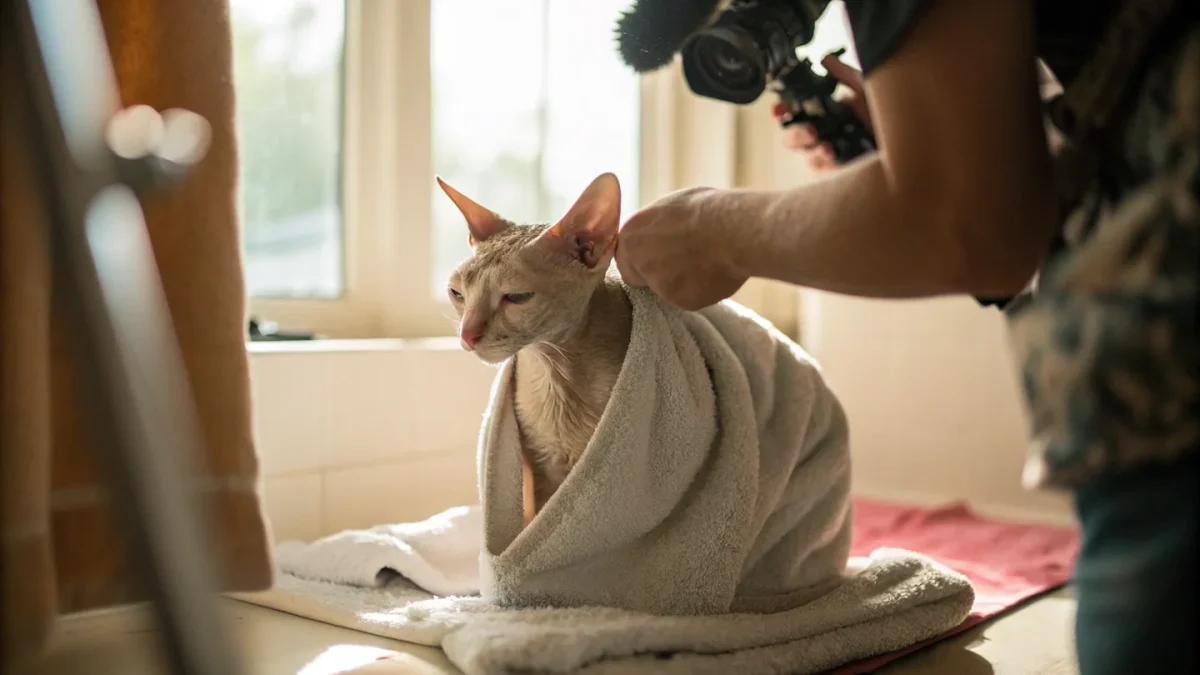
The Cornish Rex coat looks like it demands a specialist. The waves, the unusual texture, the reduced hair density — it reads as complicated. In practice, the grooming routine is simpler than most long-haired cats and more specific than most short-haired ones. The key is understanding why the coat behaves the way it does.
For broader context on the breed, the Cornish Rex breed overview covers history, temperament, and the full ownership picture. This guide is focused purely on coat and body care.
Why the Cornish Rex Coat Needs Different Care
Standard cat coats consist of three hair types: guard hairs (the outer layer), awn hairs (the middle layer), and down hairs (the soft undercoat). The Cornish Rex mutation essentially removes the guard hairs and greatly reduces the awn hairs, leaving mostly the soft, crimped down coat.
Those missing guard hairs normally serve two functions: protection and oil distribution. In a typical cat, as the outer coat moves, it wicks oils produced by the skin outward through the coat, where they gradually dissipate. Without that wicking mechanism, oils accumulate closer to the skin. Over time, this creates a greasy or waxy feel to the coat, most notably around the ears, chin, and along the back — areas with higher concentrations of sebaceous glands.
The Bathing Routine
Most Cornish Rex benefit from bathing more often than most cats — approximately every four to six weeks, though individual cats vary. Some have naturally balanced skin and need less frequent baths; others with more active oil production benefit from monthly bathing.
The process:
-
Gather supplies before you start. Warm water, a gentle cat-appropriate shampoo (one designed for sensitive or oily skin works well for this breed), a cup or detachable showerhead for rinsing, and at least two towels.
-
Use warm water, not hot. The Cornish Rex feels temperature acutely due to their reduced coat. Test the water on your wrist — it should feel pleasantly warm, not hot.
-
Wet thoroughly before applying shampoo. The wavy coat repels water initially; take a moment to ensure the coat is saturated rather than just surface-wet.
-
Work shampoo in gently. Focus on areas prone to oil buildup: ears and around the ear base, chin, along the back, and the tail.
-
Rinse extremely thoroughly. Shampoo residue causes skin irritation and an itchy, flaky coat in this breed. Rinse until the water runs clear and the coat no longer feels slippery.
-
Dry completely. The reduced coat means the Cornish Rex chills more easily than other cats. Towel-dry first, then either use a hair dryer on the lowest, warmest setting (held at a distance) or keep the cat in a warm room until fully dry. Most cats become accustomed to a dryer if introduced gradually as kittens.
Introducing baths: Cats introduced to baths gradually from kittenhood tolerate them well — some even seem to enjoy the warm water. Adult cats coming to baths for the first time need patient desensitization. Start with just introducing the bathroom, then standing in an empty tub, then shallow water, over several weeks. Rushing this creates lasting bath resistance that makes grooming miserable for everyone.
Between Baths
You'll notice oil buildup most around the ears and chin between baths. A damp cloth or gentle wipe can clean these areas as needed without requiring a full bath. Some owners use unscented, alcohol-free pet wipes between bath sessions.
The coat itself benefits from gentle stroking with your hand rather than brushing. The waves in a Cornish Rex coat are not created by grooming — they're structural — and aggressive brushing can disturb the wave pattern and cause static. Simply running your hands over the coat spreads oils and keeps the texture feeling its best.
Ears, Nails, and Teeth
Ears: Check weekly. Cornish Rex ears are large and relatively open, which means they accumulate debris visibly. Clean gently with a cotton pad moistened with a vet-recommended ear cleaner when needed. Never insert anything into the ear canal.
Nails: Trim every two to three weeks. The breed's active climbing and play habits mean keeping nails at a manageable length prevents damage to furniture and — more importantly — scratches during enthusiastic play sessions.
Teeth: Dental hygiene matters for all cats, but this is an area for your veterinarian to guide you on protocol. Regular checks and professional cleaning as needed are more important than any specific home routine.
What to Avoid
- Avoid brushes with stiff metal bristles. They're too harsh for the delicate wave structure and thin coat.
- Don't skip baths and hope for the best. Prolonged oil buildup irritates the skin and can lead to blackheads, particularly around the chin.
- Don't use human shampoos. pH levels in human shampoos are wrong for cats and will cause skin irritation.
- Don't leave the cat cold and damp after a bath. The reduced coat doesn't insulate well; thorough drying is genuine welfare care, not optional.
If you're still in the decision-making phase, consider reading about whether the Cornish Rex is the right breed for your household — the grooming commitment is one factor among several worth weighing honestly.