

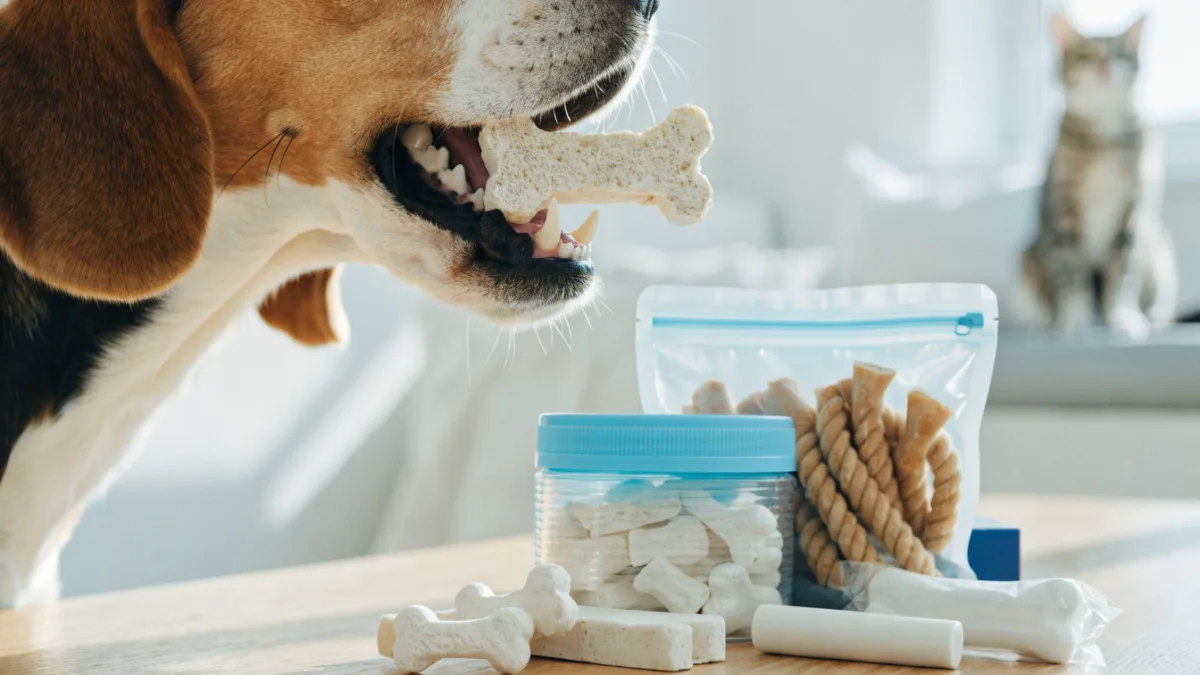
Let me tell you about Max. Max is a five-year-old Golden Retriever with a goofy smile and a fondness for carrying around the largest stick he can find. Last spring, his owner, Emily, brought him into the clinic because she noticed a distinctly unpleasant odor coming from his mouth. “I don’t understand it, Dr. Mitchell,” she said, genuinely baffled. “I give him an expensive dental chew every single day, and his breath is still terrible.”
Emily isn’t alone in her frustration. Walk into any pet store, and you are instantly bombarded by an overwhelming wall of bags and bones all promising sparkling clean teeth and fresh breath. The packaging features glowing white molars and happy dogs. But as I explained to Emily, the reality of the dental chew market is far more complicated—and far less regulated—than the marketing teams want you to believe.
When we unboxed Max’s favorite treats and looked at the label, the problem was clear. They were loaded with unnecessary calories, lacked any scientific backing, and were soft enough that they provided almost zero mechanical cleaning. He was essentially eating a candy bar every afternoon and hoping it would count as a trip to the dentist.
To understand why so many products fail, we have to look at how dental chews actually work—and why our cats need an entirely different approach.
## The Anatomy of a Chew: How Mechanical Action Works
The concept behind a dental chew is beautifully simple: mechanical friction. When your dog chews on something with the right texture, that object literally scrapes against the surface of their teeth. This physical rubbing action disrupts the sticky biofilm of bacteria known as plaque before it has a chance to harden into tartar (or dental calculus), which is the concrete-like substance that locks bacteria against the gumline.
For a chew to be effective, it has to strike a very specific balance. It needs to be tough enough to require sustained chewing and create that scraping effect, but not so tough that it risks breaking the tooth. Many products on the market fail this test completely.
If a treat is too soft—like many of the airy, bone-shaped biscuits you find in supermarket aisles—your dog will simply gulp it down or shatter it in a single bite. The treat never spends enough time in the mouth to do any cleaning. It just adds empty calories to their daily diet, contributing to weight gain without offering any real oral health benefits.
## The “Goldilocks” Rule of Hardness
On the flip side of the too-soft treats is a hidden danger I see all too often in my clinic. Many well-meaning owners assume that because wild canines chew on bones, domestic dogs should too. Or they buy incredibly hard synthetic nylon bones, deer antlers, or hooves, assuming that “tough” means “good for teeth.”
I’ll be honest: early in my career, I used to think giving dogs hard natural bones was a great way to keep their teeth clean. I’ve completely changed my mind on this. After seeing one too many shattered teeth in my exam room, I now firmly advise against them.
Take Bones, a two-year-old Mastiff mix who came in last month. His owner had given him a dense elk antler, proud of herself for finding a “natural” chew. But Bones bit down with such force that the antler didn’t give way—his tooth did. He had fractured his upper fourth premolar (the large chewing tooth we call the carnassial tooth) right down to the sensitive pulp chamber. It was excruciatingly painful, and we had to perform a surgical extraction.
I always tell my clients to use the thumbnail test. If you press your thumbnail into the chew and it leaves a slight indent, it is generally safe for your dog’s teeth. If it feels like a rock or a piece of ceramic, it is too hard and risks a slab fracture. [1] that these overly hard chews are a leading cause of dental trauma in dogs.
## Finding the Best Dental Chews for Dogs: Look for the Seal
So, if the supermarket aisles are filled with deceptive marketing, how do you actually find the best dental chews for dogs?
You look for the Veterinary Oral Health Council (VOHC) Seal of Acceptance.
The VOHC is to pet dental products what the ADA (American Dental Association) seal is to human toothpaste. It is an independent, veterinary-backed organization that reviews clinical trials. For a product to earn their seal, it must undergo rigorous, double-blind scientific studies proving that it actually reduces plaque and tartar by a statistically significant margin compared to a control group.
Because the pet supplement and treat market is largely unregulated, the VOHC seal is the only reliable benchmark for consumers. When you are shopping, ignore the glossy packaging and bold claims. Flip the bag over and look for the VOHC stamp. It is the closest thing you can get to a guarantee that the product will do what it says.
What the Science Says About Effectiveness
The effectiveness of these approved products isn’t just anecdotal. A notable 2020 study evaluated the benefits of daily dental chew administration in adult dogs. The [2] actively improved oral health outcomes and significantly reduced halitosis—the medical term for bad breath—in the test subjects.
Modern dental chews that carry the VOHC seal do more than just physically scrape the teeth. Recent developments have introduced “novel” formulations. These chews often feature a porous, flexible texture that wraps around the teeth during chewing, combined with specialized ingredients like delmopinol or specific enzymes that chemically neutralize the volatile sulfur compounds produced by oral bacteria.
A Supplement, Not a Cure-All
Despite the impressive science behind VOHC-approved treats, it is vital to manage expectations. [3] that chews are not a cure-all.
I had to gently explain this to Emily when we were discussing Max’s treatment plan. Giving your dog a dental chew is an excellent adjunct—an addition—to a comprehensive dental care routine. However, it cannot replace the mechanical brushing action of a toothbrush, nor can it reverse existing periodontal disease.
If a dog already has tartar buildup along the gumline or infected, inflamed gums (gingivitis), a chew cannot fix that. The tartar acts as a shield, protecting the bacteria from any friction the chew might provide. In these cases, a professional veterinary dental cleaning under anesthesia is required to scale the teeth above and below the gumline. Once the teeth are clean, then you can use the chews to keep the plaque from coming back.
## The Feline Reality: Why Cat Dental Treats Fall Short
If you have a cat, you might be wondering where they fit into all of this. While dogs will happily spend twenty minutes gnawing on a chew, cats are an entirely different story.
Feline dental health relies on a completely different approach, primarily because cats simply do not chew the same way dogs do. Cats are obligate carnivores, and their teeth are designed for shearing meat and catching prey, not for grinding on hard objects.
When you toss a cat dental treat to your feline friend, they will likely pick it up and swallow it whole. When the treat bypasses the teeth entirely and goes straight down the hatch, there is zero mechanical friction. You are essentially feeding them a highly concentrated, high-calorie snack that does absolutely nothing for their oral hygiene.
A Direct Approach for Cats
Because cat dental treats are often so ineffective, feline dental health relies much more heavily on direct action.
- Direct Brushing: This is the gold standard. Using a soft-bristled finger brush or a cat-specific toothbrush with enzymatic pet toothpaste (never use human toothpaste, as the fluoride and xylitol are toxic) is the most effective way to control plaque. Even brushing a few times a week makes a massive difference.
- Dental Diets: For cats that refuse brushing, specialized dental diets can be highly effective. These aren’t standard kibble; the kibble pieces in VOHC-approved dental diets are physically much larger and have a specific fibrous texture. The cat is forced to bite into the kibble, causing it to splay and wipe the tooth surface clean like a sponge before it shatters.
- Water Additives and Gels: There are VOHC-approved water additives and plaque-prevention gels that can be applied directly to the teeth or added to water bowls. These use enzymes to chemically break down bacteria and can be a helpful tool for cats who won’t tolerate having their mouths handled.
Just like with dogs, these interventions are meant to prevent disease. Cats are highly prone to a painful condition called feline tooth resorption, where the body begins breaking down the tooth structure. No chew, treat, or brushing can stop or reverse resorption, which is why annual veterinary exams and dental x-rays are critical for catching these silent issues early.
## The Bottom Line on Dental Health
When Emily brought Max back in for his post-cleaning checkup, his breath was fresh, and his teeth were gleaming. We had established a new routine: a professional cleaning to reset his oral health, daily tooth brushing (which he learned to love thanks to poultry-flavored toothpaste), and a single VOHC-approved chew given in the afternoon as a supplement, not a solution.
Navigating the unregulated world of pet dental products can feel overwhelming, but it doesn’t have to be. Remember the “Goldilocks” rule of hardness—never give your dog anything that could fracture their teeth. Flip the bag over and only buy treats that proudly display the VOHC seal. And above all, remember that true dental care is a holistic endeavor that requires active participation from you, whether you’re brushing your dog’s molars or checking your cat’s gums for redness.
Your pet relies on you to see past the marketing. By grounding your choices in science and veterinary evidence, you aren’t just freshening their breath—you’re protecting their heart, their kidneys, and giving them a pain-free life.
Sources
- Veterinary dental specialists consistently warn — houstonpetdentals.com
- research found that daily administration of these novel dental chews — pmc.ncbi.nlm.nih.gov
- Veterinarians are careful to point out — rabunanimalhospital.com