

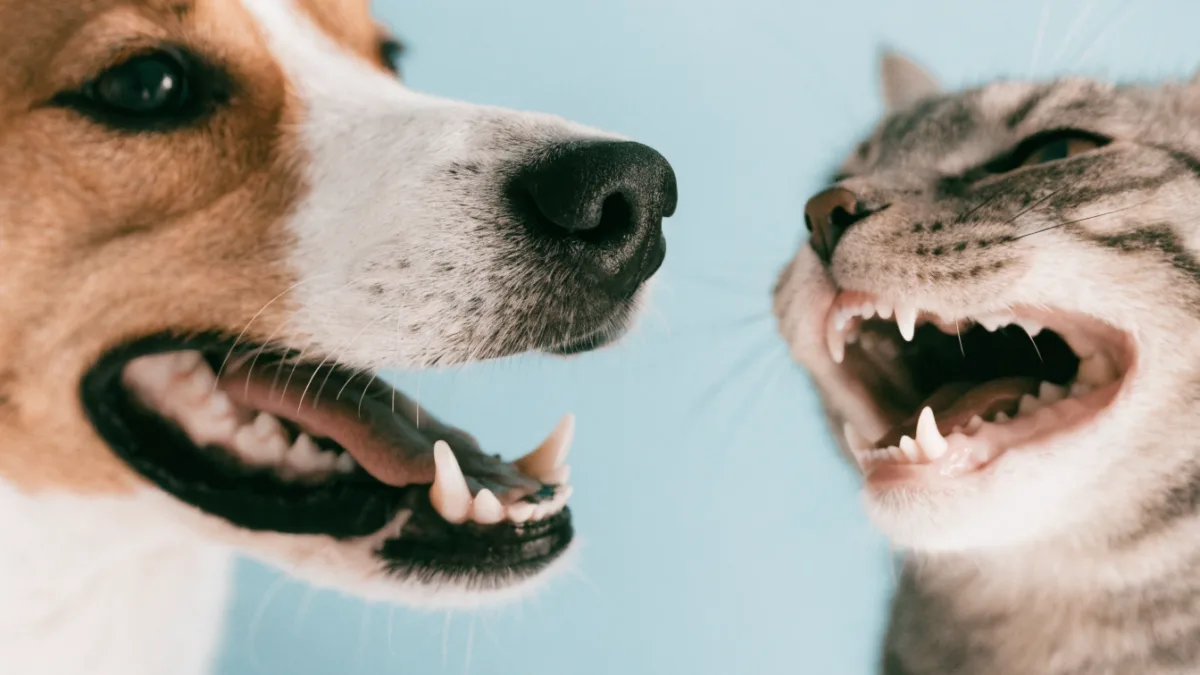
Let me tell you about two patients I saw recently. First was Tucker, a four-year-old Yorkshire Terrier who came in because his owner noticed he was dropping his kibble and had breath that could peel paint off the wall. Then there was Luna, a nine-year-old calibo cat. Her owner brought her in because Luna had started hiding under the bed and was swallowing her food whole instead of chewing it. Both pets were suffering from severe dental disease, but the reasons they developed it, and the specific conditions causing their pain, couldn’t have been more different.
It’s easy to assume that a mouth is a mouth, whether it belongs to a dog or a cat. But in clinical practice, we see a completely different disease landscape depending on the species. By the time they are three years old,.[1] It is the single most common clinical condition I treat. Yet, the way it attacks their pearly whites—and how they show us they are hurting—requires very different approaches. Let’s walk through why dental disease in dogs and cats is not a one-size-fits-all problem.
The Canine Smile: Crowding and Periodontal Disease
When it comes to dogs, especially small breeds,.[2] Think about a tiny Pomeranian or a Chihuahua. They have the same number of teeth as a larger dog, but those teeth are crammed into a jaw the size of a walnut. Because of this severe crowding, food and bacteria get trapped easily, accelerating the formation of plaque and tartar.
Dogs are highly prone to periodontal disease. This is advanced gum disease where the bacterial infection creeps below the gumline, destroying the ligaments and bone that hold the teeth in place. I remember treating a sweet older Pug named Barnaby whose mouth was so crowded that his teeth had essentially rotated. By the time he came to me, his gum tissue was receding, and several of his teeth were wiggling like loose piano keys. His owner was devastated, saying, “I just thought his breath was bad because he’s a dog!”
The systemic impact of this is significant. The bacteria from infected gums don’t just stay in the mouth; they enter the bloodstream and travel to major organs, particularly the heart, liver, and kidneys. Over time, chronic periodontal disease can actually cause microscopic damage to the heart valves. We treat the mouth not just to save the teeth, but to protect the rest of the body.
Spotting the Signs in Dogs
Because dogs are generally more overt with their discomfort, you might notice clear behavioral changes if you know what to look for. Keep an eye out for:
- Excessive drooling, sometimes with blood-tinged saliva.
- Dropping food or chewing on only one side of the mouth.
- Pawing at the mouth or rubbing the face against the carpet.
- A sudden hesitancy to eat hard kibble or play with hard toys.
The Feline Enigma: Masking Pain and Mysterious Resorption
If dogs are obvious, cats are absolute masters of disguise. As both predators and prey in the wild, felines are evolutionary hardwired to hide any sign of weakness. By the time a cat like Luna stops eating or hiding under the bed, the disease in her mouth is usually incredibly advanced.
Instead of the straightforward bone loss we see in dogs, cats suffer from.[3] The first is feline gingivostomatitis, a severe, exaggerated inflammatory response where the cat’s immune system essentially goes to war against the plaque on their teeth. The gums and oral tissues become fiery red and ulcerated. Imagine the worst canker sore you’ve ever had, and now imagine it covering your entire mouth.
The second condition is tooth resorption. This is a process where the body’s own cells, called odontoclasts, begin to break down and absorb the tooth structure, starting right at the gumline. We don’t entirely know why this happens, but it is agonizing. As the tooth erodes, the sensitive nerve endings are left exposed to the air and food.
Cats don’t stop eating because they aren’t hungry; they stop eating because the pain of eating finally overrides their instinct to hide their illness.
With cats, you rarely see them drooling or pawing at their mouths. Instead, the signs are behavioral. A cat might start swallowing kibble whole, stop grooming themselves (leading to a matted, dull coat), or experience unexplained weight loss.
Navigating the Myths: Bones, Anesthesia, and Hard Choices
When I talk to owners about dental care, I often encounter well-meaning home remedies. I completely understand the impulse—you want to do something natural and avoid stressful procedures. However, some of these choices can actually cause more harm than good.
The Danger of “Natural” Chews
Many owners give their dogs natural bones, hooves, or antlers, believing the hard texture will scrape away tartar. While it’s true that gnawing provides some mechanical cleaning, these items are simply too hard. I’ve extracted countless fractured teeth—specifically the large upper premolars—because a dog bit down on a femur bone the wrong way. A good rule of thumb is the “thumbnail test”: if you press your thumbnail into the chew and it doesn’t leave an indent, it is too hard for your pet’s teeth.
The Anesthesia-Free Dental Debate
There is a major push in the grooming industry for “anesthesia-free” dental cleanings. On the surface, it sounds wonderful: your pet stays awake, there are no anesthesia risks, and the teeth look white again. But here is the reality veterinary dentists are careful to explain: those cleanings are purely cosmetic.
True dental disease lives below the gumline. Scraping the visible crown of the tooth does absolutely nothing to stop periodontal disease or tooth resorption. Furthermore, to properly diagnose and treat a pet’s mouth, we need dental X-rays—which requires them to be perfectly still. Trying to scale a nervous dog or cat’s teeth while they are awake is highly stressful, often painful, and can even cause micro-scratches on the enamel if not polished properly.
Building an Evidence-Based Prevention Toolkit
I’ve actually changed my mind on a few things over the years I’ve spent writing about this. Early on, I leaned entirely on professional cleanings and didn’t emphasize daily at-home care as much as I should have. But prevention is a team effort, and the “big three” of dental care can dramatically extend the time between surgeries.
- Daily Brushing: This is the gold standard. Using a soft-bristled pet toothbrush and pet-safe enzymatic toothpaste (never use human toothpaste—it contains fluoride and xylitol, which are toxic) breaks down the bacterial biofilm before it hardens into tartar.
- VOHC-Approved Products: Look for products carrying the Veterinary Oral Health Council (VOHC) seal of approval. This seal means the product has been independently tested and scientifically proven to reduce plaque and tartar. Whether it’s a dental diet, a water additive, or a specific chew, this seal is your best friend.
- Professional Cleanings: Just like you and I need our deep cleanings at the dentist, pets need comprehensive oral health assessments under anesthesia. This allows us to probe every tooth, take full-mouth digital radiographs to check the roots, and clean both above and below the gumline.
Modern veterinary dentistry has also embraced incredible technology. Many clinics now use CO2 lasers to treat feline gingivostomatitis, which significantly reduces recovery time and inflammation compared to traditional surgery. It’s a game-changer for cats who previously faced full-mouth extractions.
Dental disease might be common, but it doesn’t have to be a foregone conclusion. It breaks my heart to see rescue pets surrendered to shelters because severe, untreated oral pain made them aggressive or unable to eat, severely decreasing their quality of life. Taking care of our pets’ teeth isn’t just about a pretty smile; it is quite literally about extending their lives and ensuring the time they have with us is free from chronic, hidden pain. By understanding the specific risks your dog or cat faces—and committing to evidence-based care—you are giving them one of the greatest gifts of all: a healthy, comfortable mouth to enjoy all those dinners and treats for years to come.
Sources
- roughly 80% of dogs and 70% of cats show some form of dental disease — facebook.com
- anatomy is often their biggest enemy — greenwayah.com
- two highly specific, incredibly painful conditions — expressvetsnorthcanton.com