

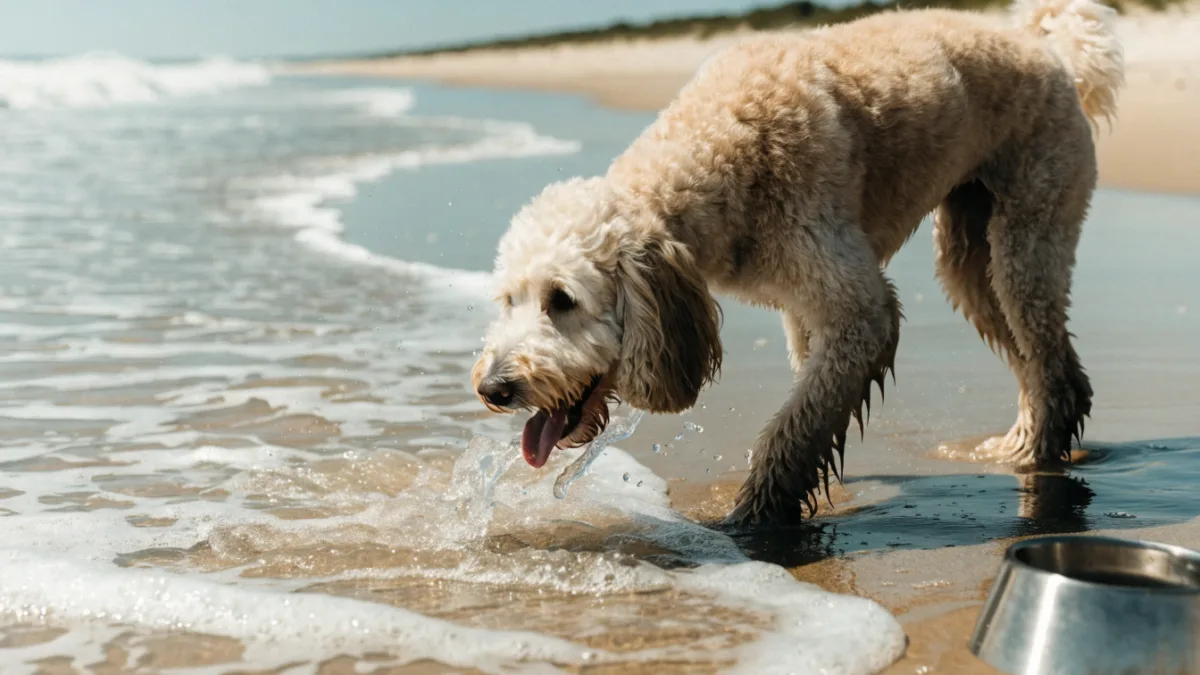
Last summer, a family brought their Goldendoodle, Cooper, into the clinic on a Sunday evening. They’d spent the day at the beach, and Cooper had been living his best life — chasing tennis balls into the waves, digging in the wet sand, rolling around like a furry maniac. But by dinnertime, he’d vomited four times, was drooling excessively, and could barely lift his head. His owners were baffled. “He didn’t eat anything weird,” they told me. “Just sand and saltwater.” That’s when I knew exactly what we were dealing with.
The Ocean Isn’t a Water Bowl: Understanding Saltwater Poisoning
Here’s something that catches a lot of dog owners off guard: ocean water is genuinely toxic to dogs when consumed in more than small amounts. The sodium concentration in seawater is roughly 35,000 parts per million — that’s about nine times saltier than a dog’s body fluids. When Cooper gulped down mouthful after mouthful of ocean while retrieving his ball, all that excess sodium started pulling water out of his bloodstream and into his intestines through a process called osmosis.
The result is what we call hypernatremia — dangerously high sodium levels in the blood. Think of it like this: your dog’s cells are basically being shriveled dry from the inside out. The body desperately tries to rebalance itself, and in doing so, the neurological system gets thrown into chaos.
Early symptoms of saltwater poisoning include:
- Vomiting and watery diarrhea
- Excessive drooling or dry heaving
- Loss of appetite
- Visible lethargy or weakness
If left untreated, things escalate quickly. Dogs can develop muscle tremors, become disoriented, and eventually suffer seizures that can be fatal. I’ve seen it happen within hours of beach exposure.
And here’s the thing that really worries me: small dogs are at dramatically higher risk. A Yorkshire Terrier or a Chihuahua only needs to swallow a fraction of what a Labrador does to reach toxic sodium levels. That same mouthful of seawater that barely affects a Golden Retriever could send a small dog into a crisis.
When Sand Becomes Concrete: The Hidden Danger of Sand Impaction
While most pet owners worry about the water, the sand beneath your dog’s paws can be equally dangerous. Sand impaction happens when a dog swallows enough sand that it accumulates in the intestines, mixes with moisture, and essentially hardens into a cement-like mass.
Sand doesn’t digest. It doesn’t break down in stomach acid. It just sits there, getting heavier and denser as it absorbs fluid from the digestive tract. Eventually, it creates a physical blockage that nothing can move past.
Cooper, our Goldendoodle patient? He had both saltwater toxicity AND early sand impaction. Every time he grabbed his sandy tennis ball from the wet shoreline, he was swallowing small amounts of sand. Over six hours of play, that adds up fast.
The tricky part is that sand ingestion happens in ways owners don’t always notice:
- Fetching sandy toys: Tennis balls and sticks picked up from wet sand carry surprising amounts of sand into the mouth
- Drinking from beach puddles: Those shallow pools of water near the shoreline are often saturated with suspended sand
- Digging: Dogs who dig enthusiastically often ingest sand through their mouths
- Post-beach grooming: Dogs and cats both ingest significant amounts of sand when they lick their sandy fur clean
And it’s not just dogs. Outdoor cats who hunt or dig at beaches can develop sand impaction too. Take a barn cat named Whiskers, who regularly prowled the dunes near her coastal home. Her owner noticed she’d stopped eating and was hiding in dark corners. Radiographs revealed a dense column of sand filling nearly half her colon.
Symptoms of sand impaction typically include vomiting (often sand-colored material), a painful or distended abdomen, constipation or straining to defecate without producing anything, extreme lethargy, and refusal to eat.
Your Beach Day Prevention Blueprint
The good news? Both of these conditions are almost entirely preventable with some preparation and awareness. Here’s what I tell every client before they head to the coast with their pets.
Bring More Fresh Water Than You Think You Need
This is the single most important rule of dog beach safety. Bring plenty of clean, fresh water — more than you’d drink yourself on the same outing. Offer it to your dog every 15 to 20 minutes during active play. A hydrated dog is far less likely to drink ocean water out of desperation, and regular fresh water intake helps flush any small amounts of salt through their system.
I recommend bringing a collapsible travel bowl and a dedicated water jug just for your pet. Don’t rely on beach water fountains — they’re often broken, crowded, or too far from where you’re set up.
Mandate Shade Breaks
Overheated, exhausted dogs drink more recklessly. When your dog is panting hard and desperate for fluid, they don’t care if it’s fresh or salty — they’ll lap up whatever is closest. Enforce 10 to 15 minute rest periods in the shade every hour. Bring a beach umbrella or pop-up tent, and use it.
If your dog is showing signs of overheating — excessive panting, bright red gums, stumbling, or reluctance to move — end the beach visit. Heat exhaustion and saltwater poisoning are a dangerous combination.
Choose Your Fetch Toys Wisely
Discard the idea that tennis balls and driftwood are ideal beach toys. They collect wet sand like magnets, and every retrieve delivers another mouthful straight to your dog’s stomach. Instead, look for floating rubber toys designed for water play — specifically ones with smooth surfaces that sand won’t cling to. Rinse toys in fresh water between throws if possible.
And honestly? Consider reducing fetch frequency at the beach entirely. Swimming, walking, and supervised exploration are all excellent exercise that carry far less ingestion risk.
The Rinse-Off Rule
Before you leave the beach — and I mean before your dog even gets into the car — rinse them thoroughly with fresh water. This removes salt and sand from their coat, paws, and especially their face and belly. Otherwise, they’ll spend the car ride home licking themselves clean and swallowing everything you’ve been trying to keep out of their system.
For cats who spend time outdoors near beaches, a thorough brushing and wipe-down with a damp cloth when they come inside serves the same purpose.
Watch Small Dogs Like a Hawk
If you have a small breed, consider whether a beach with heavy surf is even the right environment. Calm bays, lakes, or designated calm-water areas are much safer options for dogs under 25 pounds. The volume of sand or saltwater required to cause serious harm in a small dog is genuinely small — sometimes just a few ounces of seawater can be problematic.
When Things Go Wrong: What Not to Do
Every so often, I’ll see a post in an online pet forum suggesting that owners induce vomiting if their dog has consumed too much saltwater or sand. I understand the impulse — when you’re scared and far from a vet, you want to do something. But please, do not induce vomiting in either scenario.
With sand impaction, bringing sand back up can cause choking, aspiration into the lungs, or severe tearing of the esophagus. With saltwater poisoning, rapid shifts in sodium levels can trigger neurological crises — including seizures — that can be fatal without careful IV fluid management and blood monitoring.
If you suspect your pet has ingested significant amounts of seawater or sand, call an emergency veterinarian immediately. Both conditions can progress rapidly, and time matters. Treatment typically involves intravenous fluids to correct dehydration and electrolyte imbalances, anti-nausea medication, and in severe impaction cases, sometimes surgery to physically remove the blockage.
Cooper, by the way, spent three days in our hospital on IV fluids. His sodium levels normalized, his intestines cleared, and he went home with strict orders for beach rest for two weeks. His owners now bring a gallon jug of fresh water and a shade tent every single time they visit the coast. They learned the hard way, but their story has a happy ending — not all of them do.
The beach is one of the greatest joys you can share with your pet. The sound of waves, the freedom of open space, the pure delight on a dog’s face when they first hit the sand — it’s magic. But magic requires a little planning. Bring the water, enforce the breaks, choose the right toys, and know when to call it a day. Your dog doesn’t need a marathon beach session to have the time of their life. They just need you, paying attention, keeping them safe.