
"He loves other dogs" and "he plays well with other dogs" can be two very different things. I've worked with dogs that desperately want to greet every dog they see, but whose social skills are actually poor — they rush in, invade space, ignore communication signals, and cause or receive conflict.
Good dog-to-dog socialization isn't just about exposure to other dogs. It's about learning the full communication system.
How Dogs Actually Meet
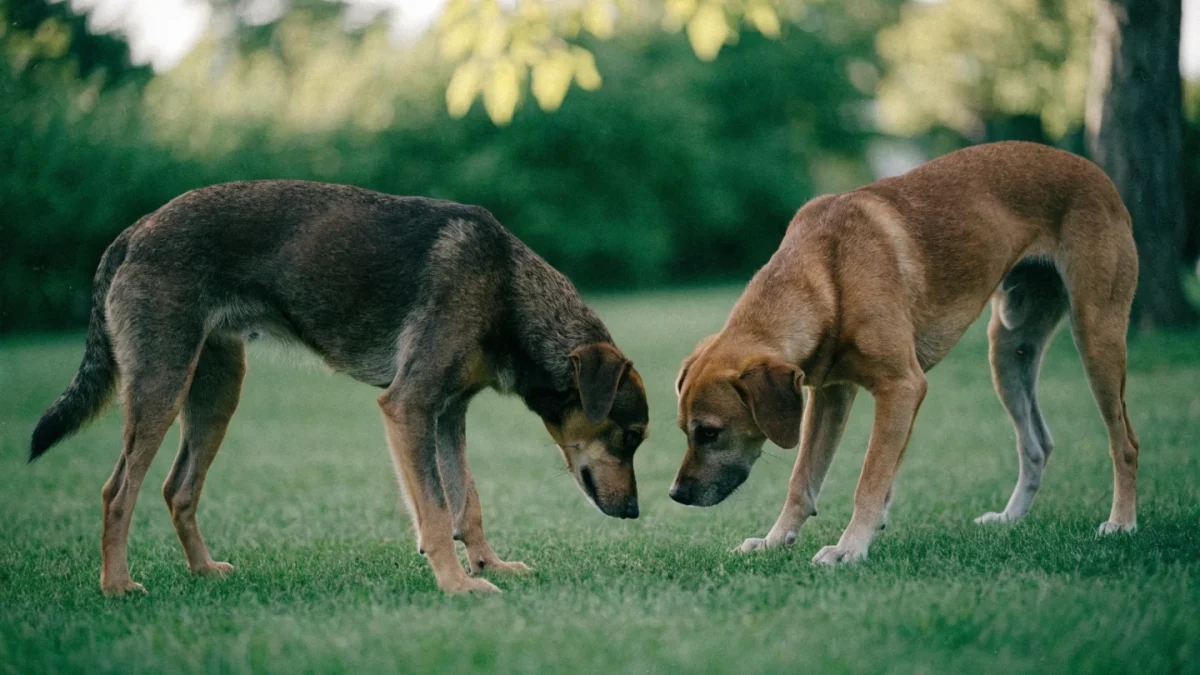
Dogs have a fairly standardized polite greeting protocol, though not every dog follows it:
- Curved approach — polite dogs approach in a slight arc, not a direct head-on charge
- Sniff greeting — nose-to-nose briefly, then nose to body, then rear investigation
- Release signals — head turn, sniff at the ground, looking away briefly
- Decision point — engagement (play invitation) or disengagement (moving away)
A dog that understands and uses this protocol will have much better outcomes with unknown dogs than one that charges in head-on, immediately tries to mount, or ignores the other dog's disengagement signals.
Choosing Good Socialization Partners
Not every dog is a good socialization partner for your dog. Look for:
Compatible energy levels. A very high-energy, bouncy dog matched with a calm, older dog is not good socialization for either — it's stress for the older dog and practice for the young dog of ignoring discomfort signals.
Size compatibility. Large size differences can result in unintentional injury during play. Small dogs can be seriously hurt by inadvertent rough play from large dogs.
Reliable communication. Dogs that clearly signal discomfort (growl, snap, or move away) and respect the same signals in return are much better socialization partners than dogs that escalate regardless of the other dog's communication.
Social, not reactive. Socializing with an already-reactive dog tends to produce or amplify reactivity.
Reading the Interaction
You can't just let dogs off-leash and walk away. Monitor closely for:
Good signs: Loose, bouncy play. Taking turns. Voluntary pausing and re-engaging. Equal enthusiasm on both sides.
Warning signs: One dog consistently trying to disengage while the other follows. Intense stiffening. Hard stare without play markers. One dog freezing or cowering.
Intervene with a timeout (brief, cheerful separation — not punishment) when play becomes too intense or one dog consistently wants to stop and can't.
The Reading dog body language Skill
Knowing what you're looking at is the foundation of good socialization oversight. The complete socialization guide gives the broader context. (See also: off-leash dog parks.)
Dog-to-dog socialization is an active, supervised process — not a "let them figure it out" situation. Your job is choosing good situations and stepping in when the situation stops being good. That's not overprotection; it's setting your dog up for positive experiences.