
Dog parks are one of the most misused resources in urban dog ownership. For the right dog in the right situation, they're great — real off-leash running, social play, genuine decompression. For the wrong dog, or a dog that isn't ready, they're stressful at best and dangerous at worst.
Is Your Dog Ready?
Not every dog is suited for off-leash dog parks, and that's okay. A dog that's reactive, selective about other dogs, anxious in groups, or physically small and easily overwhelmed may be better served by other socialization options.
Signs a dog may be ready:
- Plays well with unknown dogs in smaller, controlled settings
- Has a reliable recall in moderately distracting environments
- Doesn't bully other dogs or start conflicts
- Can settle when called away from something exciting
- Has up-to-date vaccinations and parasite prevention
Signs to hold off:
- Reactive to other dogs on or off leash
- A history of fights or repeated conflict with unknown dogs
- Intact males in areas with unspayed females (common source of conflict in mixed parks)
- Under 12-16 weeks (immune system still developing, socialization window still open — controlled puppy classes serve better than random adult dogs)
Practical Preparation
Practice off-leash recall before the park. Your reliable recall should work consistently in lower-distraction environments before you need it in a high-stimulation park. The park is the final exam, not the classroom.
Scout the park before taking your dog. Visit without the dog and observe: what's the general energy level? Are there fights? Is there a responsible culture among the regulars? Some parks are managed well; others are chaotic.
Choose off-peak times initially. Early morning or weekday visits have fewer dogs, which gives a new visitor less to handle. Building up to peak-time visits after several successful quieter visits is a more graduated approach.
Bring high-value treats. You'll want recall rewards available. Not every recall at the park needs to end the visit — call your dog to you, reward, release back to play. This prevents the recall from predicting the end of fun.
Reading the Room Inside the Park
Dog body language at parks can be complex. A few things to watch:
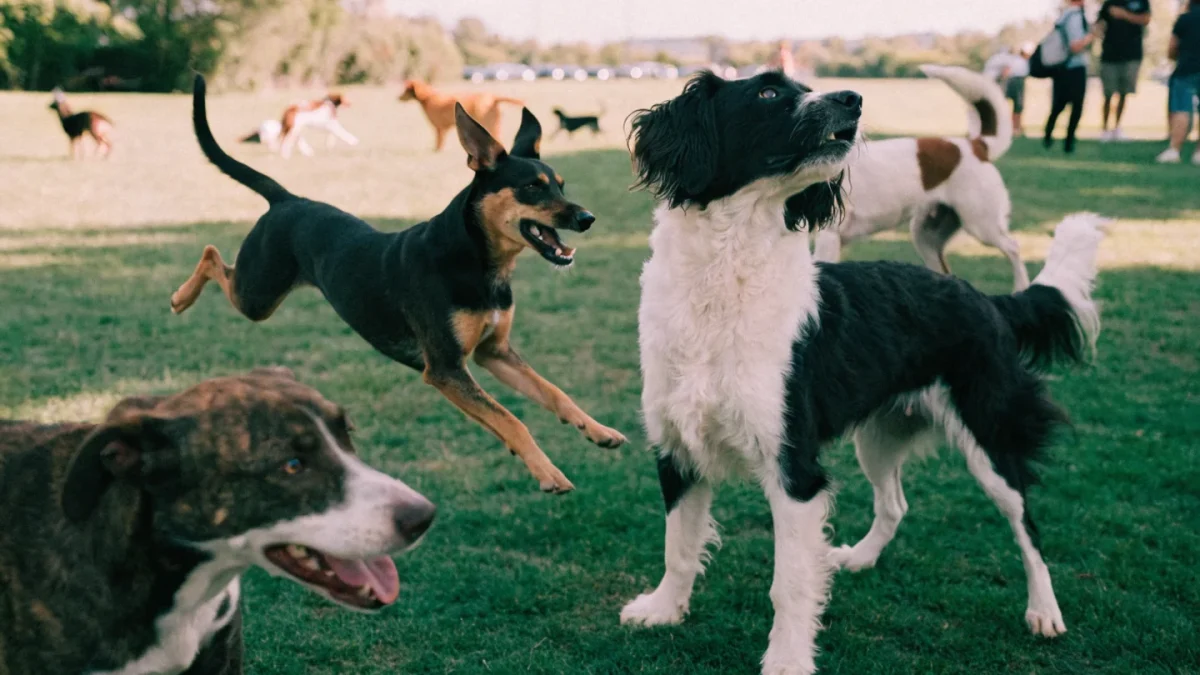
Good play signals: Loose, bouncy body language. Taking turns chasing. Pausing to check in. Willing to move away from a dog that signals discomfort.
Warning signals: One dog persistently pursuing another who is trying to flee. Dog with stiff body and hard stare. Ears pinned and body low in a fearful way. Hackles raised. Growling that isn't play-growling.
If things feel off, call your dog and leave. No visit is worth a dog fight.
Separate large and small dogs if the park has a small-dog area. Size differences in play can result in unintentional injury even with good intentions. (See also: dog socialization.)
Dog parks can be wonderful experiences for the dogs and owners suited to them. Preparation, observation, and the willingness to leave when necessary are what make the difference between great visits and awful ones.