

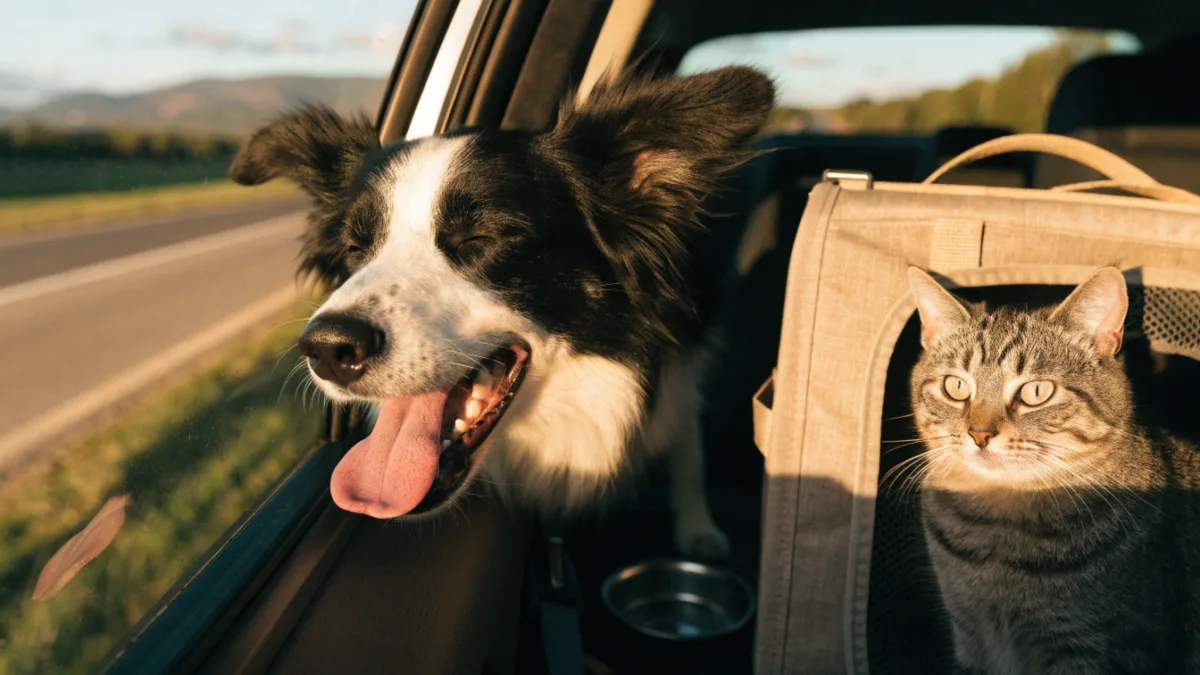
I once made the catastrophic error of assuming my cat, Mochi, would enjoy a scenic weekend drive. Five minutes into the journey, she unleashed a guttural yowl that sounded like a dying coyote, proceeded to scale the interior roof of my sedan, and left me white-knuckling the steering wheel in absolute terror. Meanwhile, my dog, Barnaby—a golden retriever mix who essentially views the entire world as his personal buffet—was hanging his head out the passenger window, drooling happily in the breeze. That ill-fated thirty-minute drive taught me a vital lesson: dogs and cats experience road trips on entirely different planets.
When you start planning a cross-country road trip or a massive relocation, it is natural to want to bring your entire fur family along. But before you pack the treats and hit the highway, you have to look at the animal sitting in your living room and ask yourself an honest question: can they actually handle this? Let’s break down the wild, messy reality of hitting the road with dogs versus cats, and figure out when it is time to call a pet sitter instead.
The Passenger Seat Divide: Adventurers vs. Homebodies
Fundamentally, dogs and cats process the concept of “travel” in completely different ways. Dogs are naturally nomadic. In the wild, a canine pack travels miles a day to track down food, patrol territory, and find new sniffing opportunities. When you put a dog in a car, you are essentially tapping into their ancestral love of the hunt. Every new rest stop is an uncharted territory of smells, and changing scenery is pure mental enrichment. Barnaby treats the car like a magic carpet that delivers him to new, exotic fire hydrants.
Cats, on the other hand, are fiercely territorial homebodies. A cat’s entire psychological well-being is tied to their scent map of your house. They know exactly where the sunny spot hits at 2:00 PM, and they know the exact elevation required to knock your favorite mug off the kitchen counter. When you shove a cat into a moving metal box, you strip them of their familiar territory. The changing scenery outside the window isn’t a fun movie; it’s a deeply disorienting display of visual stimuli paired with the physical sensation of motion, which frequently triggers motion sickness.
The Bathroom and Restlessness Timelines
Dogs have a highly predictable travel clock. Generally, a dog is going to need a bathroom break every two to three hours. When they start getting restless, pacing, or giving you the “I need to pee” eyes, you pull over at a rest stop, take a quick walk, and everyone is happy. Experienced owners can easily manage four-hour stretches in the car, even with minor traffic delays, before a dog genuinely needs to stretch its legs and decompress.
Cats are an entirely different logistical nightmare. You cannot simply pull over and let a cat out to do their business on the shoulder of a busy interstate. If you let a terrified cat out of its carrier in a moving vehicle, you are inviting an absolute disaster. They will wedge themselves under your brake pedals, or worse, bolt out an open door the second you stop for gas. This means the cat is confined to their crate for the duration of the trip.
The Great Crate Debate: Freedom Versus Safety
There is a surprisingly loud demographic of pet owners who think crates are mean. They want their pets to have the “freedom” to roam the backseat, nap on the plush blankets, and look out the window. I will put this as bluntly as possible: unsecured pets in a moving vehicle are a terrible idea. If you slam on your brakes at 70 miles per hour, an unsecured 60-pound dog becomes a deadly projectile. For a cat, an unsecured ride usually ends with them panicking under the driver’s feet.
Crating in the back seat is the only safe way to travel, and this is doubly true if you are road-tripping with a mixed-species household. If you have both a dog and a cat in the car, they both need to be securely crated and ideally separated as much as possible to keep the peace.
What to Look for in Travel Gear
You don’t need the most expensive gear, but you do need the right features. Look for a travel carrier that has been crash-tested. It should have a rigid frame (soft-sided carriers collapse and offer zero protection in an impact), secure seatbelt loops or straps to anchor it firmly to the seat, and plenty of ventilation. For dogs, you can use a crash-tested travel harness that clicks directly into the car’s seatbelt system. Leave the soft, bed-like carriers at home; they belong in your living room, not on the highway.
Planning the Marathon: Pushing Through vs. Stopping Overnight
Let’s say you are facing a massive relocation. I recently read a thread from a pet owner facing a grueling 14-hour drive to Colorado with both a dog and a cat. The comments section was deeply divided, highlighting one of the biggest controversies in pet travel: do you power through the drive in one grueling day, or do you stop halfway at a hotel?
“Powering through” means getting the drive over with quickly, but it risks severe physical and mental toll on your animals—especially the cat, who might refuse to eat, drink, or use a litter box for over half a day.
Stopping overnight introduces a new environment. A hotel room is a completely new territory, which can be incredibly stressful for a cat who just survived a seven-hour car ride. However, stopping allows your dog to get a real walk, a solid meal, and a proper sleep cycle. It also allows a cat a quiet, locked room to finally stretch their legs, eat, and decompress away from the vibration of the road.
The Verdict on Long Drives
If you are driving anything over eight to ten hours, you should stop overnight. The pet travel industry has exploded in recent years, making this easier than ever. Following the pandemic boom in pet ownership, major hotel chains have widely adopted pet-friendly policies. You no longer have to sneak your cat in a gym bag through the side door. Look for a ground-floor room to make late-night dog potty breaks easier, and always make sure the door latches securely behind you so a disoriented cat doesn’t make a run for the lobby.
If you absolutely must power through a 14-hour trip, you need to prepare for it. You cannot just wake up one morning and decide to drive across the country with a cat. You have to take them on shorter, incremental trips first. Start with ten-minute drives, then work your way up to a four-hour practice run. This builds up their physical endurance and helps them realize the car isn’t a one-way ticket to the vet’s office.
Reading the Room: When to Just Call a Sitter
Sometimes, the most loving thing you can do for your pet is to leave them behind. I know it hurts to go on a fun family vacation without your fur babies, but not every animal is cut out for the open road.
If your pet shows severe signs of stress during your practice runs—constant, unbroken vocalization, heavy panting (a major red flag for cats, who generally do not pant unless they are overheated or terrified), or eliminating in their crate despite being house-trained—do not force them into a multi-day road trip. That is their version of a panic attack.
For cats, there are a few products on the market designed to take the edge off. Synthetic feline pheromone sprays that mimic the calming scent cats leave when they rub their cheeks on furniture can be spritzed inside the carrier. You can look for pheromone collars that last for weeks. But remember: pheromones and calm voices are not magic. If your cat fundamentally detests the car, a 14-hour drive is going to be psychological torture for them.
Leave the stressed-out homebody with a trusted pet sitter, or book them a suite at a reputable boarding facility where they can be spoiled. If you have a dog that loves the road but a cat that hates it, you might even split the duties: one family member takes the dog on the adventure, while the cat stays home to rule the roost.
At the end of the day, domestic animals rely on us to make the best decisions for their welfare. While our pets are not facing threats from predators or habitat loss in the wild, our homes are their entire ecosystem. A car disrupts that ecosystem. Respecting their individual stress thresholds—whether they are an adventure-seeking golden retriever or a deeply territorial tortoiseshell—ensures that when the journey is over, you all arrive at your destination happy, safe, and still speaking to one another.