

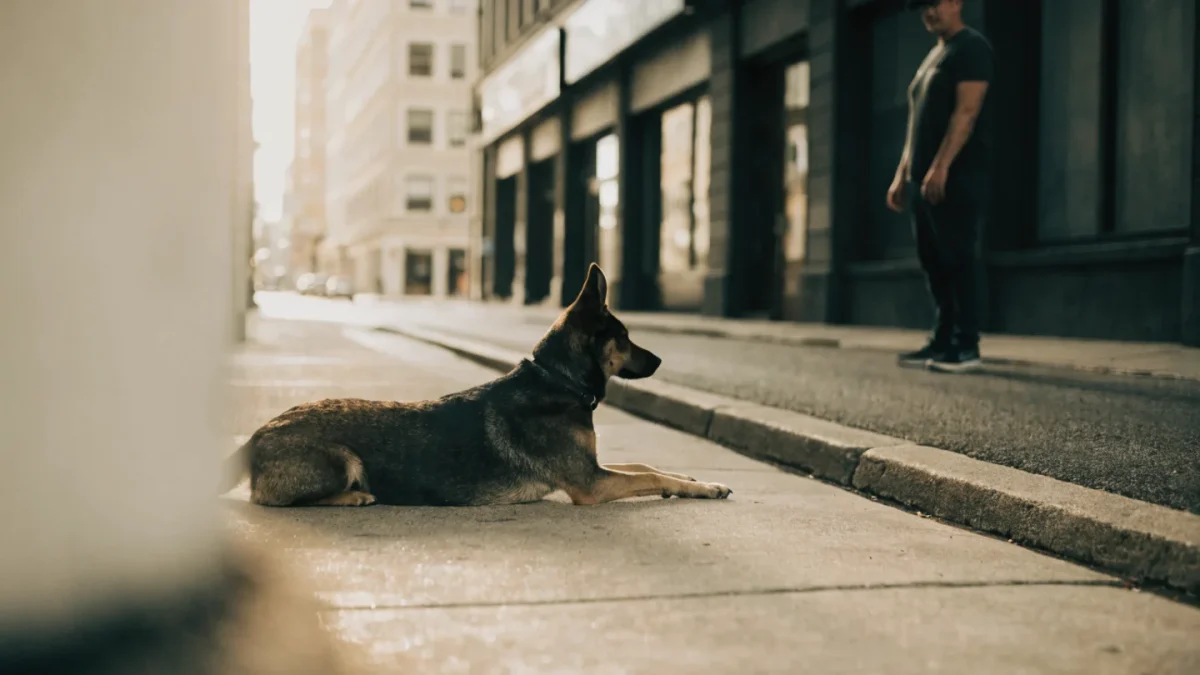
I had a client whose dog ran out the front door and toward the street. She called "stop" in a panic — and the dog sat down on the sidewalk, two feet from the road.
She'd taught the emergency stop over several weeks leading up to that moment. She never thought she'd actually need it. She did.
This command is one I encourage every dog owner to build, regardless of how reliable their other training is.
What the Emergency Stop Is
The emergency stop is a specific, trained cue that means "freeze in place immediately, regardless of what you're doing." Not a sit, not a down, not a come — a freeze. The dog stops all forward movement and ideally sits or stands still.
It's different from "stop pulling" or "wait at the door." It's a safety interrupt designed to stop a dog mid-motion in a dangerous situation.
Why It Needs Special Training
The emergency stop works only if it's been trained specifically and deliberately. You can't build it with normal obedience training and then expect it to fire under high arousal.
It needs to:
- Be a distinctive cue that isn't used for anything else
- Have the highest possible reinforcement history
- Be practiced under increasing levels of distraction
Building the Cue Indoors
Choose your cue: A single, sharp word ("stop," "freeze," "halt") in a tone that cuts through noise and arousal. Slightly louder than your normal training voice, but not panicked.
Step 1: Stand in front of your dog. Say the cue. The moment they pause or look at you, mark and deliver a jackpot — multiple treats, enthusiastic praise, whatever your dog loves most.
Step 2: Build the stop while your dog is moving. Start walking with your dog, then say the cue. The moment they stop, jackpot. Practice this until the stop is immediate and reliable in the house.
Building It Outside
Move to the backyard on leash. Walk your dog forward, say the cue, mark and jackpot the stop. Build up to walks in low-distraction environments.
The leash is safety during this phase — you're not off-leash until the stop is solid under real distraction. (See also: reliable dog recall.)
The Critical Rule: Reserve It
The emergency stop must not be a frequent command. Every time you use it and follow with a jackpot, you maintain its value. Every time you use it without a jackpot, the value drops.
Use it in training sessions: once per session, random in the session, always followed by a jackpot. Use it in real life only when necessary.
If you use "stop" for casual management situations — telling your dog to wait while you pick up something — you'll burn through the command's emergency value. (See also: leave it and drop it.)
Monthly Maintenance
Practice the emergency stop once a month in a variety of environments. Keep it surprising (random in the walk), keep the reward large. The command should remain an unusually well-reinforced behavior so that when it matters, it fires.
Build this over the next four weeks: indoor stop first, then leash-stop in the yard, then on a walk. Use it once per session. Make the jackpot worth remembering. You may never need it. If you do, you'll be grateful you built it.