
I had a client call me in a panic because her dog had eaten a sock. Again. Third one that month. The dog had a well-established habit of grabbing things off the floor and running — she'd chase, he'd dodge, it was a whole game.
Leave it and drop it would have solved this. Neither one was trained.
These two commands get lumped together constantly, which leads to confusion about what each one means and how to use them. They're different skills, they solve different problems, and they both need to be trained as trades — not demands.
Leave It vs. Drop It: What's the Difference?
Leave it: Don't touch that thing at all. Used for something your dog is approaching but hasn't grabbed yet. Chicken bone on the sidewalk. Your kid's sandwich on the coffee table. Another dog's toy.
Drop it: Release what's already in your mouth. Used for something your dog has already picked up. The sock. The remote control. The sock again.
The distinction matters because the training approach is different for each, and using the wrong command at the wrong moment just creates confusion.
Teaching Leave It
Step 1: Closed fist
Put a treat in your closed fist. Hold it out toward your dog. They will sniff it, lick it, paw at it. Say nothing. Wait.
The moment they pull back from your fist — even slightly, even for half a second — mark it ("yes") and give them a treat from your other hand. Never give them the treat from the fist.
Repeat until your dog consistently backs away from your fist quickly. This usually takes 5-10 repetitions.
Step 2: Add the cue
Now add the word "leave it" just as you present the closed fist. Mark and reward the backup. You're pairing the word with the behavior.
Step 3: Open fist
Open your fist to show the treat. Say "leave it." Most dogs will try to take it — cover it immediately and wait them out. The moment they back away, mark and reward from the other hand.
Step 4: Treat on the floor
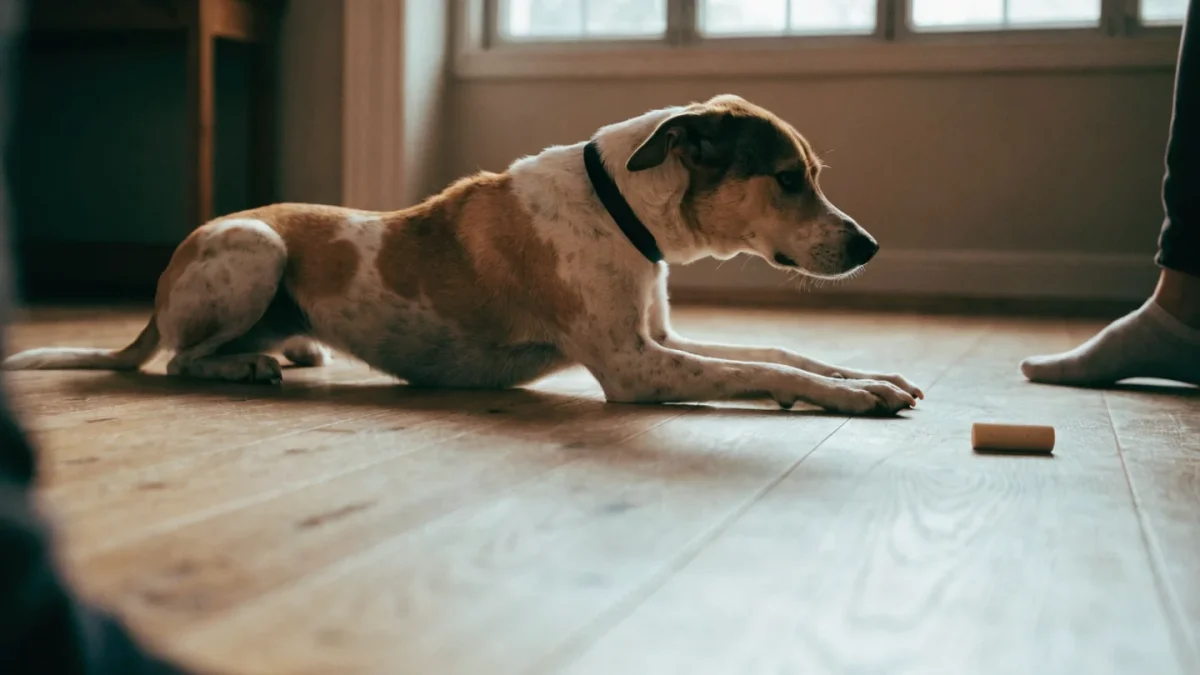
Place a treat on the floor and cover it with your foot. Say "leave it." Uncover it slightly. If they go for it, cover it again. Mark and reward the moment they stop trying.
Graduate to an uncovered treat on the floor, then objects on the floor (keys, shoes, food), then things on counters.
Step 5: Real-world leave it
Practice on walks: "leave it" when you spot something on the ground before your dog grabs it. Start with low-value items and work up.
The key to a real-world leave it is that your dog learns to look at you after complying. Once they look away from the forbidden object toward you, mark and reward generously. That eye contact toward you is what you want — they're checking in for direction rather than just freezing.
Teaching Drop It
The most common mistake with drop it is treating it as a demand. "Give that to me." Dogs don't drop things on command unless there's a reason to. The reason is always a trade.
Start with low-value objects
Get a toy your dog likes but doesn't love. Let them take it. Immediately offer a high-value treat near their nose. The moment they open their mouth to take the treat, the toy falls out. Mark that moment and give the treat.
Then give the toy back.
That last part is crucial. If drop it always means you take the thing away and keep it, your dog will start resource-guarding or running when they have something valuable. If drop it means "give me this, get a great reward, and get your thing back," they'll drop things readily.
Add the cue
Once your dog is dropping the object reliably to take the treat, add "drop it" just before you present the treat. Pair the word with the behavior before fading the trade.
Gradually increase object value
Work through progressively more interesting objects: toys they like, toys they love, food items, found objects. Use higher-value trades for higher-value items. A sock for a piece of kibble is not a compelling trade. A sock for a piece of chicken is.
Never chase
If your dog grabs something and runs, do not chase. Chasing is the best game in the world. Instead, run away from them (many dogs will come toward you if you move away), offer a trade, or simply wait.
When Your Dog Won't Drop High-Value Items
Some dogs — especially resource-guarders — are very difficult to trade with when the item is something they really want. They may growl, stiffen, or try to move away with the object. (See also: dog aggression and reactivity.)
This is a separate issue from training drop it, and it warrants working with a professional rather than pushing through. Attempting to take a high-value item from a dog that's showing resource guarding signals can end with a bite.
For everyday use — picking up random things, dropping toys — consistent training with the steps above will get you a reliable drop it.
This week, practice leave it with your closed fist five times a day. Once your dog is backing away from your fist consistently, put a treat on the floor and cover it with your foot. You'll be surprised how fast they figure out the rule.