

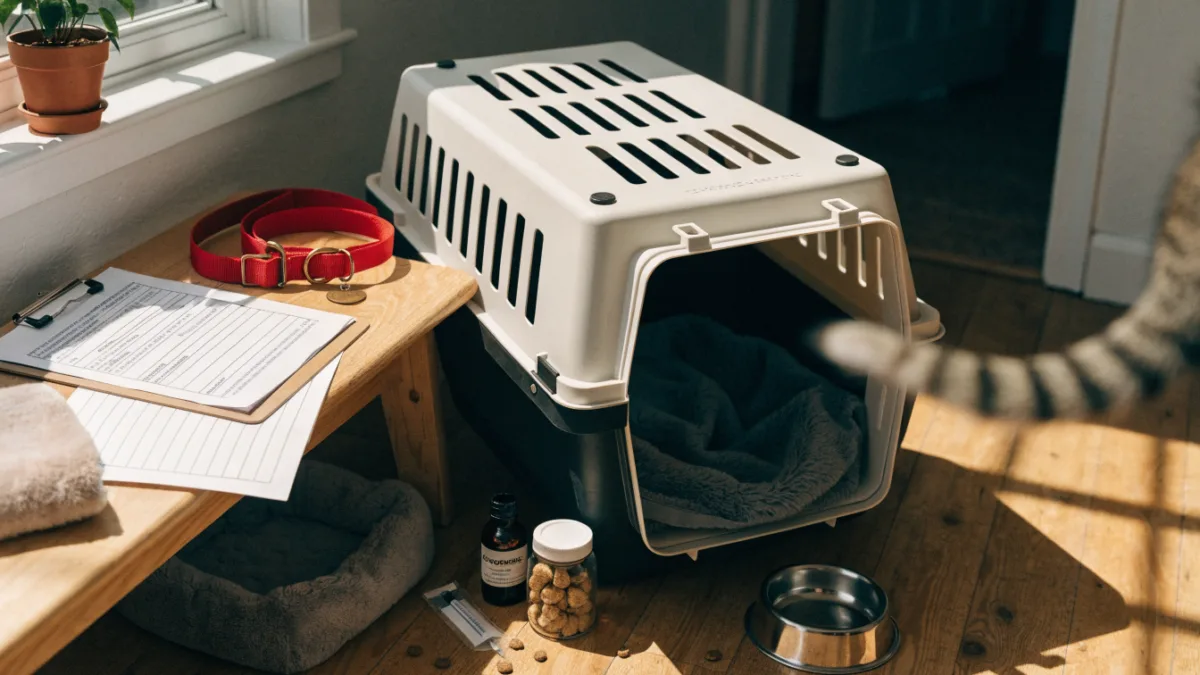
Last Tuesday morning, my schedule had two “new patient” appointments booked back-to-back. The first was a recently adopted rescue dog named Gus, a two-year-old terrier mix whose owner had driven three hours to bring him home from a regional shelter. The second was a scruffy, completely unsocialized feral cat we’ll call Socks, who had been live-trapped in a neighbor’s barn overnight. On paper, both of these animals needed the exact same thing: a comprehensive first veterinary exam. In reality? The way we approached their care was night and day.
When you bring a new animal into your home—whether it’s a shelter dog who has been waiting for a family, or a feral cat you’re trying to help—the first veterinary visit is the crucial foundation for their future health. But comparing a rescue dog to a feral cat reveals fascinating medical and behavioral divides. Here is exactly what happens behind the clinic doors, and why the approach has to be completely different for each.
Setting the Stage: The Exam Room vs. The Live Trap
The most immediate difference between examining a rescue dog and a feral cat is how we physically manage the animal. With a rescue dog, even a fearful one, we usually start in the exam room with the owner present.
The Rescue Dog Approach
When Gus walked into my clinic, he was trembling, his tail tucked tightly between his legs. Rescue dogs often carry behavioral trauma or anxiety from their time on the streets or in noisy shelters. Veterinary medicine has experienced a massive, positive shift recently toward “Fear-Free” and “Cat-Friendly” handling. Instead of immediately pinning Gus to the exam table, I sat on the floor with him. I let him sniff my stethoscope and offered him a lick-mat smeared with a high-value treat. By reading his body language and letting him set the pace, we gained his trust.
However, there are times I will ask to take a fearful rescue dog to our “back room” (the treatment area behind the clinic doors). Many owners feel a spike of anxiety when we ask to take their pet away from them. A recent discussion among pet owners on social media highlighted this exact concern, with many wondering if vets take pets to the back just to hide rough handling. I always assure my clients that the back room is simply a place where we have proper lighting, extra staff to safely hold the animal, and specialized equipment like muzzles or slip leads. It is almost always less stressful for a fearful dog to be briefly taken to a quiet, well-lit room with three vet technicians offering treats than to be forced through a stressful procedure in a cramped exam room.
The Feral Cat Protocol
Socks the feral cat required a completely different playbook. A truly feral cat is not just fearful; they are essentially a wild animal. Attempting to handle them with bare hands is a recipe for severe injury to my staff and lethal stress for the cat.
For Socks, the examination happened while he was still securely inside his live trap. We covered the trap with a heavy towel to reduce visual stimulation, which immediately lowers a feral cat’s heart rate and respiratory rate. To examine him, we used a piece of sturdy plexiglass pressed against the side of the trap to gently compress him against the bars. This “squeeze” technique allows us to safely look at his eyes, ears, and body condition without ever opening the trap door or risking a bite.
The Nose-to-Tail Reality Check: Health and Disease
Once we have visual access to the animal, we perform a baseline physical exam. Both dogs and cats get a thorough check of their weight, skin and coat health, eyes, ears, teeth, and gums. I’ll listen to their heart and lungs and palpate their abdominal organs.
Body Condition and Nutrition
For both Gus and Socks, I started with a Body Condition Score (BCS). Vets use a standard scale from 1 to 9, where 1 is emaciated, 5 is ideal, and 9 is morbidly obese. Gus came in at a 3—he was noticeably underweight from his time as a stray. Socks was a solid 5, having successfully hunted to sustain himself, though his coat was matted and dull.
I worked with Gus’s owner to develop a safe caloric loading plan. When an animal has been malnourished, you can’t just give them a massive bowl of rich food; you have to transition them slowly to a stable domestic diet to avoid gastrointestinal upset. (Note: I always tailor these feeding plans to the individual animal, and I never recommend specific dosages of supplements or dietary changes without seeing the patient first).
Parasites and Pathogens
Because they survive outdoors without preventative care, feral cats carry a significantly higher risk of external and internal parasites. When I looked at Socks through the plexiglass, I could see the telltale dark, crumbly discharge in his ears characteristic of ear mites (Otodectes cynotis). His gums were also pale, hinting at anemia likely caused by a heavy burden of intestinal parasites like roundworms and tapeworms.
Both animals received core vaccinations and deworming, but the delivery methods were wildly different. Gus got his subcutaneous vaccines (injections under the skin) while standing on the floor of the exam room. Socks received his vaccines and anti-parasitic medications through the bars of his trap using a pole syringe—a long, lightweight metal pole that allows us to safely inject the medication into his hip while keeping our hands far away from his teeth and claws.
For Socks, we also had to draw blood to test for Feline Leukemia Virus (FeLV) and Feline Immunodeficiency Virus (FIV), as well as Panleukopenia (feline distemper). These viral infections are rampant in outdoor feral cat populations. For Gus, we ran a standard blood panel to check his organ function, along with a quick test for heartworm disease.
Scars, Chips, and the Fertility Check
A major priority during a first rescue or feral visit is determining the animal’s reproductive status and checking for permanent identification.
Gus was easily scanned for a microchip in the exam room. Shelter dogs are frequently microchipped, and occasionally, we discover a lost pet with a family desperately looking for them. In Gus’s case, the scan was empty, but his pre-surgical bloodwork was great, and we scheduled his castration for the following week.
Socks, on the other hand, was not microchipped. I was able to visually inspect him through the trap to determine he was an intact male. For feral cats, checking for a “spay scar” on the abdomen of a female can be nearly impossible without shaving the belly, which is why many TNR programs default to performing a quick spay/neuter surgery to be absolutely certain.
The Great Divide: Socialization vs. TNR
This is where the clinical meets the behavioral, and where I’ve genuinely changed my mind over my years in practice.
When I first started volunteering with rescue groups, I believed that with enough time, patience, and love, any feral cat could become a cuddly house cat. The reality of animal behavior proved me wrong.
With a rescue dog like Gus, we actively evaluate his behavioral trauma. We look at how he reacts to loud noises, how he handles being touched, and whether he shows signs of resource guarding. We set him up with behavioral modification protocols to help him thrive in a home.
Adult feral cats like Socks, however, missed the critical socialization window (between 2 and 7 weeks of age). Confining an adult feral cat to an indoor living room is often a profoundly stressful experience for the cat. This leads to a common debate during the first feral vet visit: should we try to domesticate them, or opt for Trap-Neuter-Return (TNR)?
Adult feral cats are generally unadoptable through traditional shelters, meaning they face a high risk of euthanasia if surrendered. The most humane, evidence-based route for adult ferals is TNR. During Socks’s visit, we scheduled his neuter surgery. When he goes back under anesthesia, the very tip of his left ear will be painlessly removed. This “ear-tipping” is the universal visual marker that a feral cat has been vaccinated, altered, and is part of a managed colony.
Young feral kittens, however, are a different story. If a kitten is trapped before 8 weeks of age, they can almost always be successfully socialized, fostered, and adopted into loving homes.
Why It All Matters
Whether we are sitting on the floor feeding peanut butter to a scared rescue dog, or safely administering vaccines to a feral barn cat through the bars of a trap, the overarching goal of the first vet visit is the same: establishing a baseline of health and preventing future suffering.
There is also a vital conservation message embedded in these exams. Free-roaming and feral cats are globally recognized as one of the most damaging invasive species to local wildlife, responsible for the deaths of billions of native songbirds and small mammals annually. By humanely trapping feral cats like Socks, getting them vaccinated and altered, and returning them to a managed outdoor home where they are fed by caretakers, we actively break the cycle of overpopulation. Sterilized feral cats defend their territory without producing endless litters of kittens, which ultimately protects our vulnerable native ecosystems while still respecting the lives of the cats themselves.