

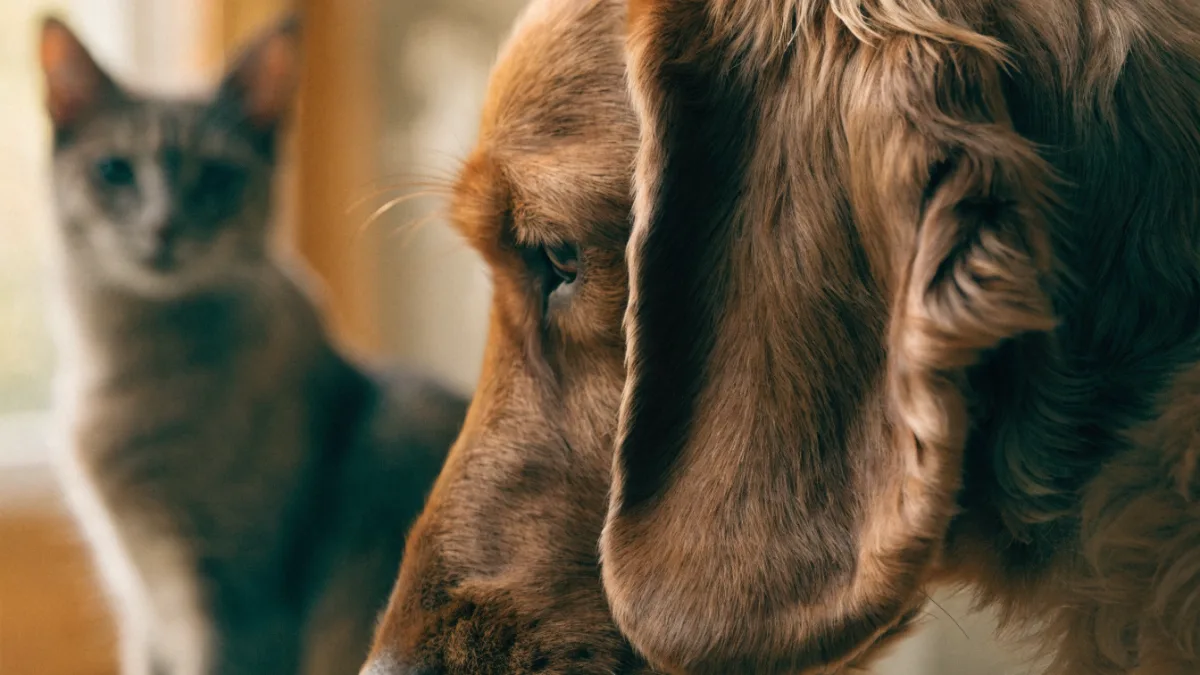
If you’ve ever owned a Cocker Spaniel, you probably know the smell. That distinct, musty, slightly sweet odor that hits you the moment your dog shakes its head. Consider Maeve, a seven-year-old golden Cocker seen at a clinic last spring. Her owner, Karen, was at her wit’s end. “She’s been shaking her head for weeks,” Karen said, “and the smell is filling the whole living room.” Lift Maeve’s heavy, velvet ear flap and the canal beneath was angry red, leaking discharge, and so tender that she whimpered at the lightest touch. This was her fourth infection in a year.
Scenarios like Maeve’s play out in veterinary clinics every single day. But here’s something that might surprise you: I almost never see the same pattern in cats. In fifteen years of practice, I can count on one hand the number of feline patients who’ve come in with recurrent ear infections. Dogs outnumber cats in ear infection cases by a staggering margin, and the reason comes down to something humans did entirely on purpose.
The Anatomy of a Problem We Created
To understand why dogs suffer so much more than cats, you need to look at what’s sitting on top of their heads. A cat’s ear is an engineering marvel. Those tall, upright triangles aren’t just for swiveling toward the sound of a treat bag opening. They’re designed for airflow. When a cat’s ear stands erect, air circulates freely through the canal, keeping it dry, cool, and inhospitable to microbial growth.
Now consider the floppy-eared dog. When humans began selectively breeding dogs hundreds of years ago, we chose certain traits because we found them appealing or useful. Floppy ears looked endearing. They gave spaniels a soft expression and hounds a soulful appearance. But those heavy ear flaps do something nature never intended: they seal the ear canal like a lid on a pot.
Underneath that adorable flap, heat and humidity build up relentlessly. The canal becomes a warm, dark, moist environment, which is exactly what bacteria and yeast need to flourish.
It’s essentially a greenhouse for infection. And we’ve compounded the problem by breeding some dogs with extremely narrow ear canals, others with prolific hair growing deep inside the canal, and many with both. Cats, by contrast, have changed relatively little in their basic ear structure through domestication.
Which Dogs Suffer Most
Recent research from the,[1] which analyzes enormous databases of veterinary records, has given us the clearest picture yet of which breeds bear the heaviest burden. The findings confirm what most vets have observed clinically, but with hard numbers attached.
The Long-Eared Offenders
Breeds with the heaviest, longest ear flaps top the list. Basset Hounds, with ears that practically sweep the ground, are poster children for ear disease. Bloodhounds, Cocker Spaniels, and Springer Spaniels follow closely behind. These breeds have so much ear leather that the flaps trap moisture and debris constantly, and their canals are often deep and curved, making cleaning difficult.
The Small Dog Surprise
The RVC study also flagged something that might seem counterintuitive: smaller dogs are at disproportionately higher risk than large ones. Miniature Poodles, Dachshunds, and Cavalier King Charles Spaniels all showed elevated rates of ear infection. Why? Their ear canals are simply narrower, which means less airflow and more opportunity for wax and debris to become trapped. Some small breeds also have curly hair growing inside the canal, which acts like a wick, holding moisture in place.
When Breed Meets Lifestyle
I think of a patient named Bruno, a four-year-old chocolate Labrador who lives on a property with a creek. His owner, Mike, thought nothing of Bruno swimming every day during summer. But Labradors have those thick, heavy ear flaps that hold water against the canal for hours. By late August, Bruno had a raging yeast infection in both ears. The swimming wasn’t the root cause. The anatomy was. The swimming just poured fuel on an existing vulnerability.
Beyond Anatomy: The Allergy Connection
While ear shape explains a lot, it doesn’t explain everything. Some floppy-eared dogs never develop infections, while some pointy-eared dogs do. The difference often comes down to what’s happening systemically in the body, and allergies are usually the prime suspect.
When a dog has environmental allergies (to pollen, dust mites, or mold) or food sensitivities, the skin’s entire microbiome shifts. The ear canal is really just a specialized extension of skin, so it gets caught in the crossfire. Allergic inflammation causes the glands inside the canal to overproduce wax. That excess wax feeds bacteria and yeast that normally live harmlessly in small numbers. The microbes multiply, the infection takes hold, and you’re back at the vet.
This is why recurrent ear infections should never be treated as isolated problems. If your dog has had three or more infections in a year, we need to look for an underlying cause. Treating the infection without addressing the allergy is like bailing water without fixing the hole in the boat.
Cats do get allergies too, but they typically manifest differently. Cats are more likely to develop skin lesions, facial itching, or asthma-like symptoms rather than ear infections. This species difference is another reason the ear infection gap between dogs and cats remains so wide.
Treatment Evolution and the Resistance Problem
I’ll be honest about something: I’ve changed my approach to writing about ear infections over the years. Early on, I wrote about topical antibiotic and steroid drops as the obvious default — dog comes in with an inflamed ear, multi-week course of medicated drops, move on. But the veterinary community has become increasingly concerned about antimicrobial resistance, and rightfully so.
When we use the same antibiotic drops repeatedly for chronic infections, we’re essentially training bacteria to survive them. I now culture ear discharge much more frequently to identify exactly what’s growing and which medications will actually work. There are also newer long-lasting topical treatments that a vet applies directly in the office, which means owners don’t have to wrestle with their dog twice a day for two weeks. For severe or chronic cases, advanced diagnostics like video-otoscopy let us see deep into the canal and even flush it thoroughly under magnification.
But the most important shift in my thinking has been prioritizing the root cause. If a dog’s infections keep coming back, medication alone won’t solve it. We need to investigate allergies, address anatomy when possible, and build a prevention routine that actually works for that individual dog.
What You Can Actually Do at Home
Prevention isn’t glamorous, but it works. Here’s what I recommend to every owner of a high-risk breed:
- Dry ears thoroughly after water exposure. Whether it’s a bath, a swim, or getting caught in the rain, use a soft cloth or cotton pad to gently dry the inside of the ear flap. Never push anything deep into the canal.
- Clean routinely with an appropriate ear cleaner. Look for a veterinary-recommended solution that helps break up wax and dry the canal. Your vet can recommend a formulation suited to your dog’s specific ear type. Always follow your vet’s guidance on cleaning frequency, as over-cleaning can also cause irritation.
- Check ears weekly. Lift the flap, take a look, and take a sniff. You’ll learn what your dog’s normal looks and smells like, which means you’ll catch problems early.
- Watch for early signs. Head shaking, scratching at ears, tilting the head, or a sudden bad smell all warrant a vet visit before things escalate.
- Address allergies proactively. If your dog has itchy skin, paw licking, or recurrent ear issues, talk to your vet about allergy testing or dietary trials. Always consult your veterinarian before making medication or diet changes.
The Ethical Question We Need to Discuss
There’s an uncomfortable truth underneath the ear infection epidemic: humans created this problem through selective breeding. We chose floppy ears, narrow canals, and hairy ear passages because we liked how they looked, not because they served the dog’s health. Some people have historically argued that ear cropping (surgically removing part of the ear flap to make it stand erect) prevents infections. Major veterinary organizations like the AVMA strongly oppose cosmetic ear cropping, and I agree with that position. The answer isn’t to surgically alter dogs to fix a problem we bred into them. The answer is better hygiene, responsible breeding practices that prioritize health over appearance, and honest conversations about what certain breed conformations cost the animals living with them.
When I see breeds like the Basset Hound being promoted on social media for their exaggerated features, I think about how many of those dogs will spend their lives on medication for their ears, their skin, their joints. We can love these breeds and still acknowledge that some of their traits come with real welfare costs.
Maeve, the Cocker Spaniel I mentioned earlier, is doing much better now. We identified a food allergy as her underlying trigger, switched her diet, and built a weekly ear-cleaning routine that Karen handles faithfully. She hasn’t had an infection in eight months. That’s the outcome I want for every dog. Not just suppressing symptoms, but understanding the whole picture: anatomy, environment, immune system, and the legacy of human choices that shaped these animals in the first place.
The next time you see a dog with beautiful, sweeping ears, enjoy the sight. They really are gorgeous. But maybe also appreciate the quiet, efficient design of a cat’s ears, standing tall and open to the world, designed by nature to do exactly what ears are supposed to do: listen, stay dry, and stay well.
Sources
- Royal Veterinary College's VetCompass program — rvc.ac.uk