
Training that feels like a chore for you will feel like a chore for your dog. Training that feels like a game — for both of you — is training that happens consistently, builds real skills, and creates a dog that actively wants to work with you.
Here's how to shift from "okay let's do training" to something you both actually look forward to.
Start With What Motivates Your Dog
Training that's fun for dogs starts with rewards they actually want. This sounds obvious but gets missed constantly.
If your dog is lukewarm about kibble but goes wild for ball throws, use ball throws as rewards for sits. If they love tug, a quick tug game can follow a solid recall. Food, play, and social interaction are all valid rewards — use what your dog actually wants.
The moment you start using rewards your dog genuinely values, the training engagement usually jumps immediately.
Vary the Routine
Drilling the same sequence of behaviors in the same order every day gets boring. For you and for your dog.
Mix it up:
- Different behaviors in different orders
- Random environments — backyard one day, front yard the next, a friend's house
- Training incorporated into normal life activities instead of formal sessions
- Games built around behaviors (hide and seek using "sit-stay," then find me)
Novelty keeps both of you engaged.
Use Play as Part of Training
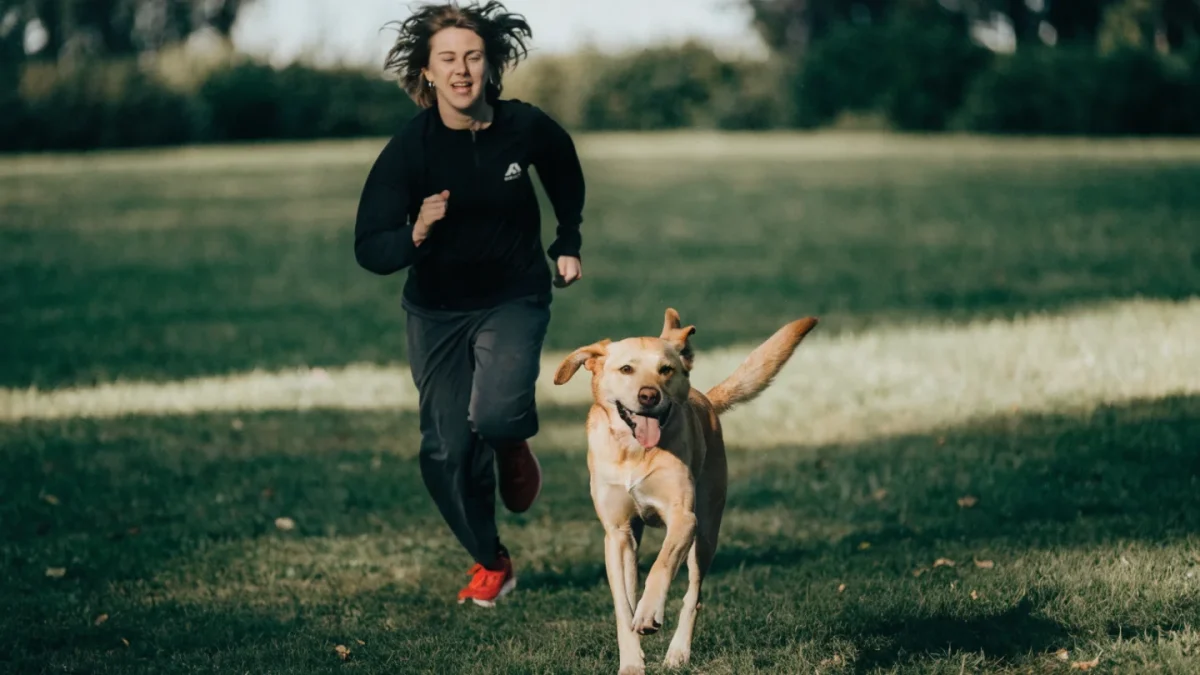
The game of tug can be a reward. Fetch can be a reward. Chase (you running from the dog) can be a reward.
Play-based training keeps arousal levels up, makes the training environment exciting, and builds the kind of enthusiastic engagement you see in working dogs. Dogs that play with their handlers are dogs that have a positive relationship with training.
Celebrate Properly
When your dog nails something difficult — something they've been working on for days — make it a real celebration. Not just a treat, but enthusiasm, multiple treats, maybe a play break. Your emotional response tells your dog that they did something special.
Dogs are sensitive to our emotional states. A handler who is genuinely excited about a success communicates that in ways that matter to the dog. (See also: dog sports and enrichment.)
End on a High
Every session should end on something your dog does well. If the last thing that happens before you put the treat bag away is your dog failing at something, that's the emotional note the session ends on.
Last behavior of every session: something solid, something clean, reward it generously, end the session. Your dog's association with training is built on how sessions end as much as how they go overall.
The Rule of Two
If a behavior fails twice in a row, stop trying it. Ask for something easier. Win. End the session or move to a different behavior. (See also: how to keep puppy training sessions short.)
Repeated failures are frustrating and teach the wrong things. Two strikes and you go back to an earlier version of the behavior.
This week: add one play reward to your training sessions. After a particularly good response, throw a ball, have a quick tug game, or do a chase sprint across the yard. See whether your dog's engagement increases for the rest of the session.